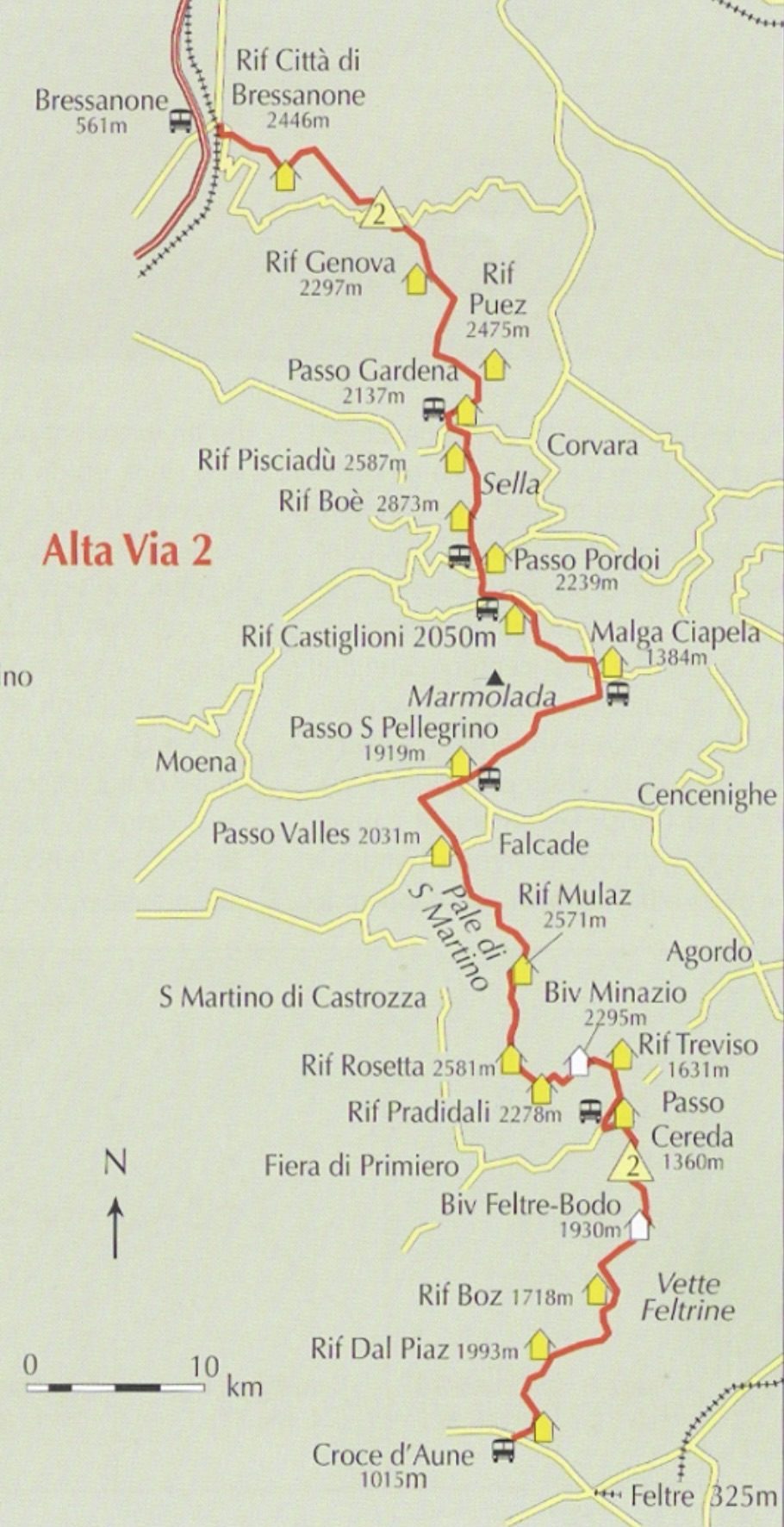
A rough outline of the route taken on my 11-day, September 2026 hike on the Alta Via 2 in the Italian Dolomites. My itinerary went like this:
Fly from Chicago to Munich. Train from Munich down through western Austria into northern Italy. Arrive Brixen/Bressanone.
DAY 1: Bus and cable car up from Brixen/Bressanone to Plose. Walk to Malga Medalges (not shown on map, but near Rifugio Genova).
DAY 2: Medalges to Rigufio Firenze (also not shown on map).
DAY 3: Firenze to Pisciadù via Puez.
DAY 4: Pisciadù to Marmolada Castiglioni.
DAY 5: Marmolada Castiglioni to Hotel Costabella in Passo San Pellegrino.
DAY 6: Hotel Costabella to Mulaz.
DAY 7: Mulaz to Pradidali via Rosetta.
DAY 8: Pradidali to Treviso.
DAY 9: Treviso to Cereda.
DAY 10: Cereda to Boz.
DAY 11: Boz to Croce d’Aune. Then bus from Croce d’Aune to Feltre.
Train from Feltre to Venice. Flight from Venice to Chicago
View from near Rifugio Puez. Only a few of the huts along the way provided free, readily available drinking water for hikers. Those who were smart brought filters and treated the water they took from bathroom sinks at the rifugios, while chumps like me ended up spending over 100 Euros on water throughout the course of the trek. Puez might’ve been the most exploitative of the water situation, charging five Euros per .75-litre bottle
In Italian, “via ferrata” means “iron path” and it refers to difficult sections on hiking routes that’ve been made more accessible by the installation of metal cables, rungs and ladders that assist hikers over rough terrain. During World War I, the Dolomites served as a high-altitude battleground between Italy and the Austro-Hungarians, and via ferratas were widely installed by both sides to aid in the transport of troops, weapons and supplies to and from the area. After the war, the routes were abandoned, but were eventually restored for recreational purposes by groups like Club Alpino Italiano. Shout out to trail buddies Paige and Nate patiently awaiting their turn on this here ladder on the via ferrata leading up to Rifugio Pisciadù.
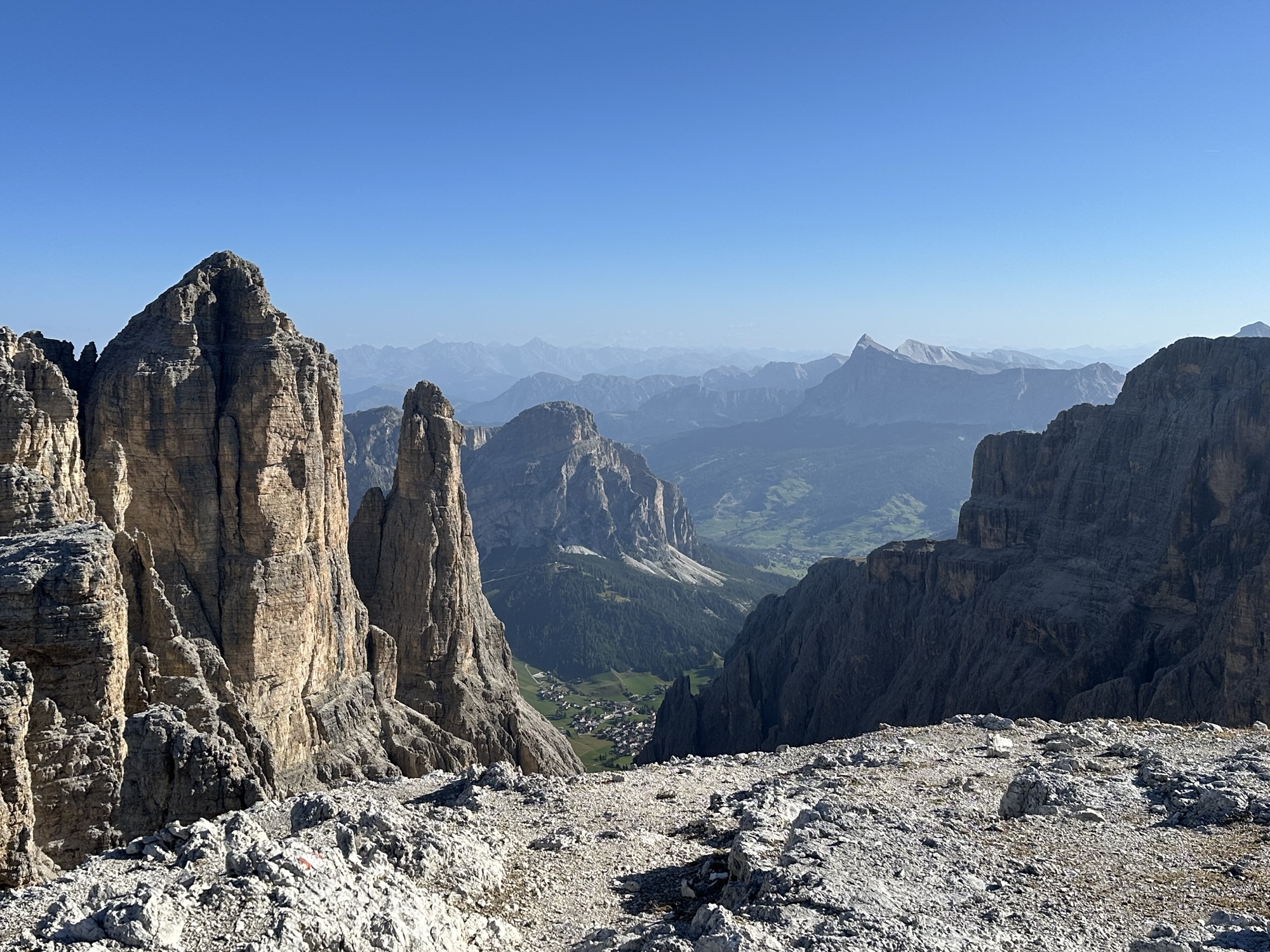
Pretty much every day on the trek, you had to walk up and down a thousand meters to get over the mountains between the rifugios. The landscapes at the top of said mountains were barren and desolate, and often gave me the impression that I was walking on the moon
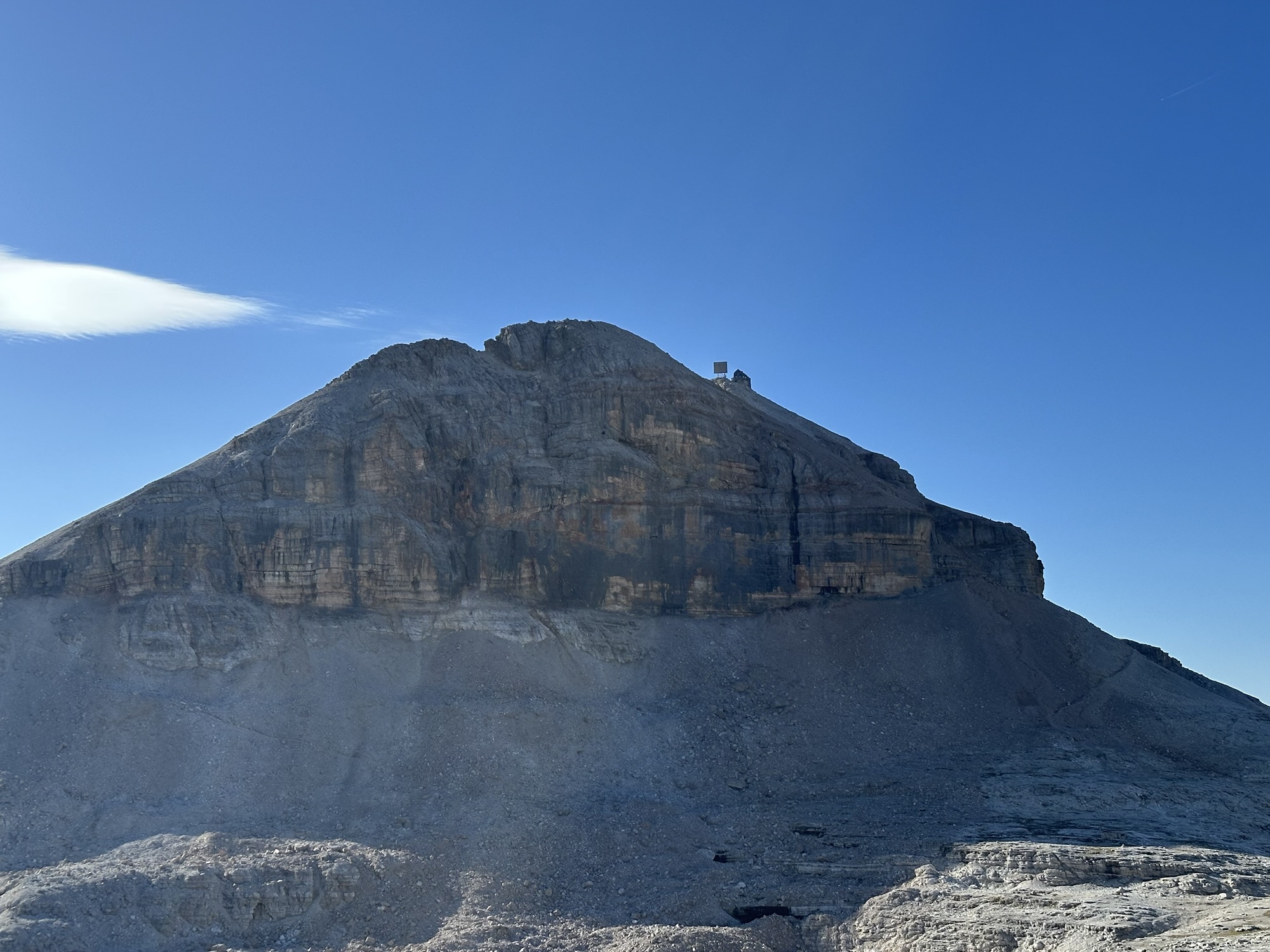
At an elevation of 3152 meters, Rifugio Capanna Piz Fassa is one of the highest in the Dolomites. I didn’t eat anything or stay at this particular rifugio at the top of Piz Boè, but found it pretty fascinating that they’d actually build something that high up there.
Rifugio Mulaz, as seen shortly before the break of dawn
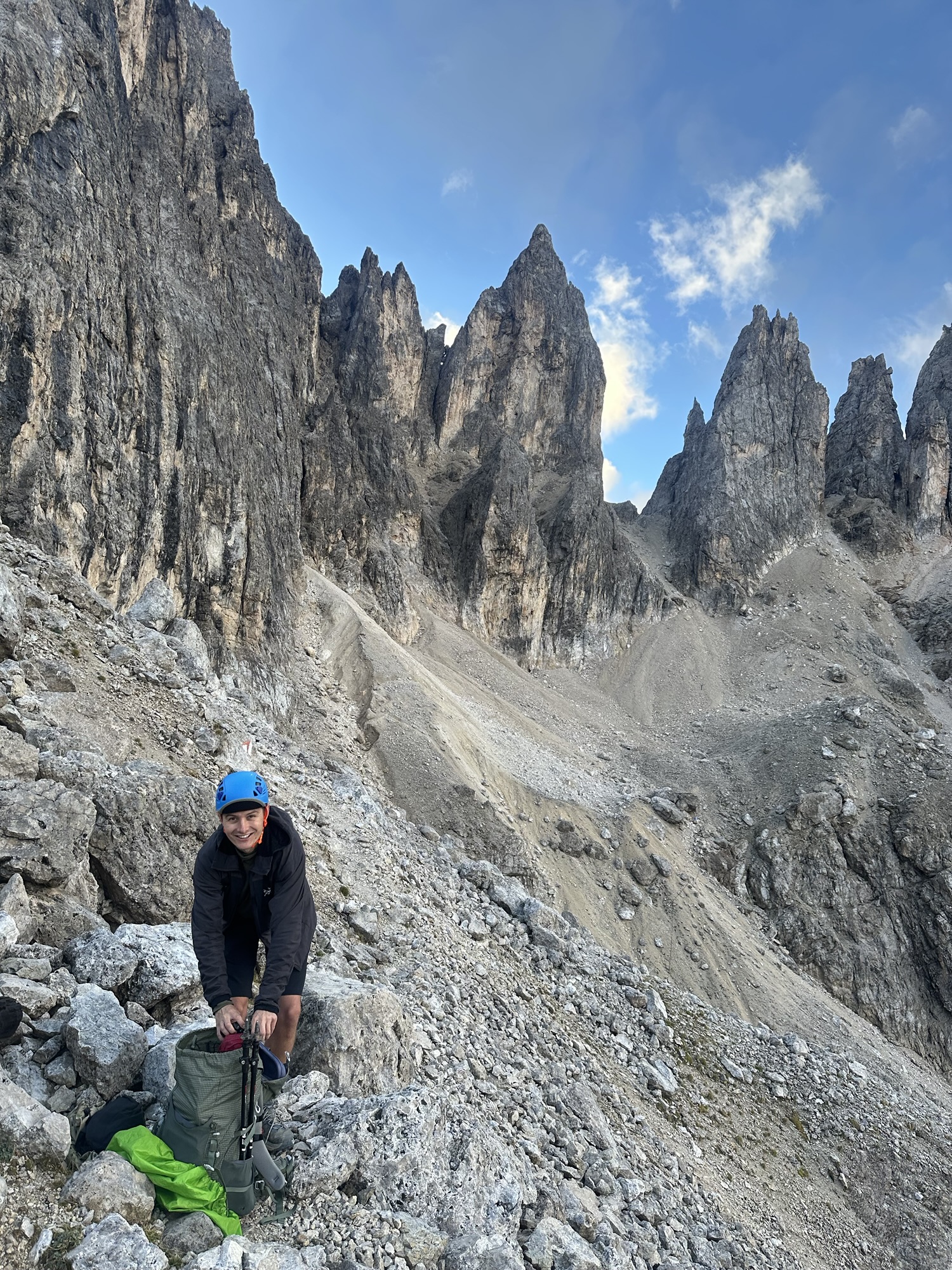
Trail buddy Samuel getting ready to take on the via ferrata that leads through the scree-covered peaks behind him, just above Rifugio Mulaz
View down from the same spot where the previous photo was taken
Stunning valley somewhere on the path between Rifugio Mulaz and Rosetta
Judging by the smell of the place, I don’t think this rule was heavily enforced, but apparently farting was not allowed in the dorms at Rifugio Pradidali
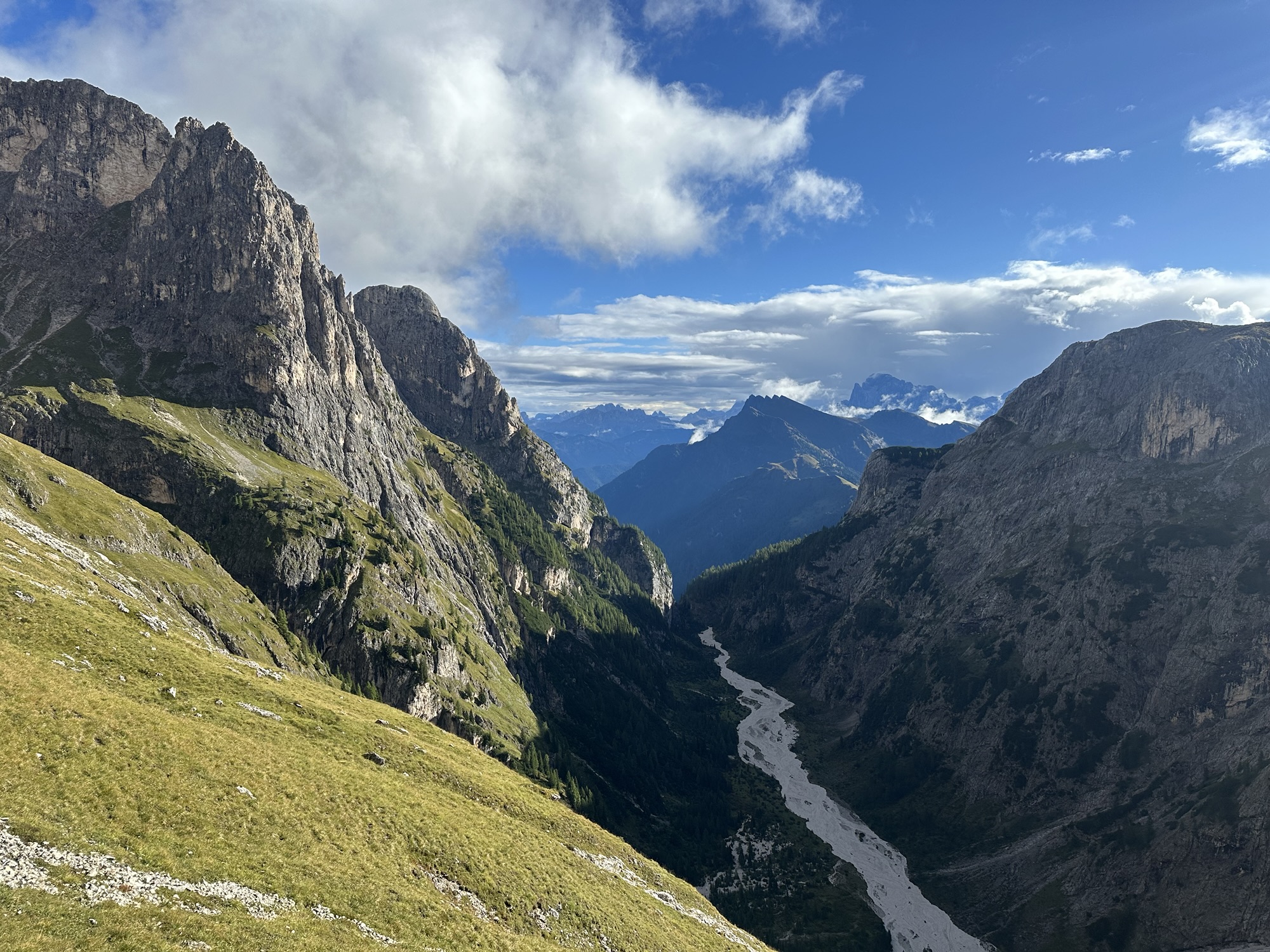
View from the big ascent between Passo Cereda and Rifugio Boz
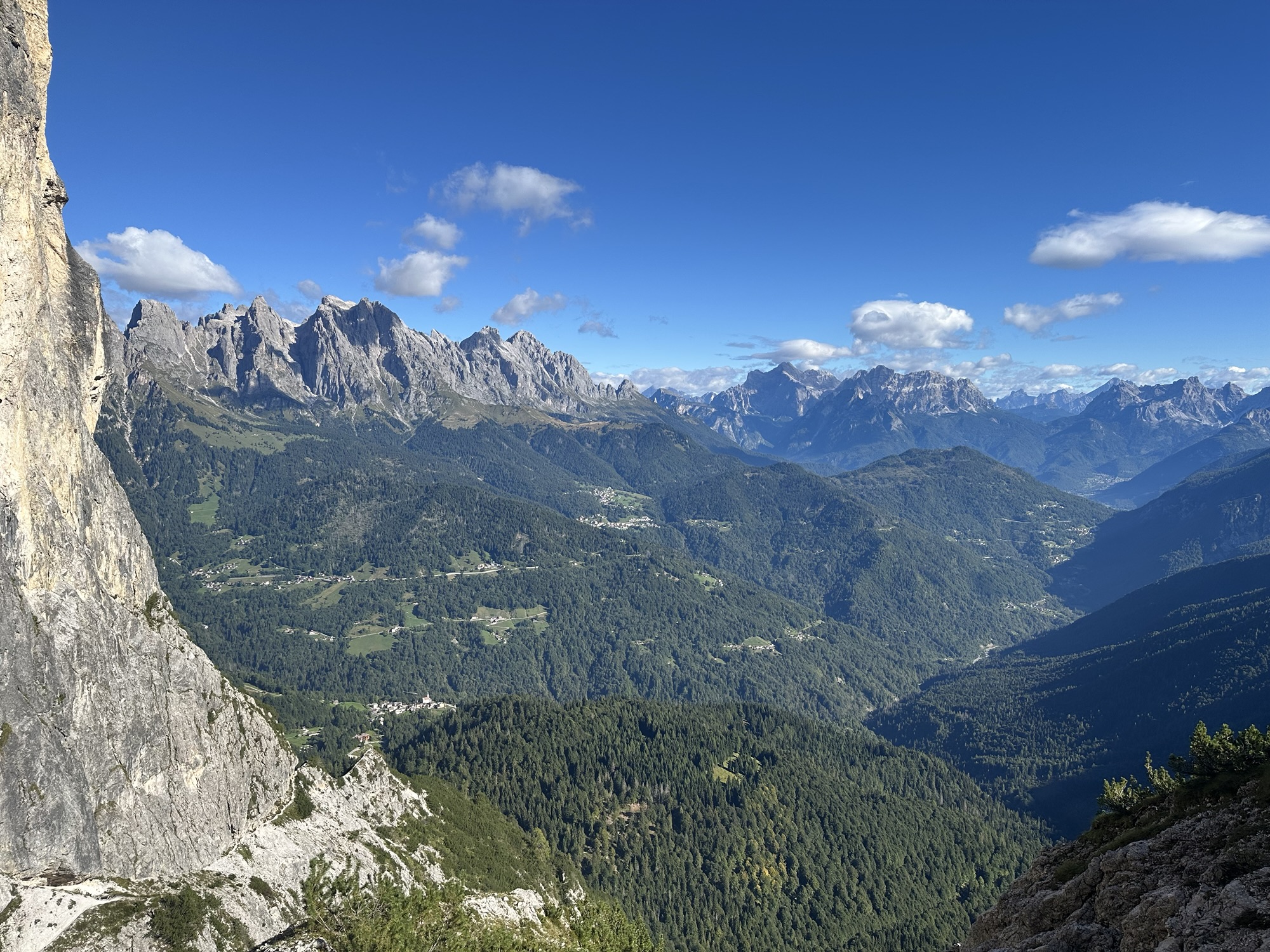
Here and there on the Alta Via 2, while walking along some precarious ledge on a path only a couple feet wide where the slightest misstep would send you tumbling over the edge down to your gruesome death, you come across memorial placards like the one shown here. Embedded in the rock walls just above these perilous paths, they served as a stark reminder that your fears are not irrational, that you better tread carefully lest you end up the same way. According to Google Translate, this here placard on the route between Rifugio Boz and Croce d’Aune says, “At the site of your tragic fate, your loved ones remember you with unchanging affection.” Guy was 19 years old.
Only people without tuberculosis were permitted to use the bathroom for one Euro at Rifugio Malga Medalges
Someone decided to carve a dickhead out of this tree stump
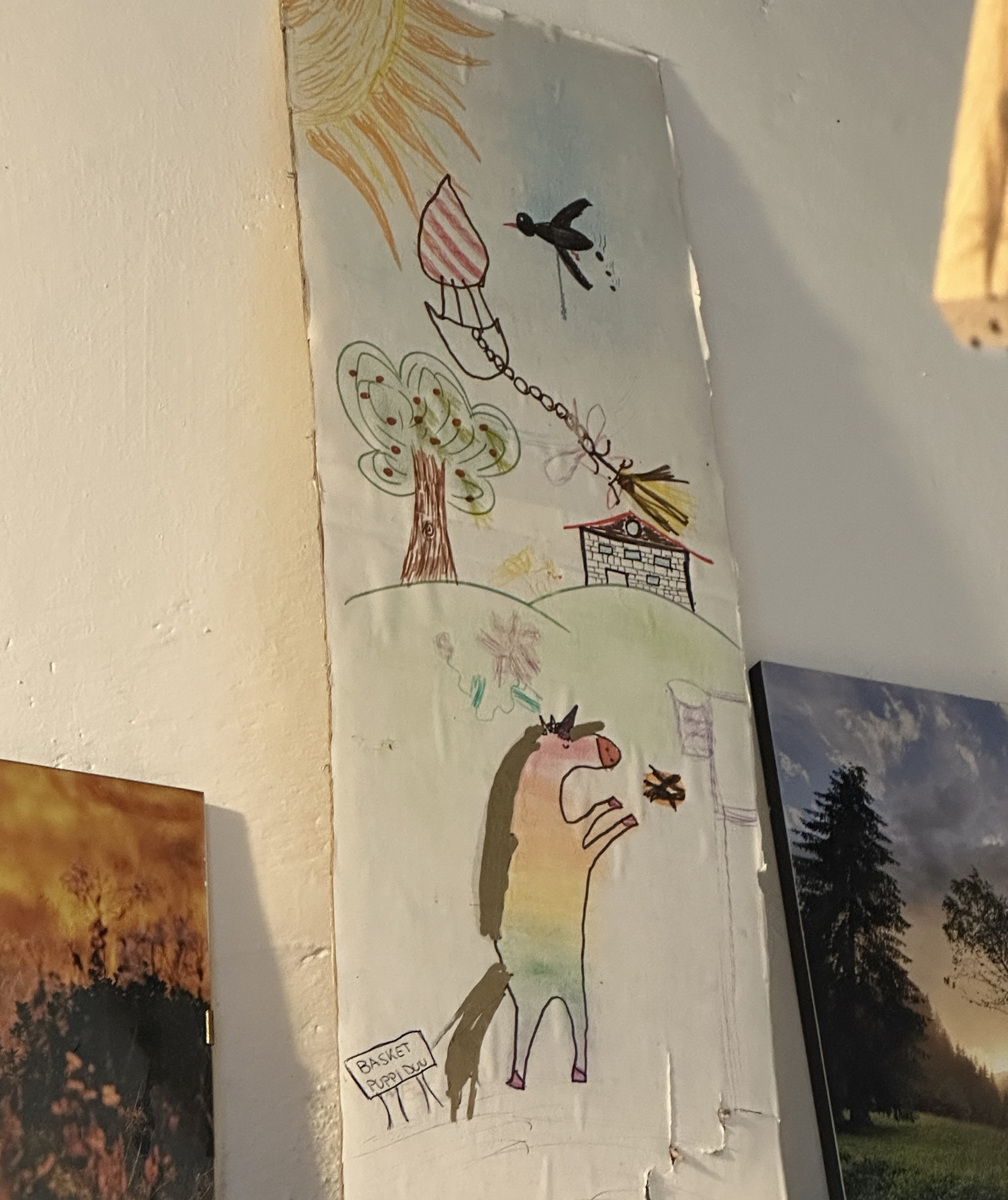
While we’re on the topic of art, here’s another piece I found particularly inspiring. This basketball-shooting, diarrhea-blasting unicorn serves as the centerpiece to the collection overlooking the main dinner table at Rifugio Boz