The Kokoda Track is where a ragtag group of Australian soldiers who were outnumbered 10 to 1 fought back the invading Japanese during WWII. During the past 40-odd years, this hike has become a pilgrimage or a rite of passage for certain Australians who feel the country wouldn’t be what it is today had all those young soldiers not given their lives on this bloody mountain track between July and November 1942. The Japanese had landed at Gona and Buna in the north and were coming south through the Owen Stanley mountain range, and the Aussies were coming up north from Port Moresby, trying to send the Japs back to where they came from. The book I read before going on this 8-day hike with the Australian-run No Roads Expeditions was Kokoda by Peter FitzSimons – you don’t need to know the history to enjoy the beautiful mountains, jungle and Papuan villages you pass through while hiking the Kokoda Track, but I did feel that it definitely added another layer of depth to the experience.
Getting There
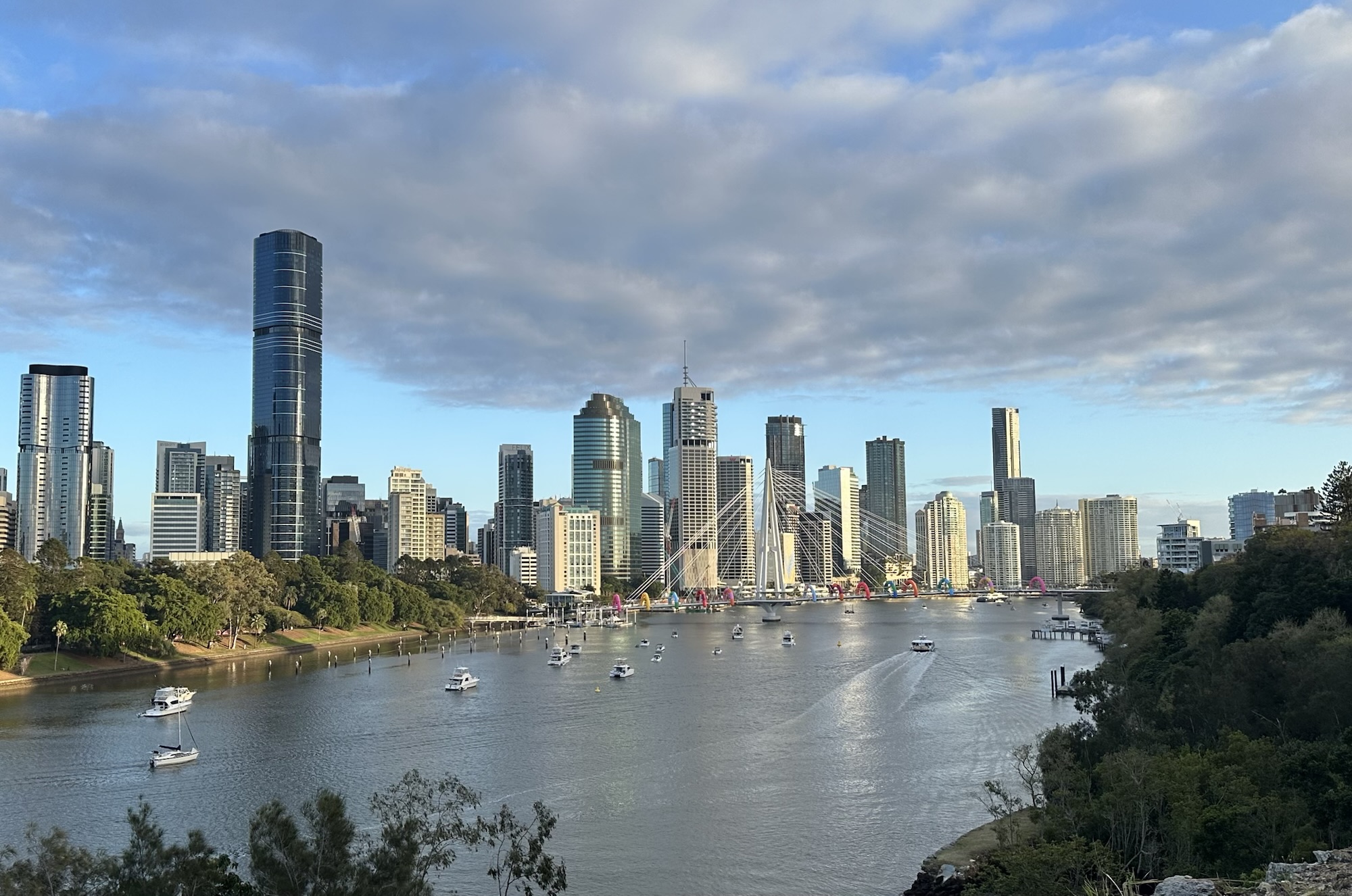
My flight route was from Chicago to Dallas to Nadi (Fiji) to Brisbane (Australia, pictured above), where I spent a couple days trying to relax and get used to the local time zone before entering Papua New Guinea
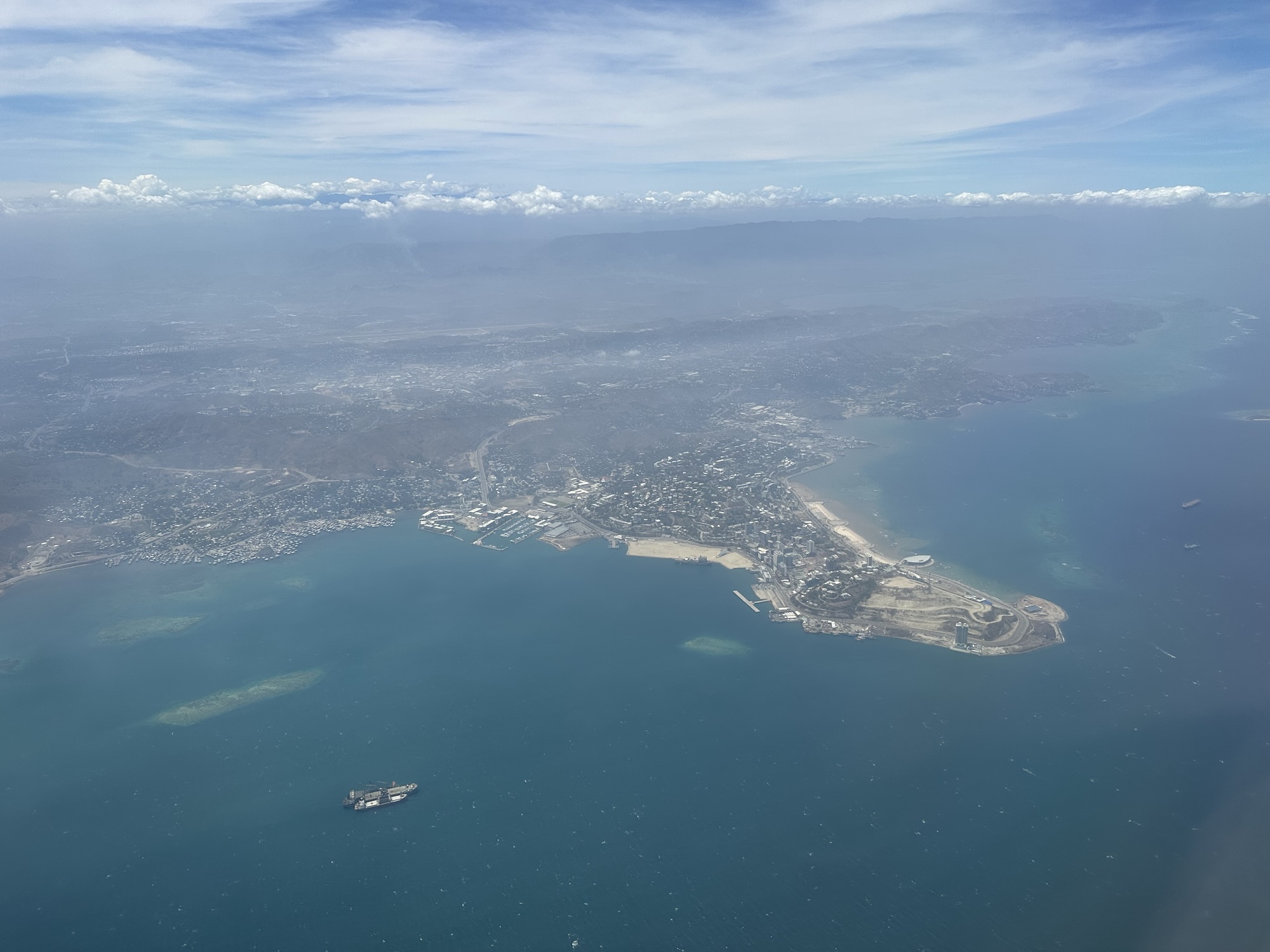
First glimpse of Papua New Guinea – the flight from Brisbane to Port Moresby takes approximately 3 hours
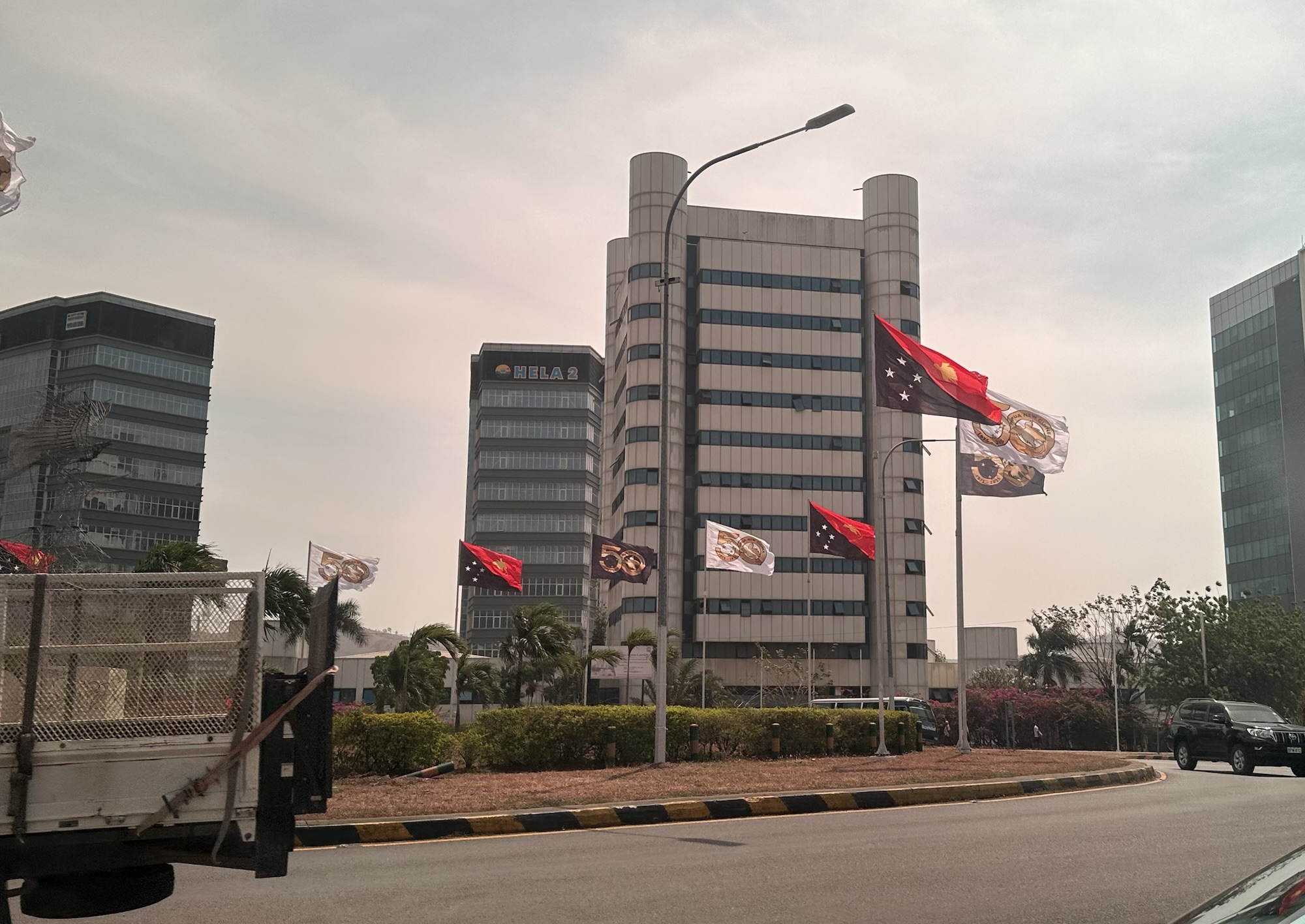
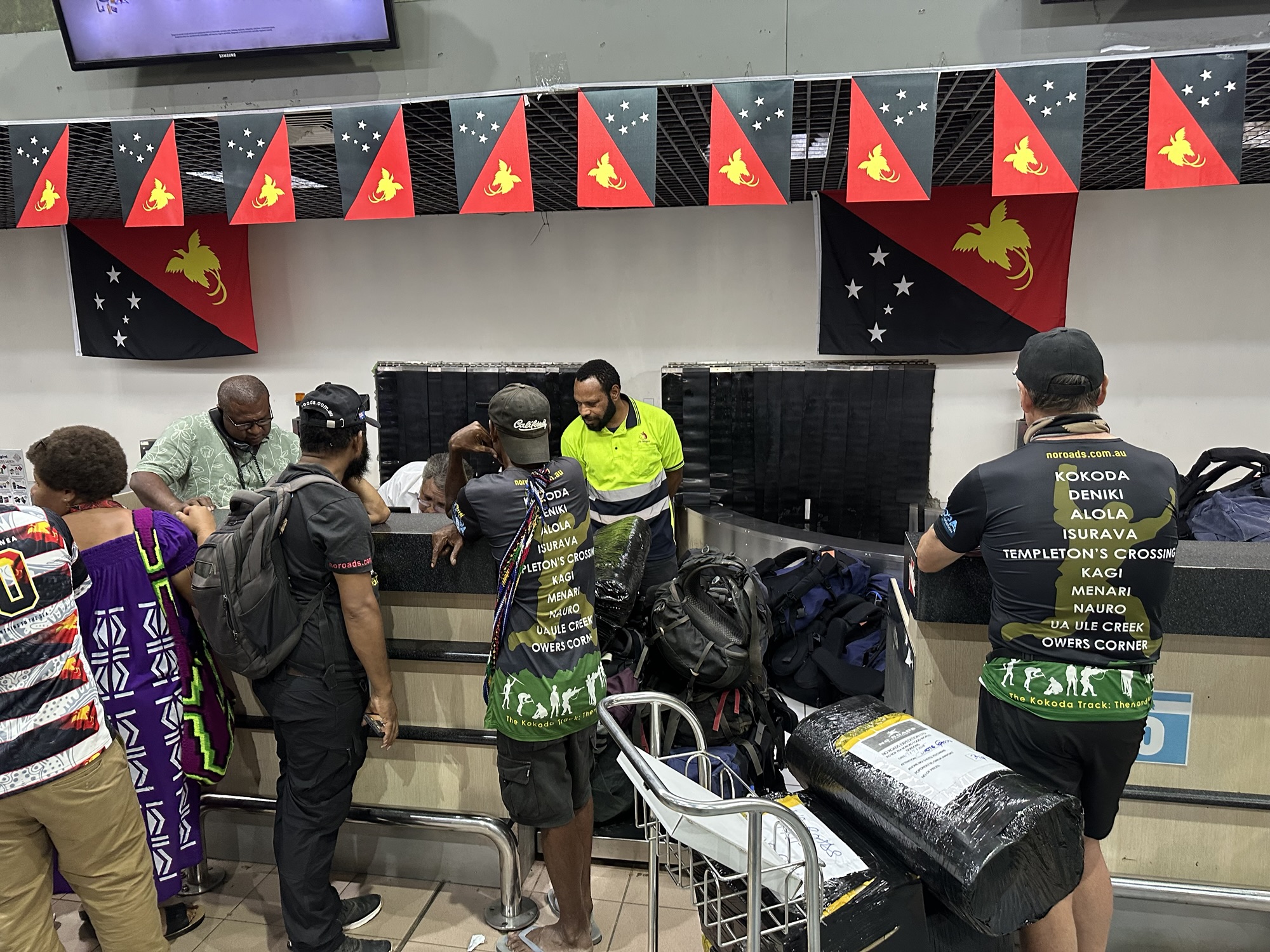
While I was in PNG, they were celebrating 50 years of independence, so they had the national flag up pretty much everywhere. They also hired Akon to come and play a couple concerts in honor of the event, and he happened to be staying at the same hotel as us. I saw him a couple times in passing in the lobby
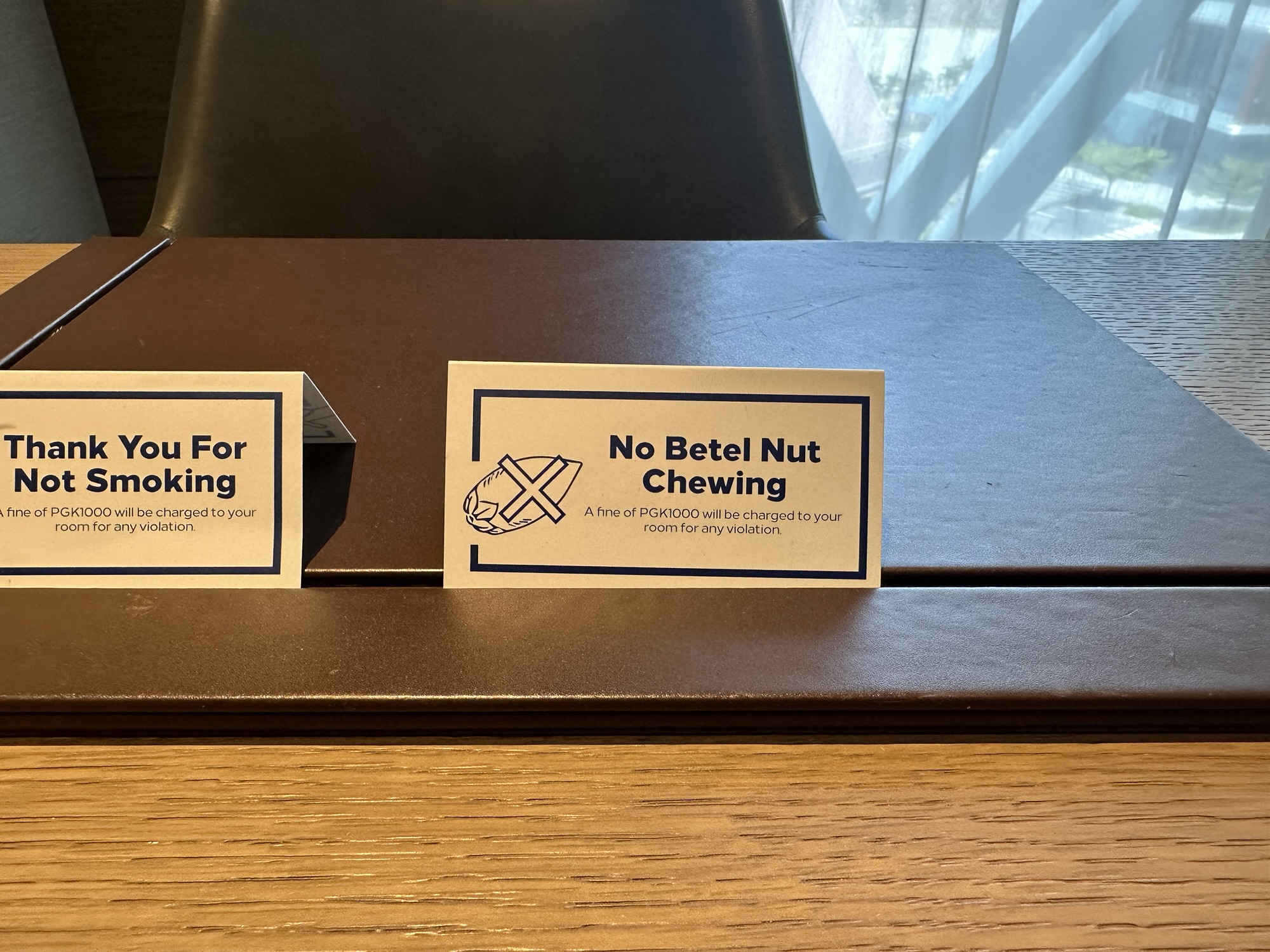
Sign in my room at the Hilton in Port Moresby. As is the case in several other countries in the area, a lot of the locals like chewing betel nut. Without getting too into it, betel nut is a stimulant that stains your teeth red and people who use it spit big globs of red shit all over the place – walls, sidewalk, wherever. It’s totally messy and gross and anyone who uses it looks like they were just eating a chick out while on her period. 10 out of 10 would not recommend
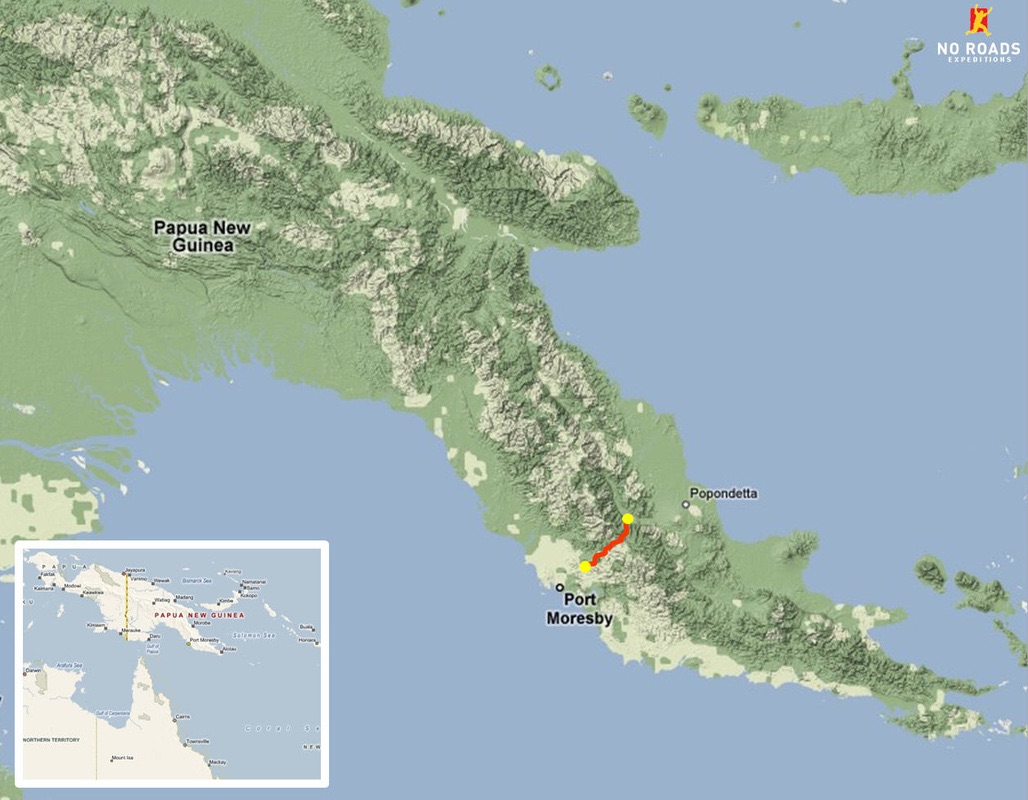
After meeting up with the Australian and local expedition leaders at the hotel in Port Moresby, we caught a flight that couldn’t have lasted more than 45 minutes up to a place called Popondetta on the other side of the Owen Stanley mountain range (you can see it on the map I used at the beginning of this article). Inexplicably, with no line in front of us, it took several hours to check in for this flight and we almost missed our boarding time.
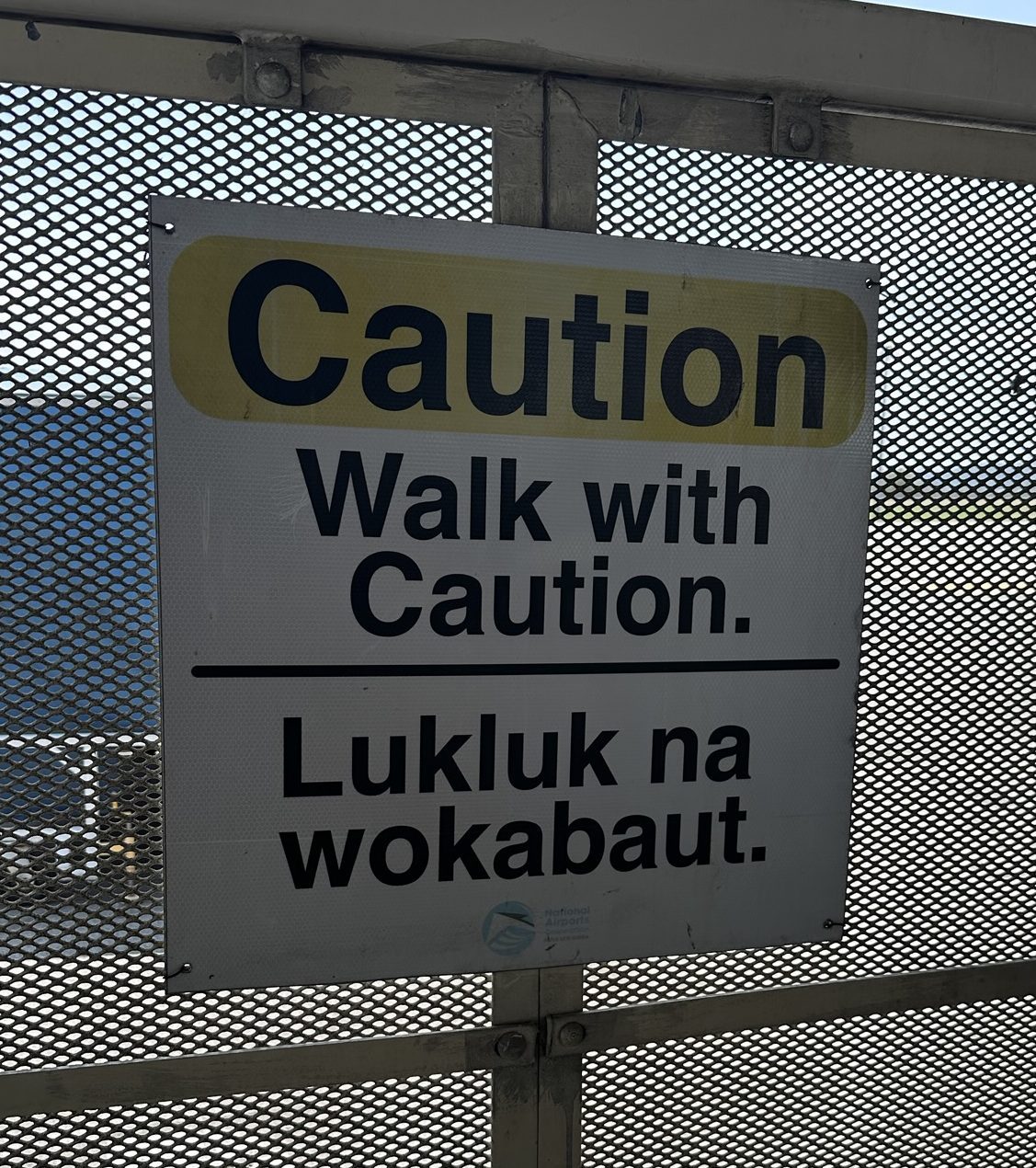
An example of PNG pidgin at the airport in Port Moresby. A couple other ones I found interesting while diving deeper online were “haus sik” meaning “hospital,” “haus moni” meaning “bank,” and “gras bilong het” (grass belonging to your head) meaning “hair”
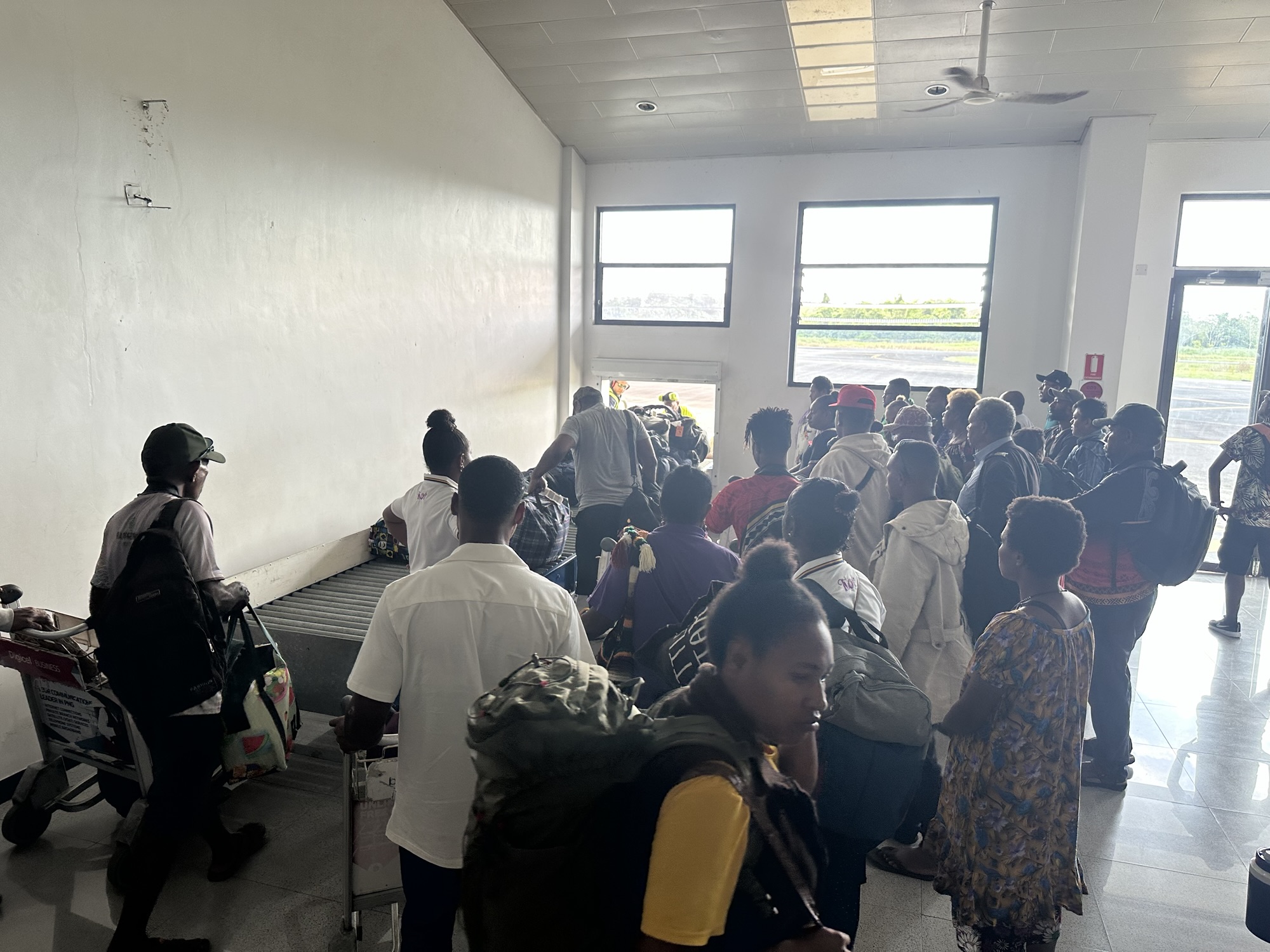
Baggage claim in Popondetta – a couple dudes outside throw your bags through a window onto one of those gravity-powered roller table thingies
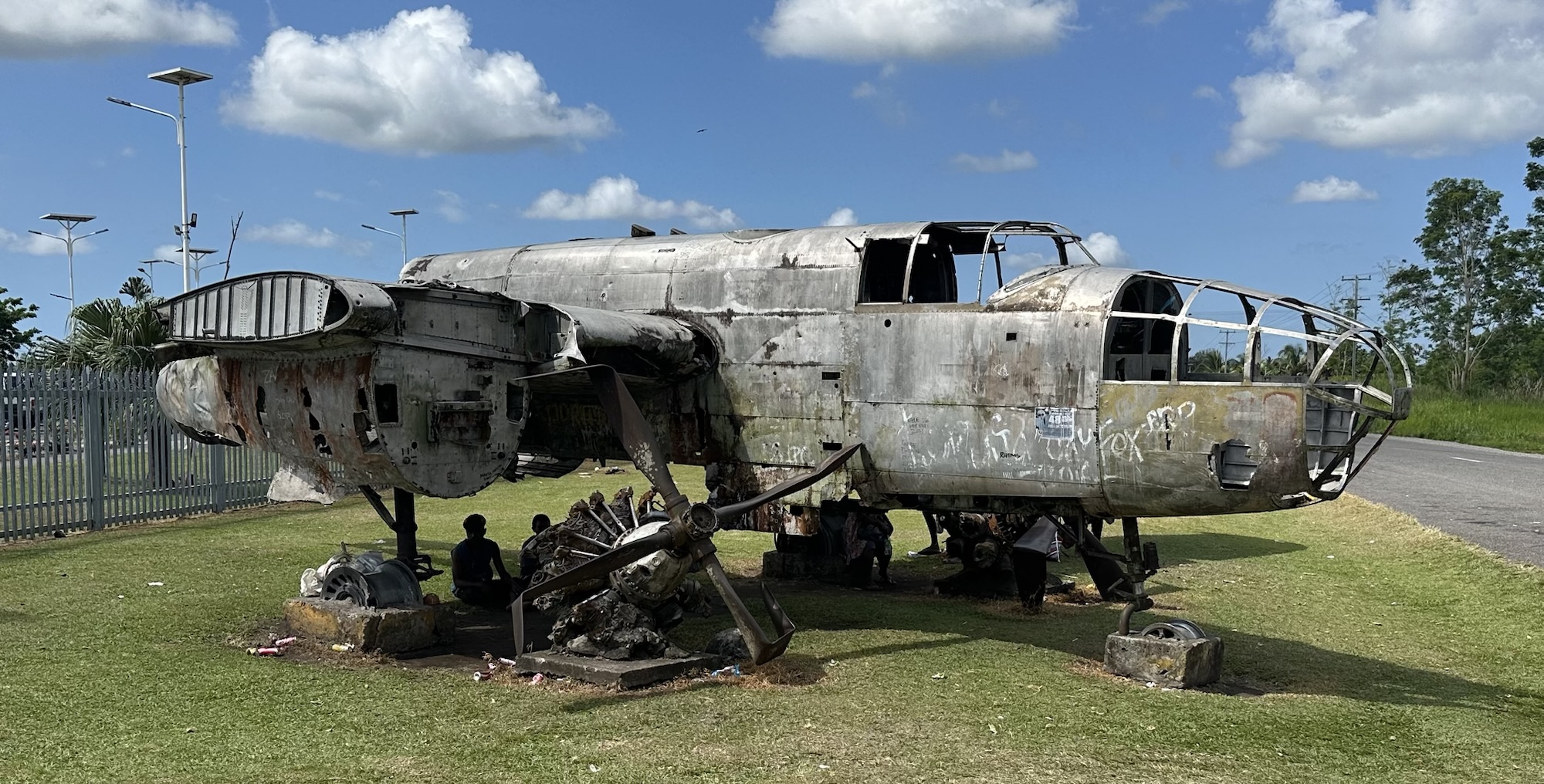
People chillin in the shade beneath the exoskeleton of this old plane outside the airport at Popondetta. Speaking of planes and Melanesians, I’m not gonna get into it here, but if you got time I recommend you read a bit about “cargo cults” in Papua New Guinea – fascinating stuff
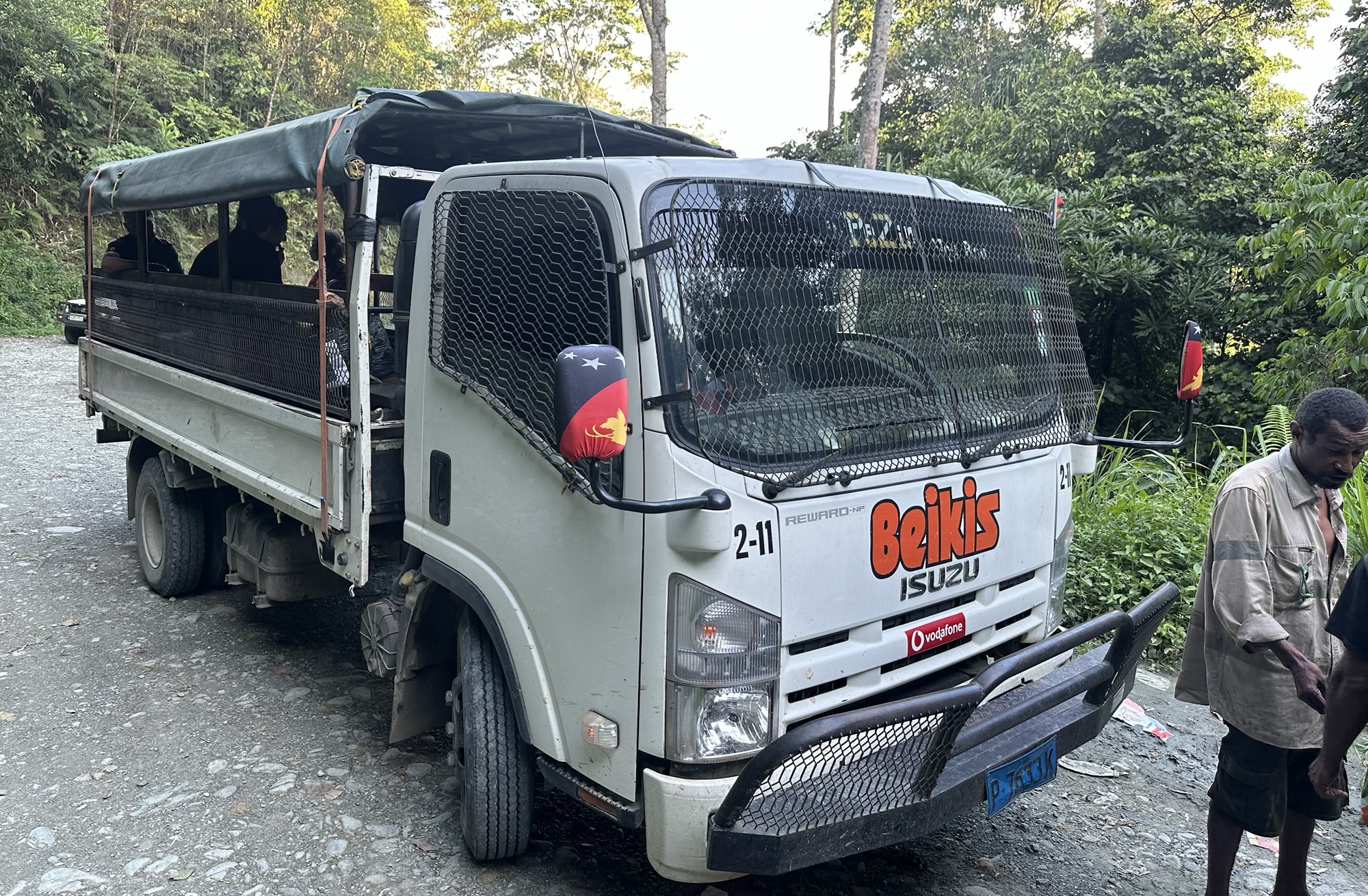
The truck we’d be riding in the back of for about 4 hours between the airport at Popondetta and the village of Kokoda where we’d be starting the hike. They got cages around all the windows to protect em from shattering
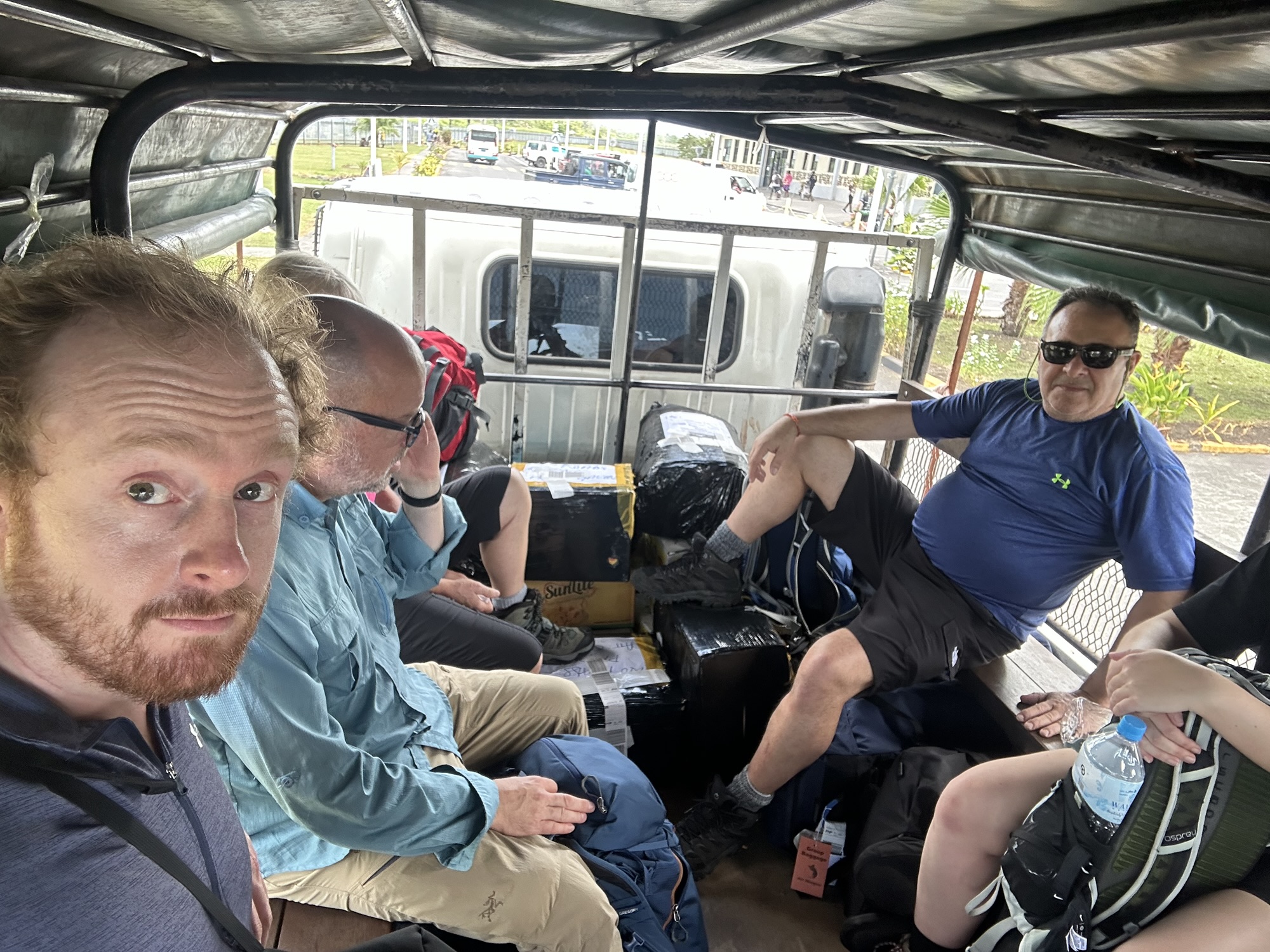
View from inside the back of the truck. Our rumps got pounded pretty hard on those wooden benches going over all those rough, bumpy-ass roads
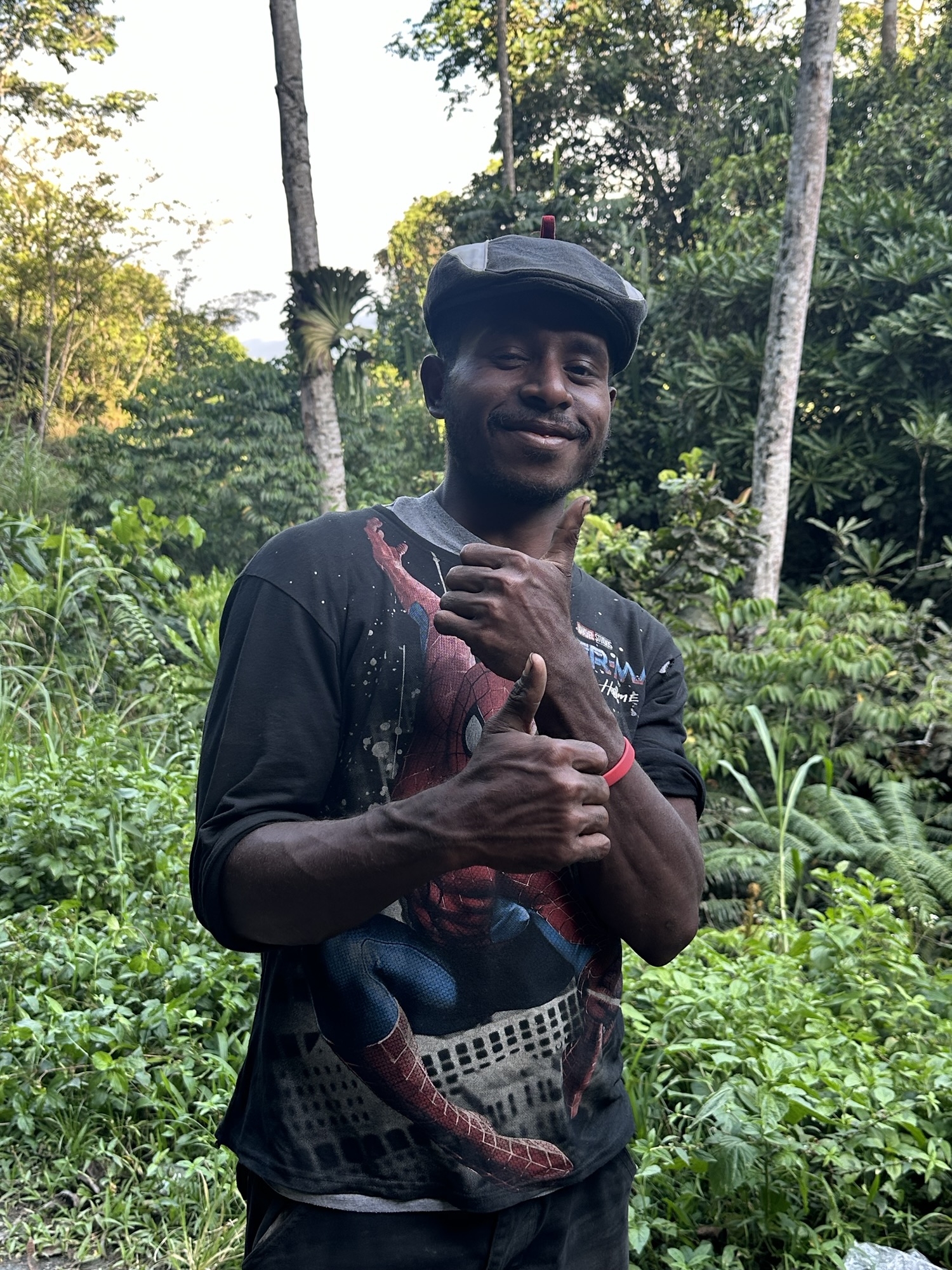
Some dude that was hanging out on the side of the road where we pulled over for a quick piss break
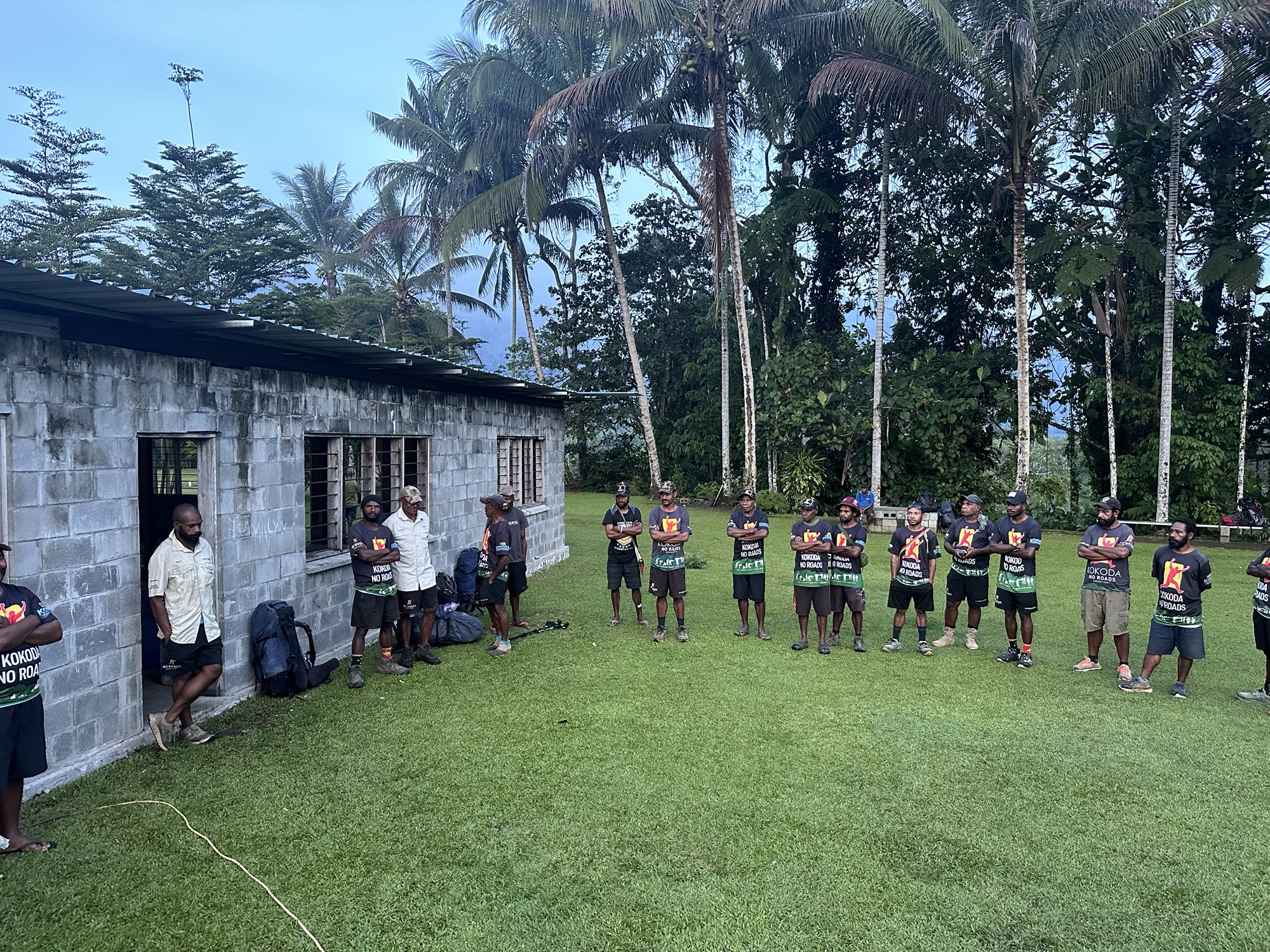
Our introduction to the local team in the village of Kokoda. These guys carried all the community equipment and tents, and cooked all the meals for us. I think almost all of them were Seventh-Day Adventists and sometimes they’d sing songs together at night around the fire and stuff like that (check out the video at the bottom of the page to see them perform)
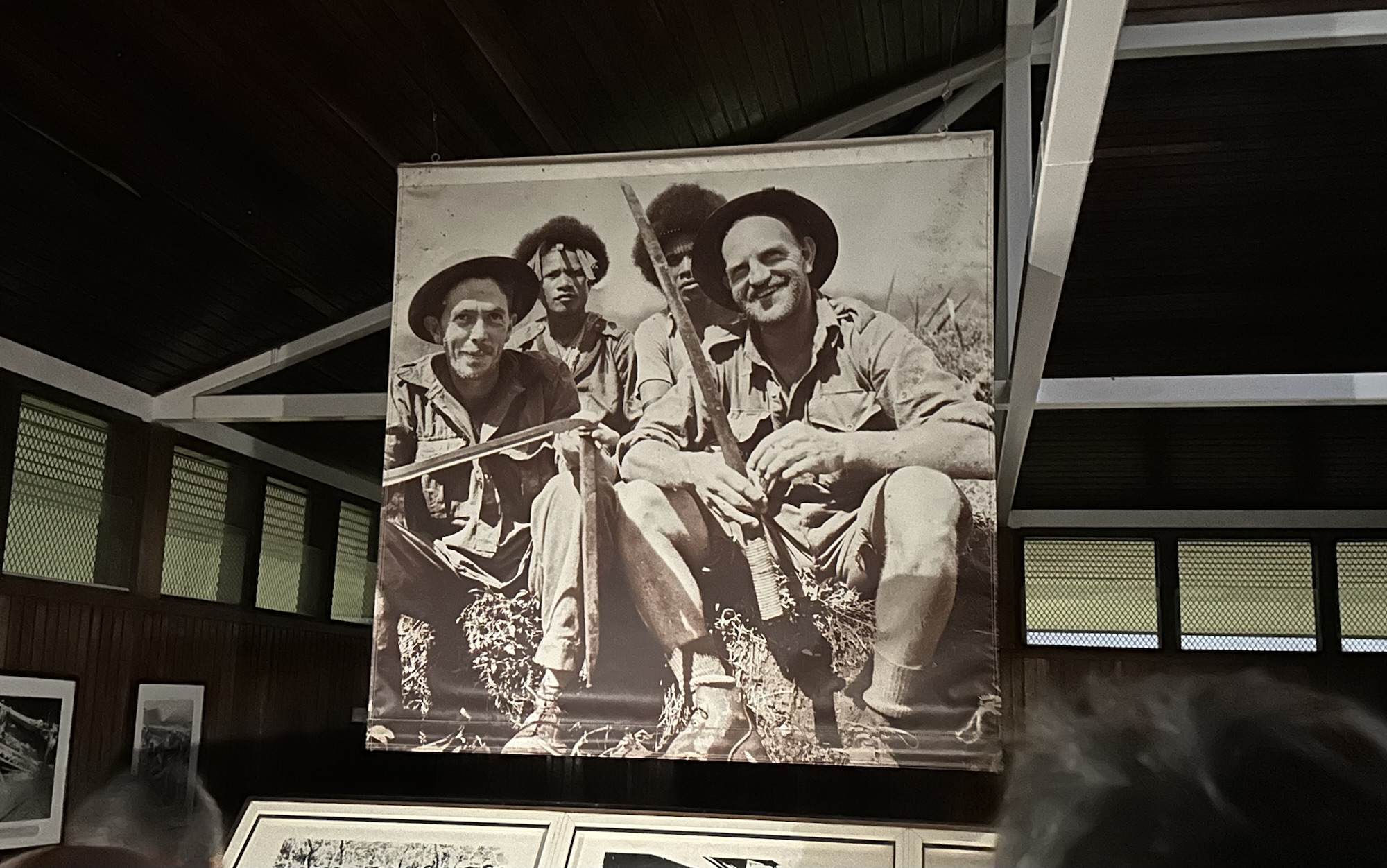
Old photo from a tiny “museum” they had in the village of Kokoda. The local men that helped out the Australian soldiers during their fight against the Japanese were referred to as Fuzzy Wuzzy Angels
The Fuzzy Wuzzy Angels were not belligerents in this conflict, but served mainly to help carry sick and wounded Australians from the front lines to places of safety
The Hike
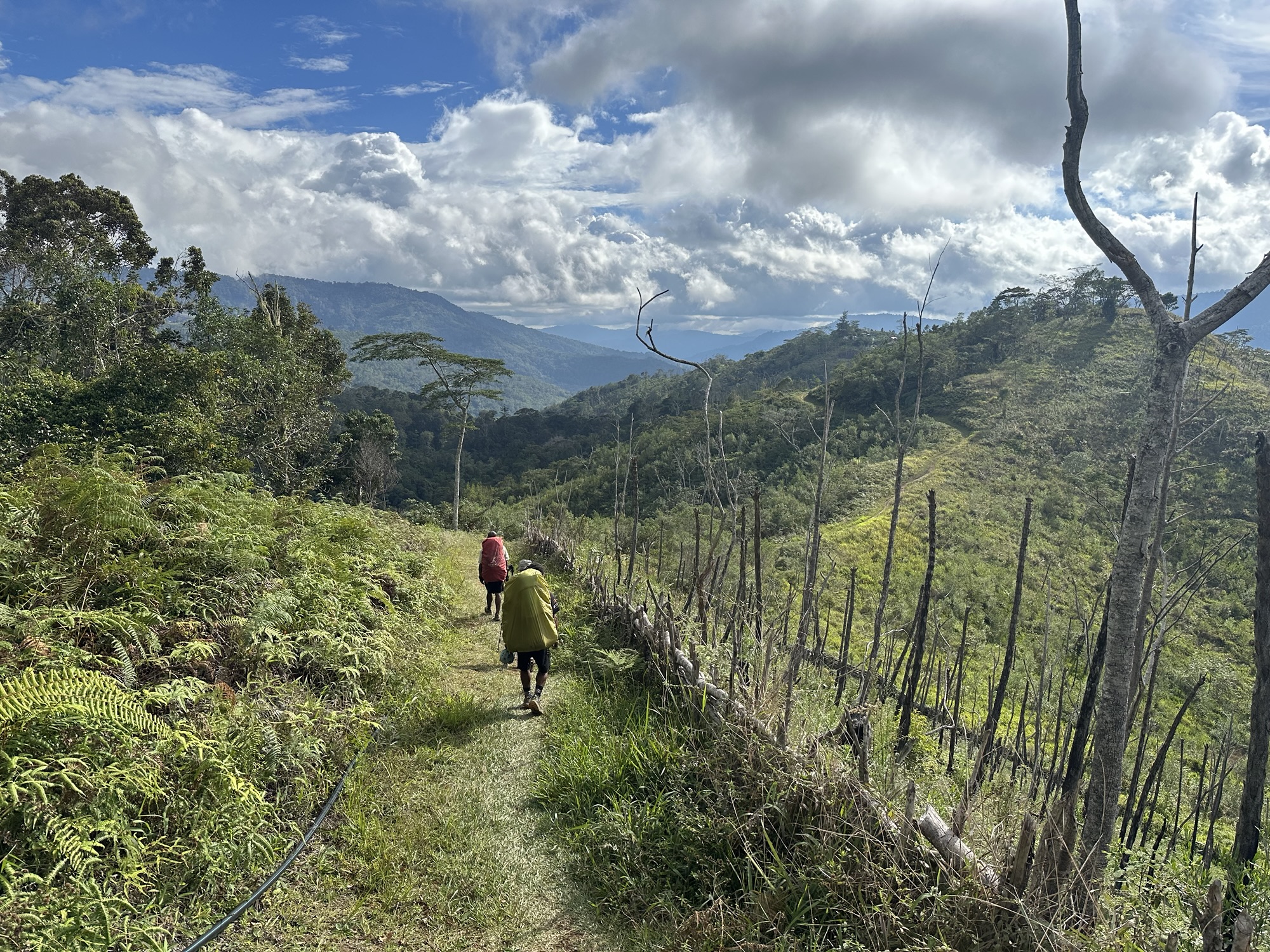
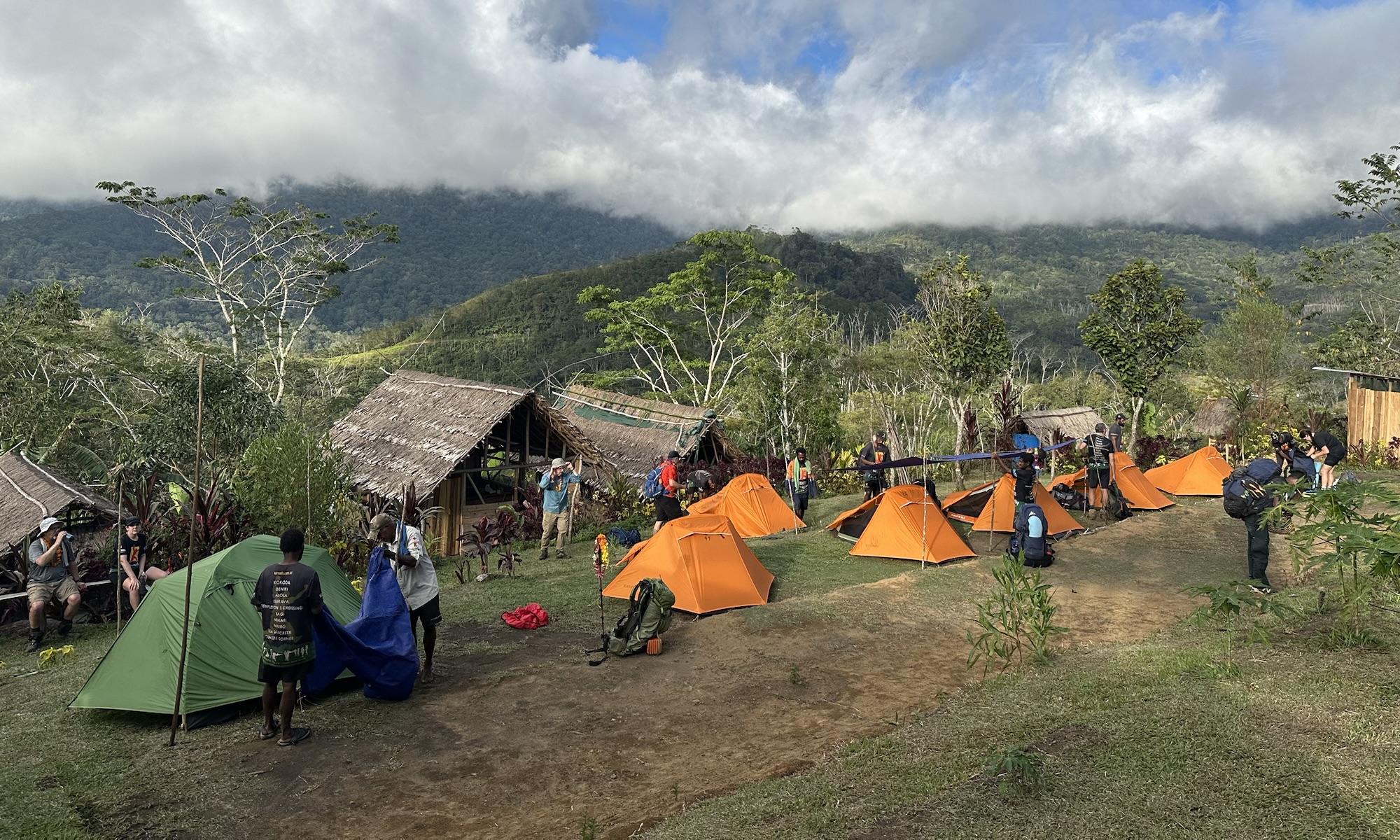
Pre-dawn wakeup on Day 1 of the hike, getting ready to head out of Kokoda. Over the course of the next 8 days, we’d be passing through steep jungle-covered mountainous terrain as we made our way about 95km south to Owers’ Corner
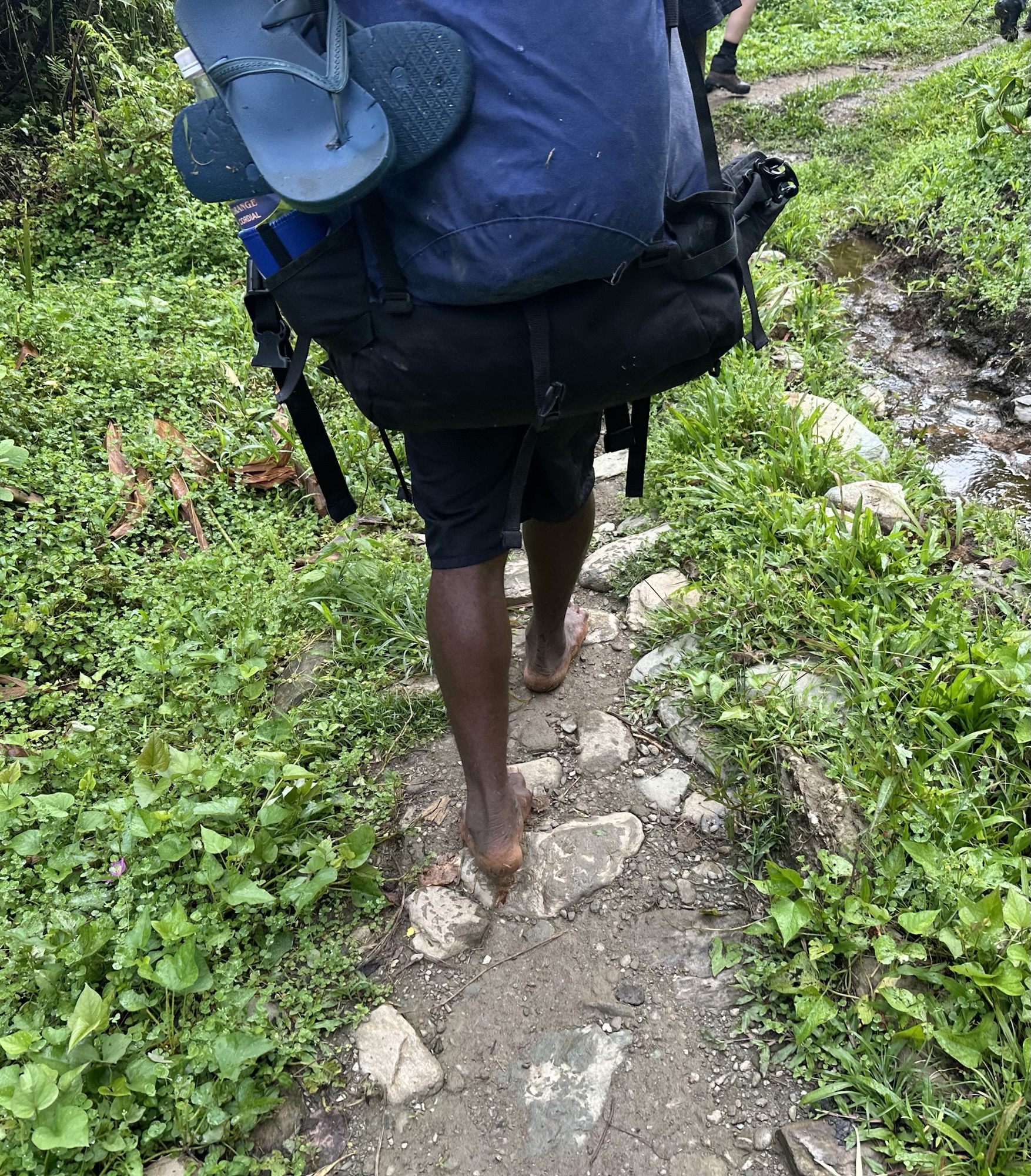
Some of the local porters – while carrying big loads on their backs – preferred to do the trek barefoot
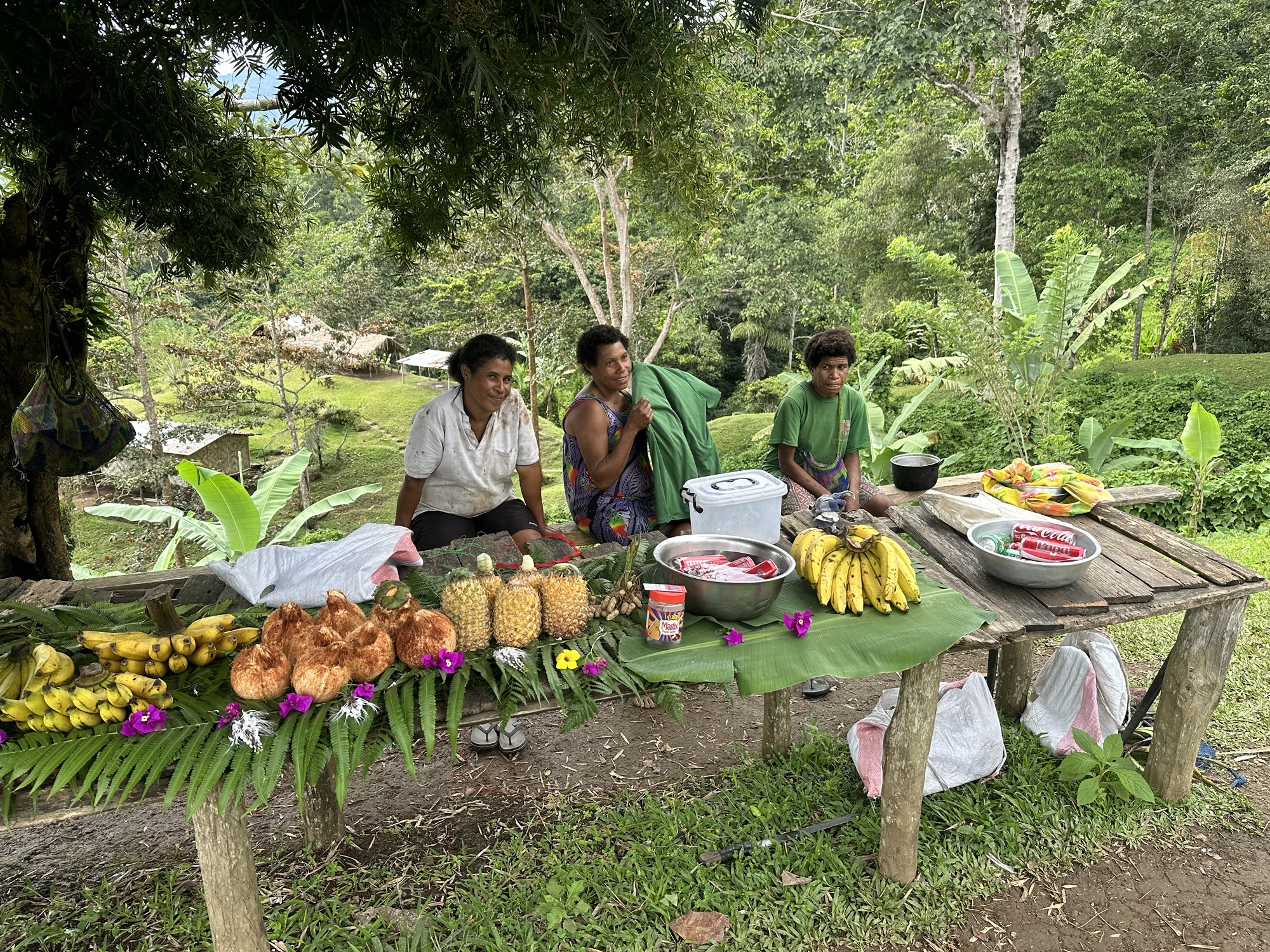
In many of the villages we passed through along the way, small businesses like this one sold fresh fruit and cold drinks to hikers. I went straight for the bananas every time
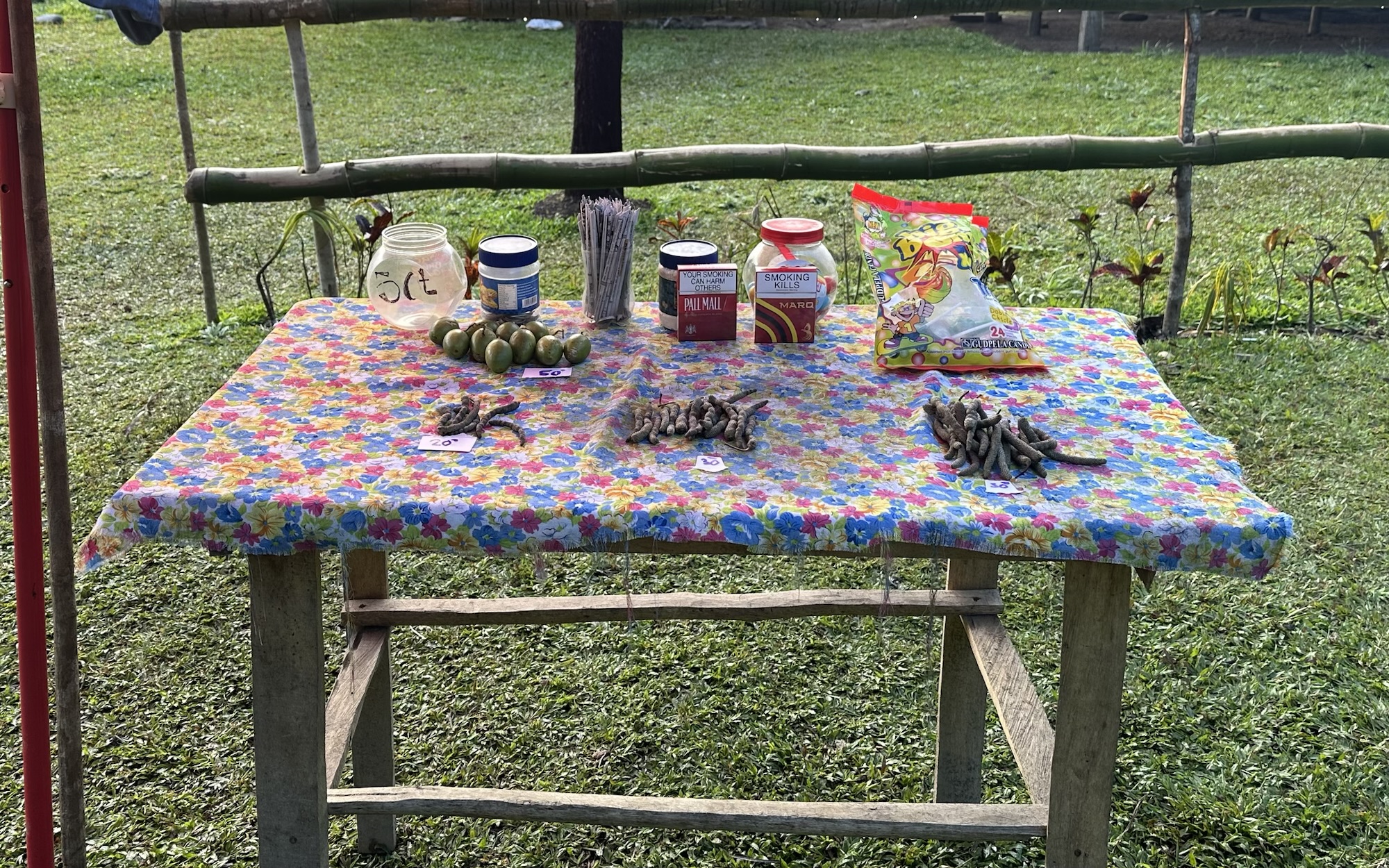
For those hikers that require something a little stronger than fresh fruit and soft drinks to feel energized, some other entrepreneurs had stands like this one selling smokes and betel nut
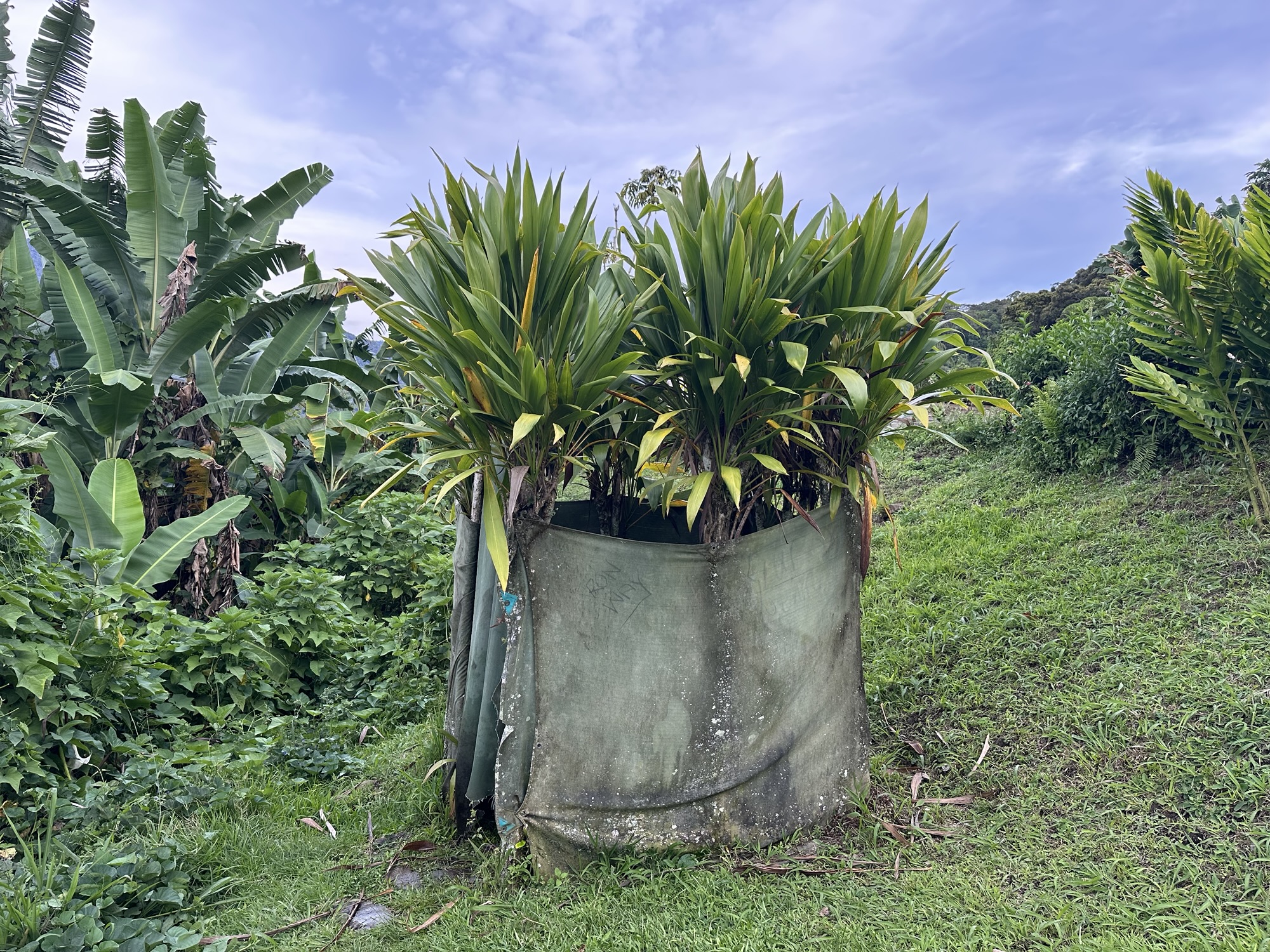
The shower facilities in Isurava village
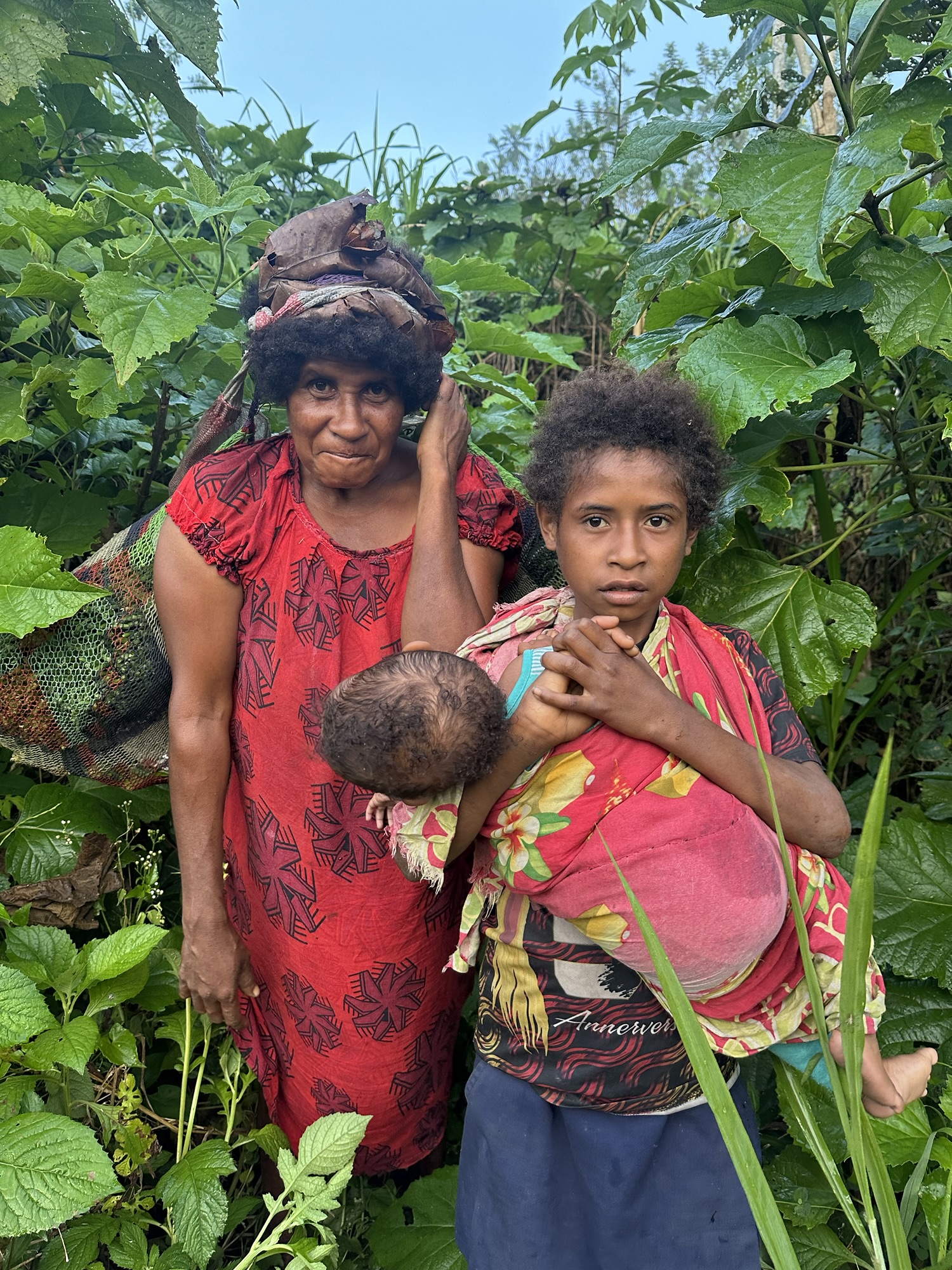
Some locals we encountered along the way
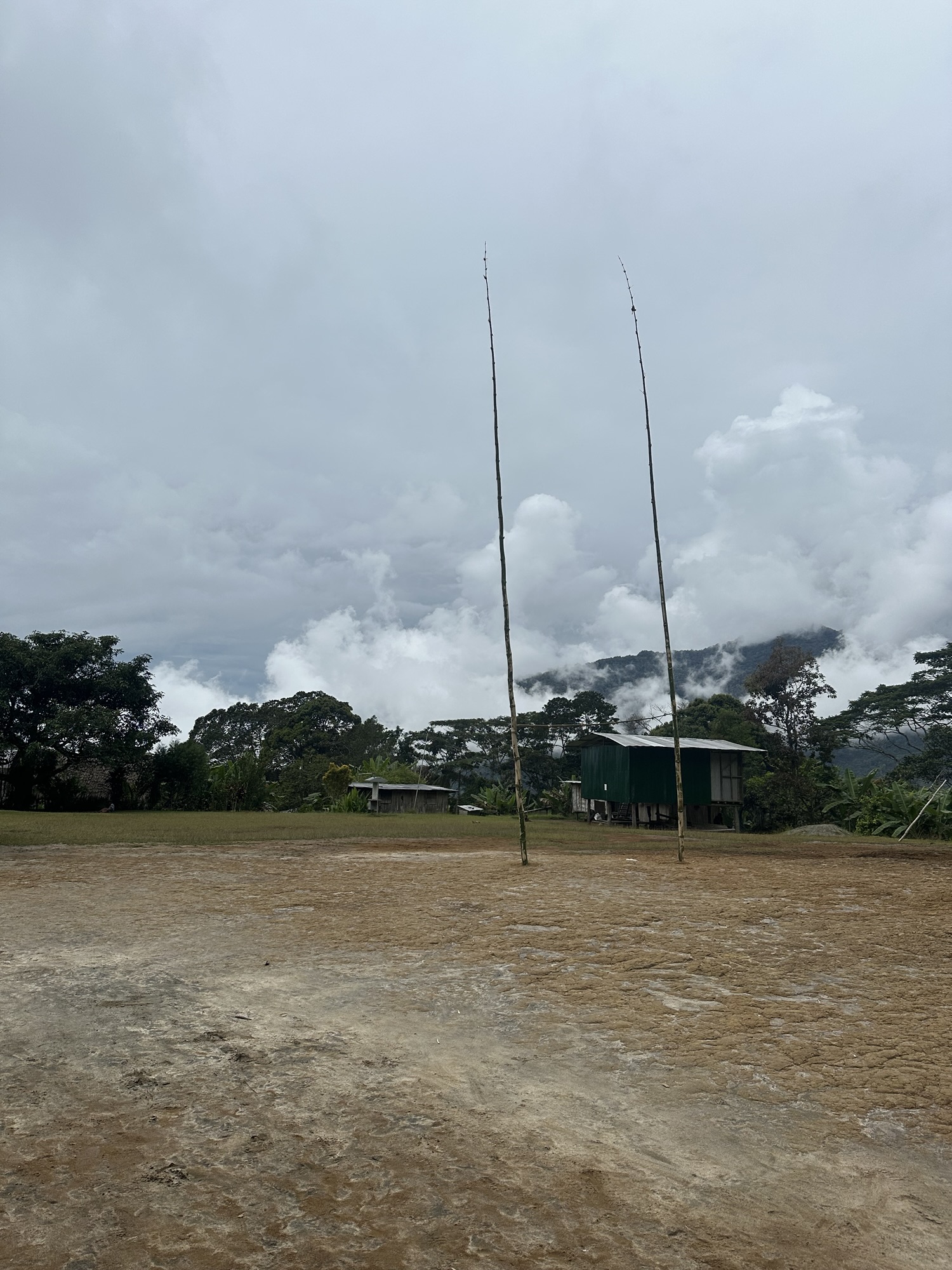
Rugby goal post
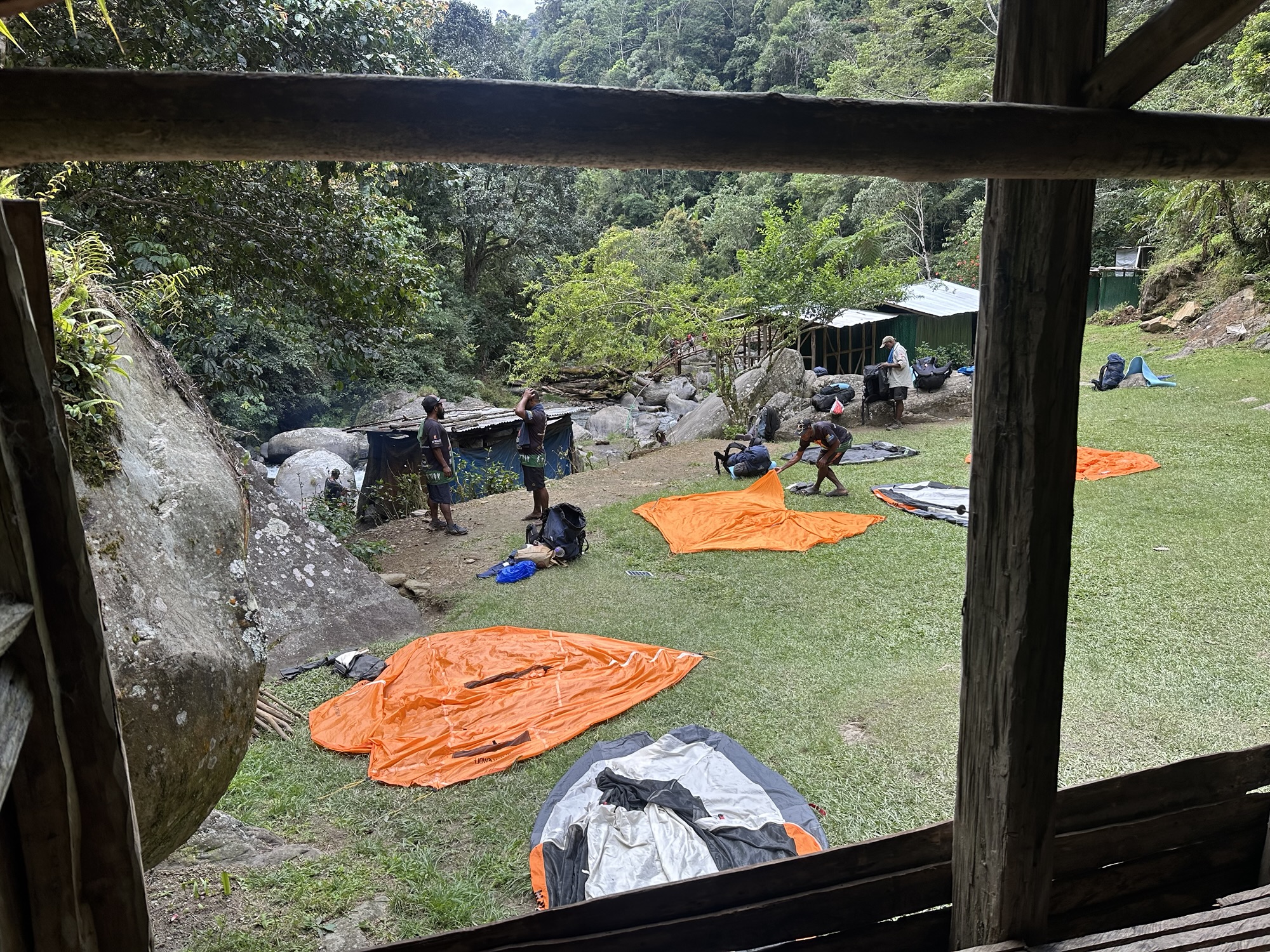
It rained pretty hard the night before, so the guys had to unpack all the tents at lunch to try and dry them out so they’d be ready to go that evening
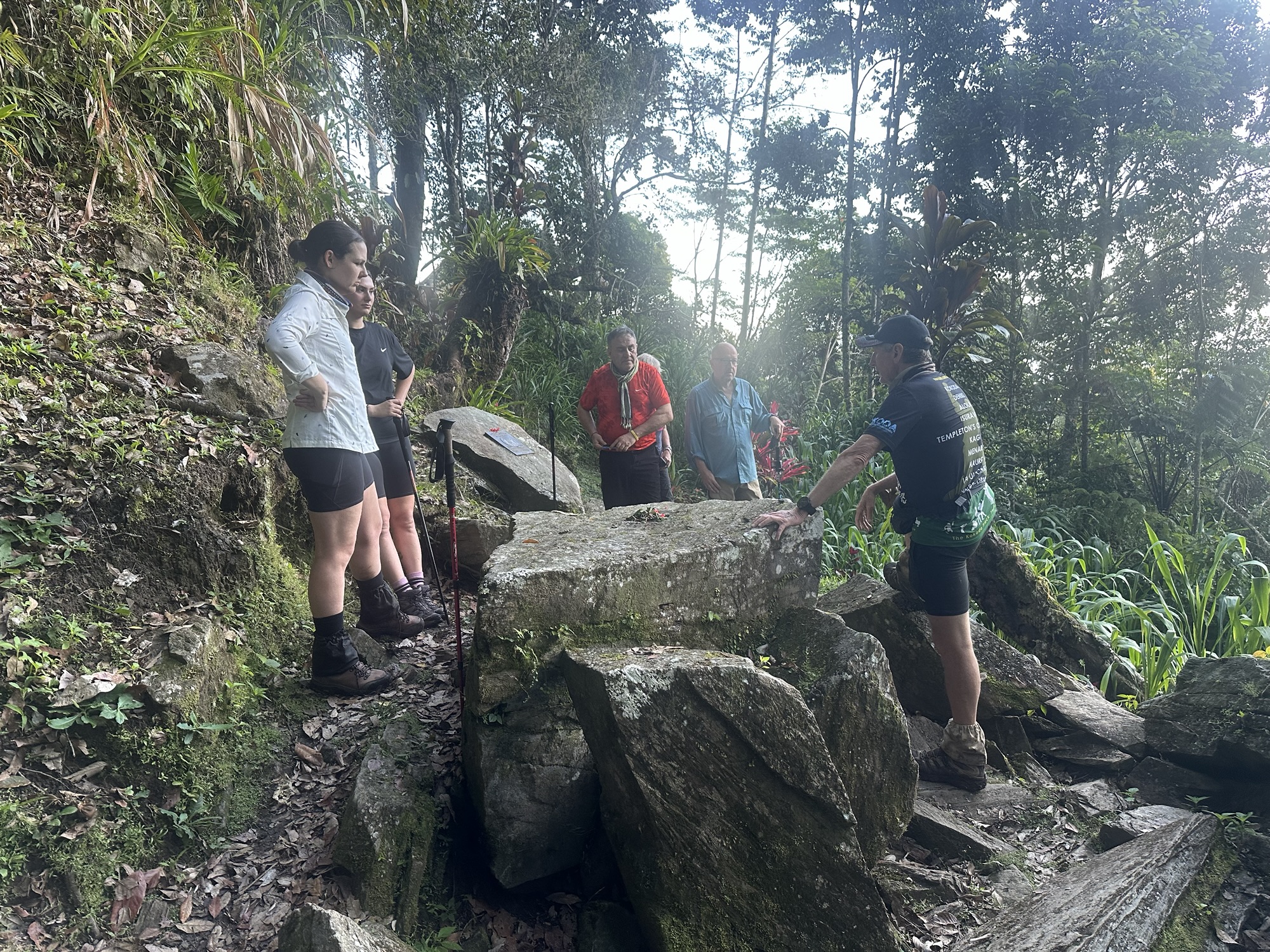
Here’s our Aussie guide Gavin telling us about Conn’s Rock which served as a makeshift operating table where surgeries were performed on wounded soldiers during the Kokoda campaign
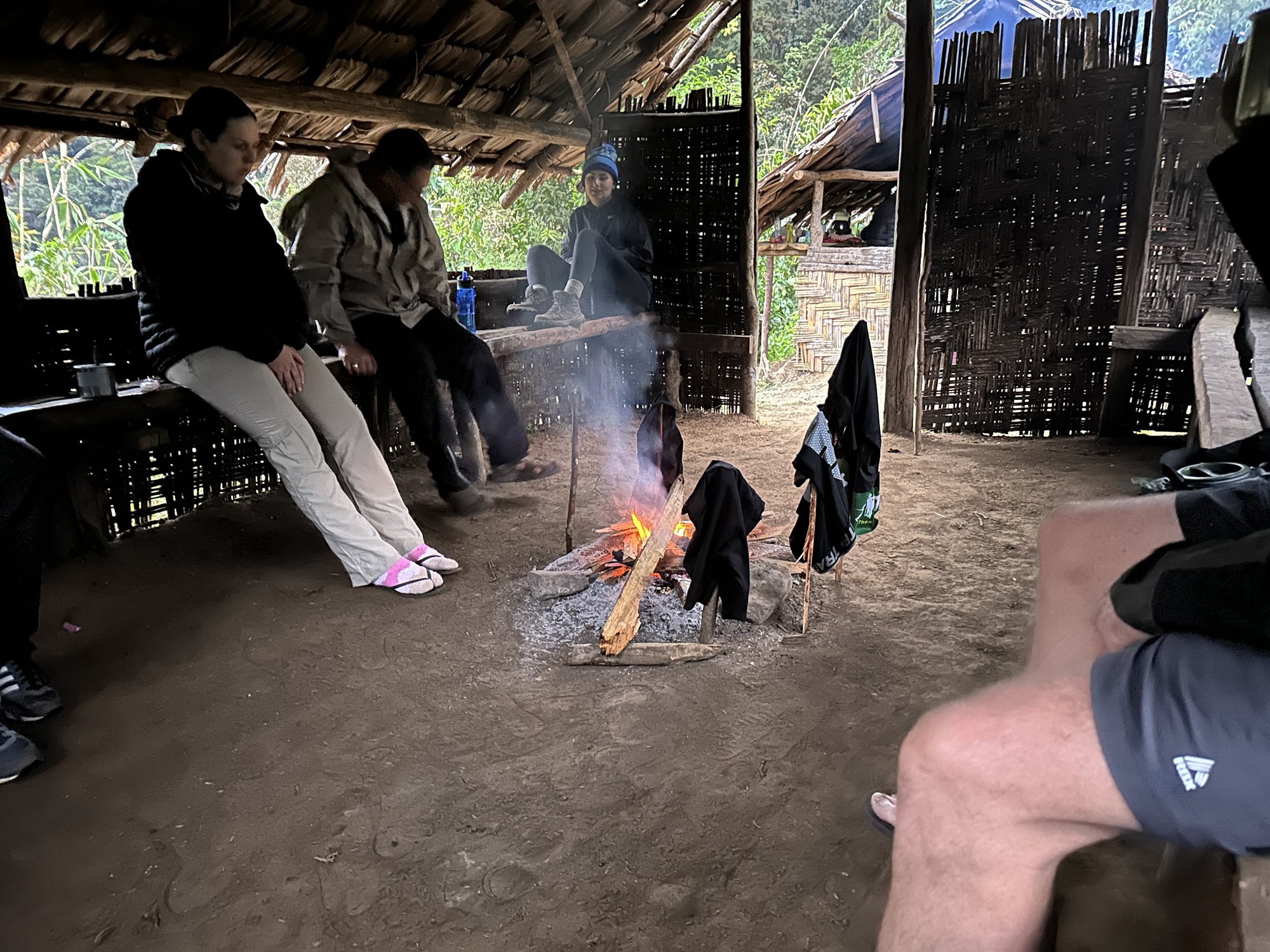
After a particularly wet day, a few of the hikers had perched their underwear on poles alongside the fire to dry out. When I saw this I said, “I didn’t know you Aussies like to smoke your jocks – that’s kinda weird.” And Gavin the guide said back, “What, yous don’t smoke your jocks where you come from? I think THAT’s kinda weird.”
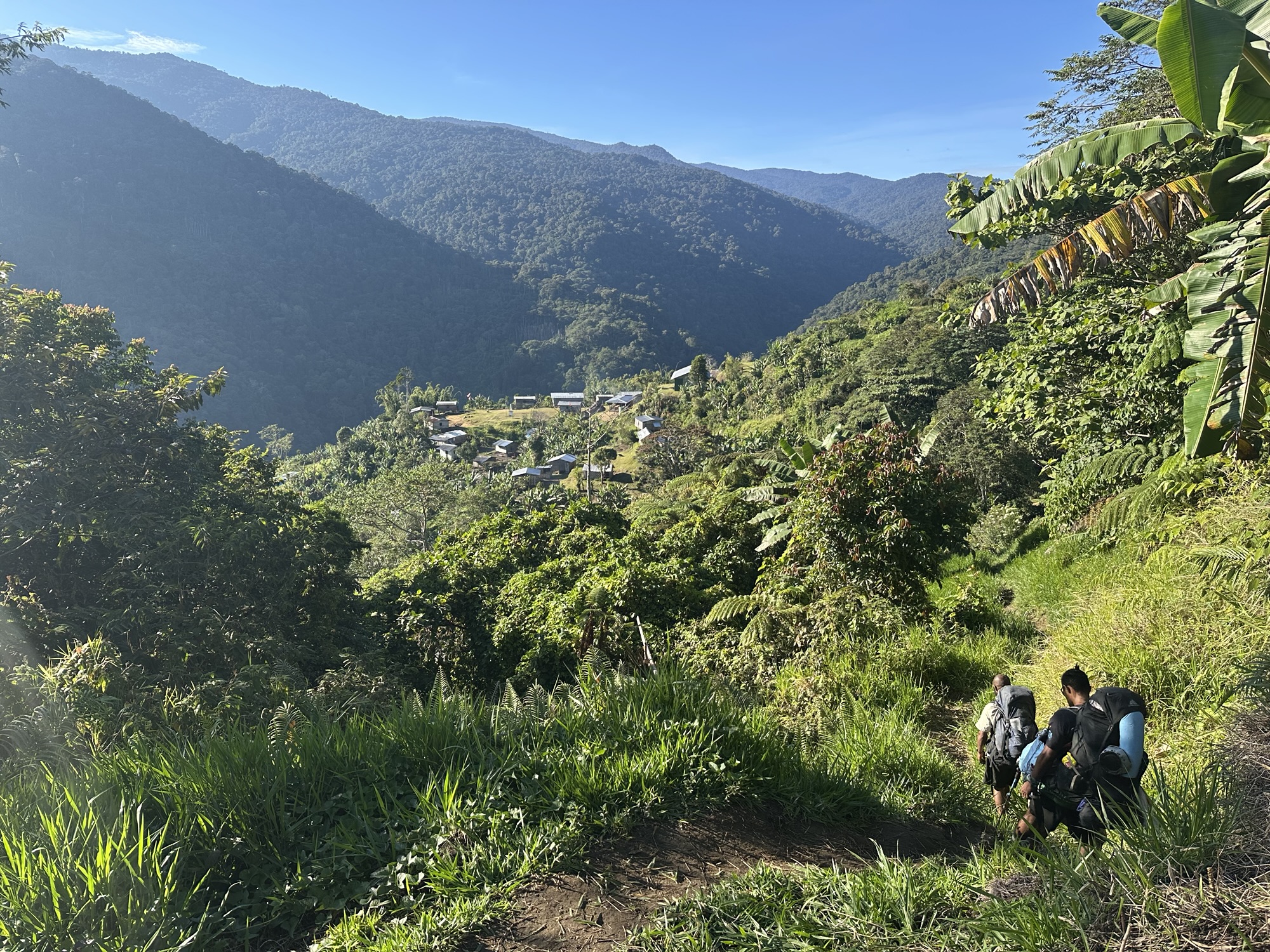
Heading down into that village for a banana break
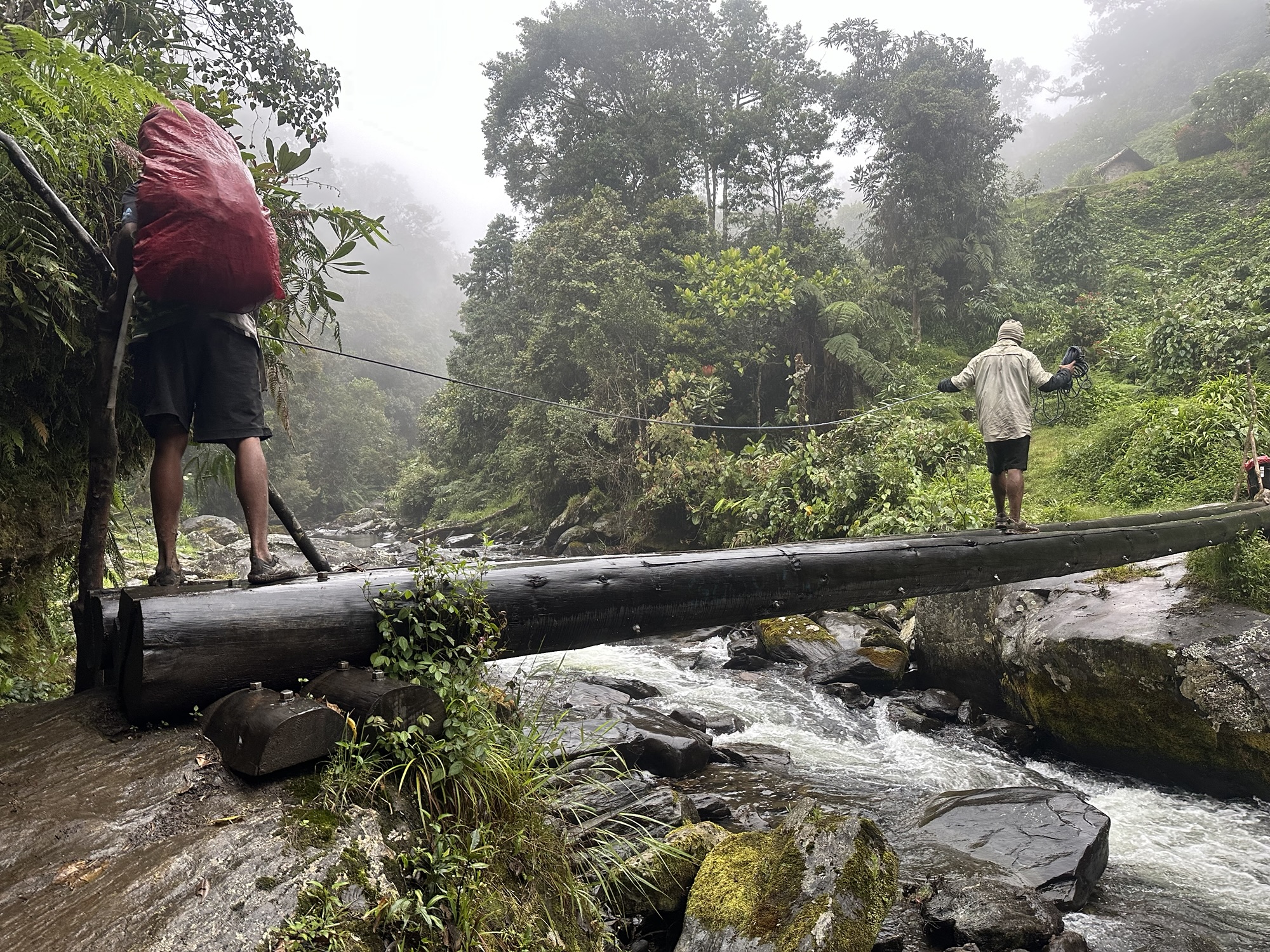
The porter team setting up a support rope from one end to the other of this slippery log to ease the white man’s crossing
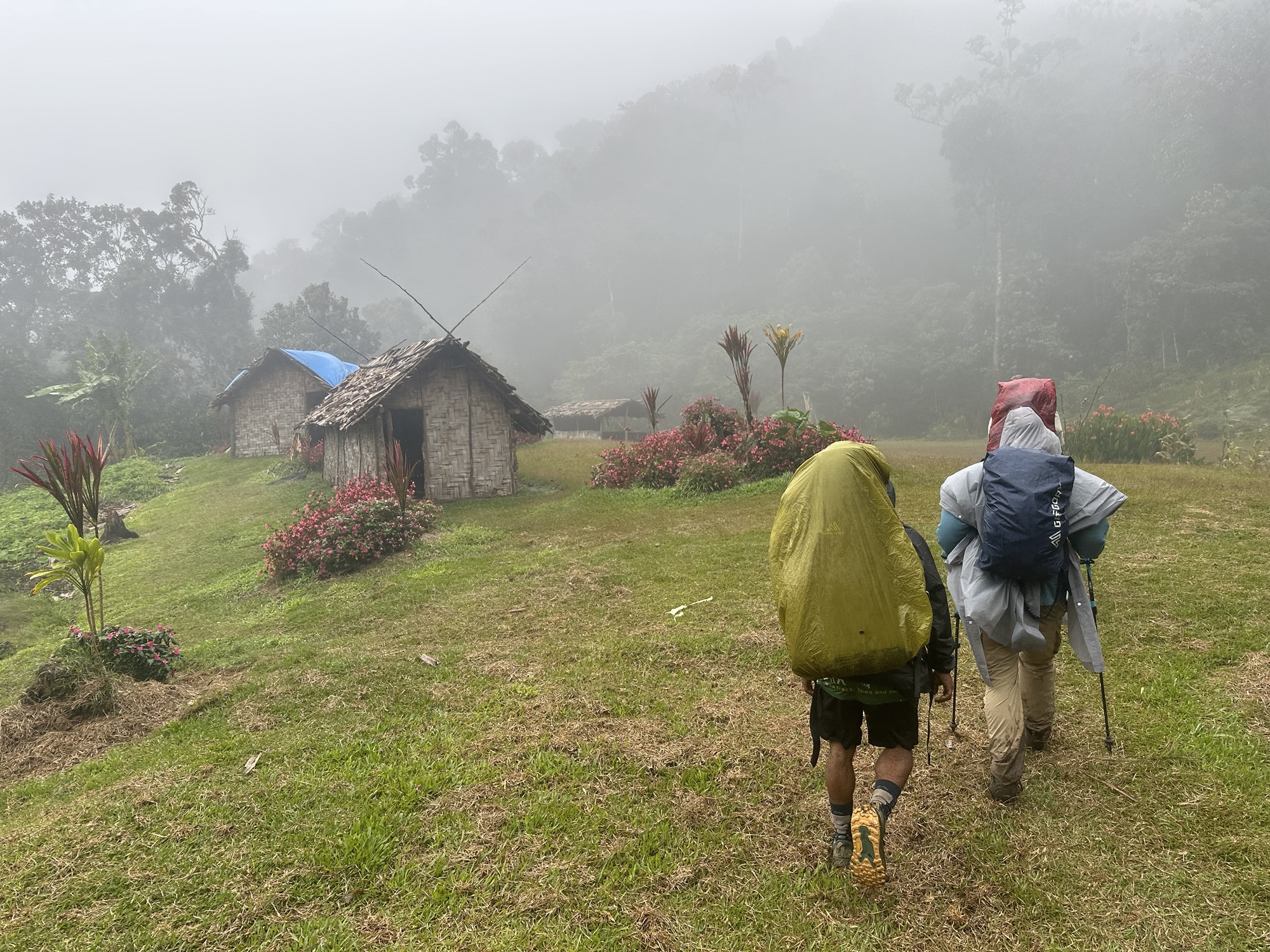
Wet day. The people in all these little villages we passed through really seemed to take pride in the appearance of their living spaces. They all had perfectly trimmed grass, which was almost always cut by hand using machetes. Our guide told us of landscaping accidents in which some of the villagers would cut open their own legs and bleed out while trimming the grass.
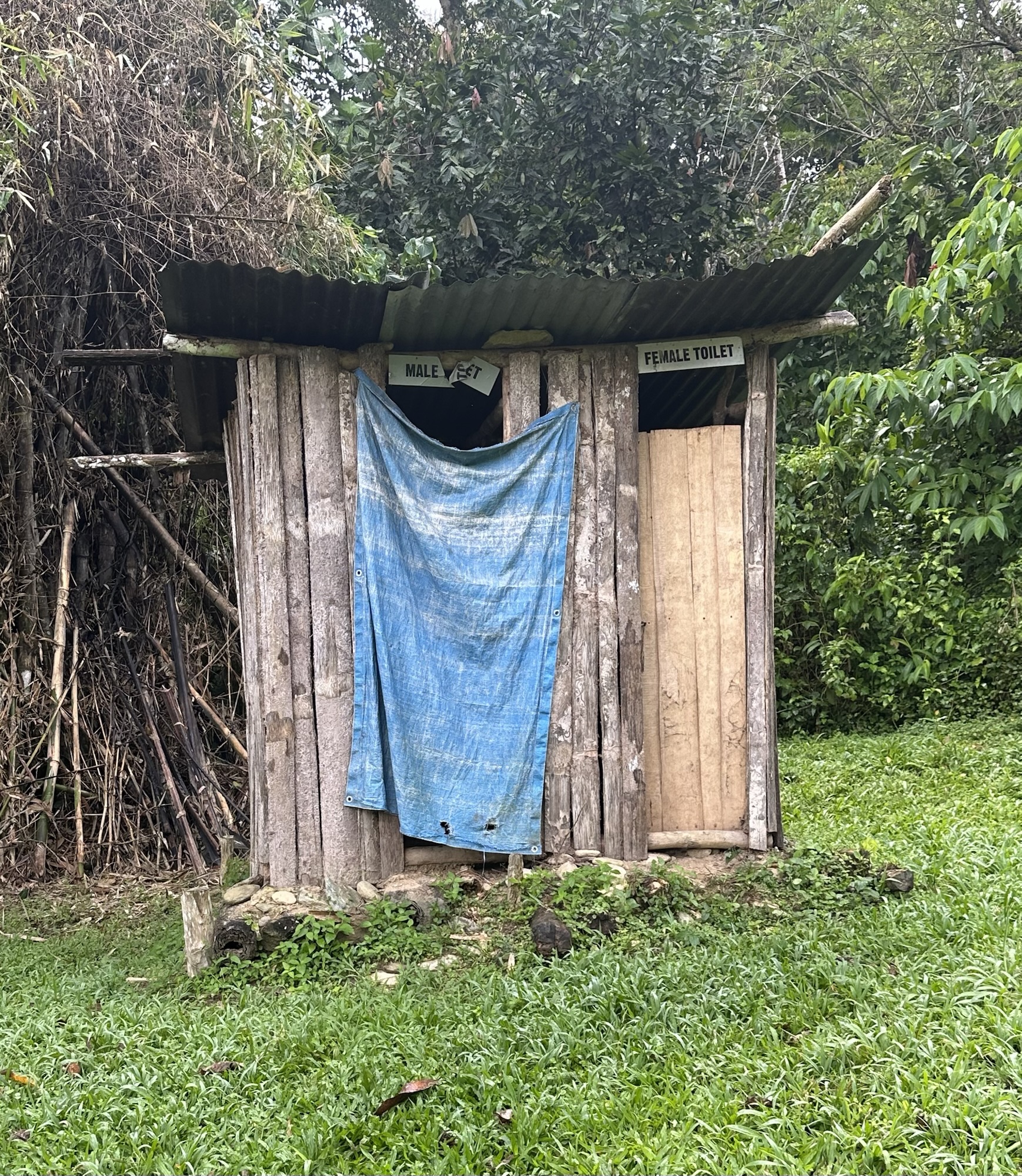
I forgot where this was, but was SHOCKED to see how transphobic these Papuan villagers are by not thinking to include gender-neutral toilets
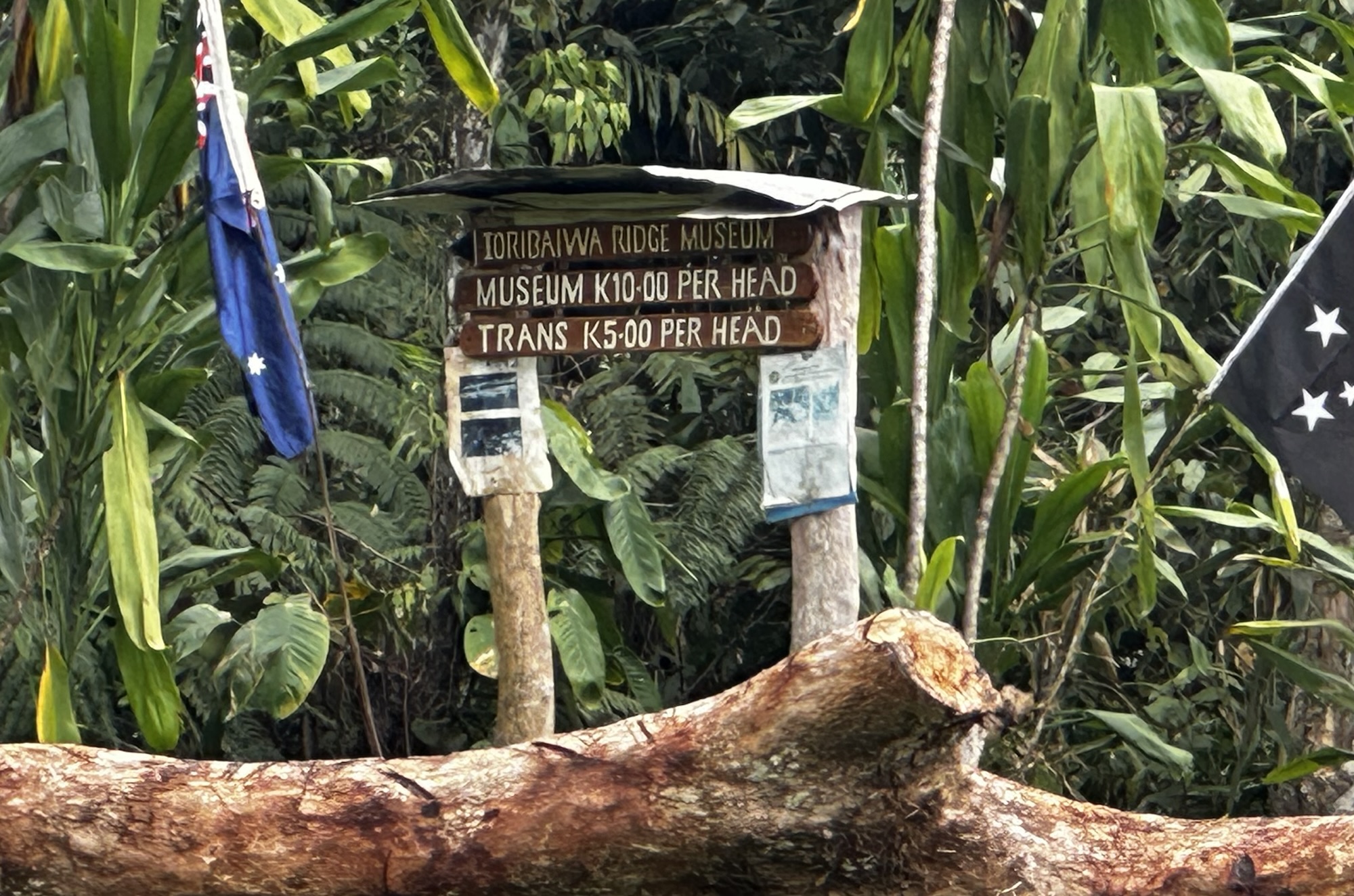
This village was more progressive. It offered head to trans people for a discounted price
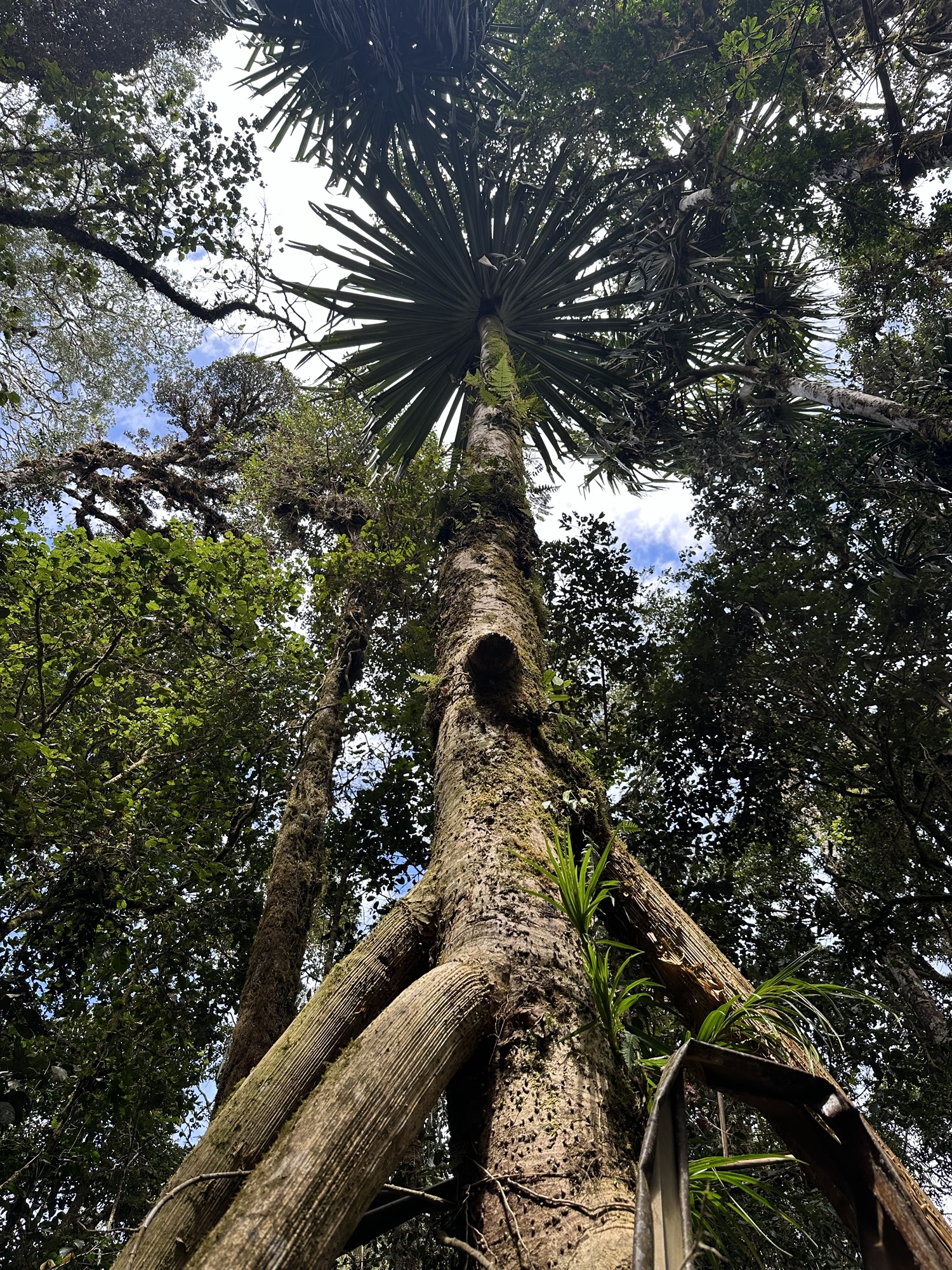
So many of these trees were so big and so old. I’m guessing a decent amount of them witnessed all the violence that took place along this trail some eighty years back
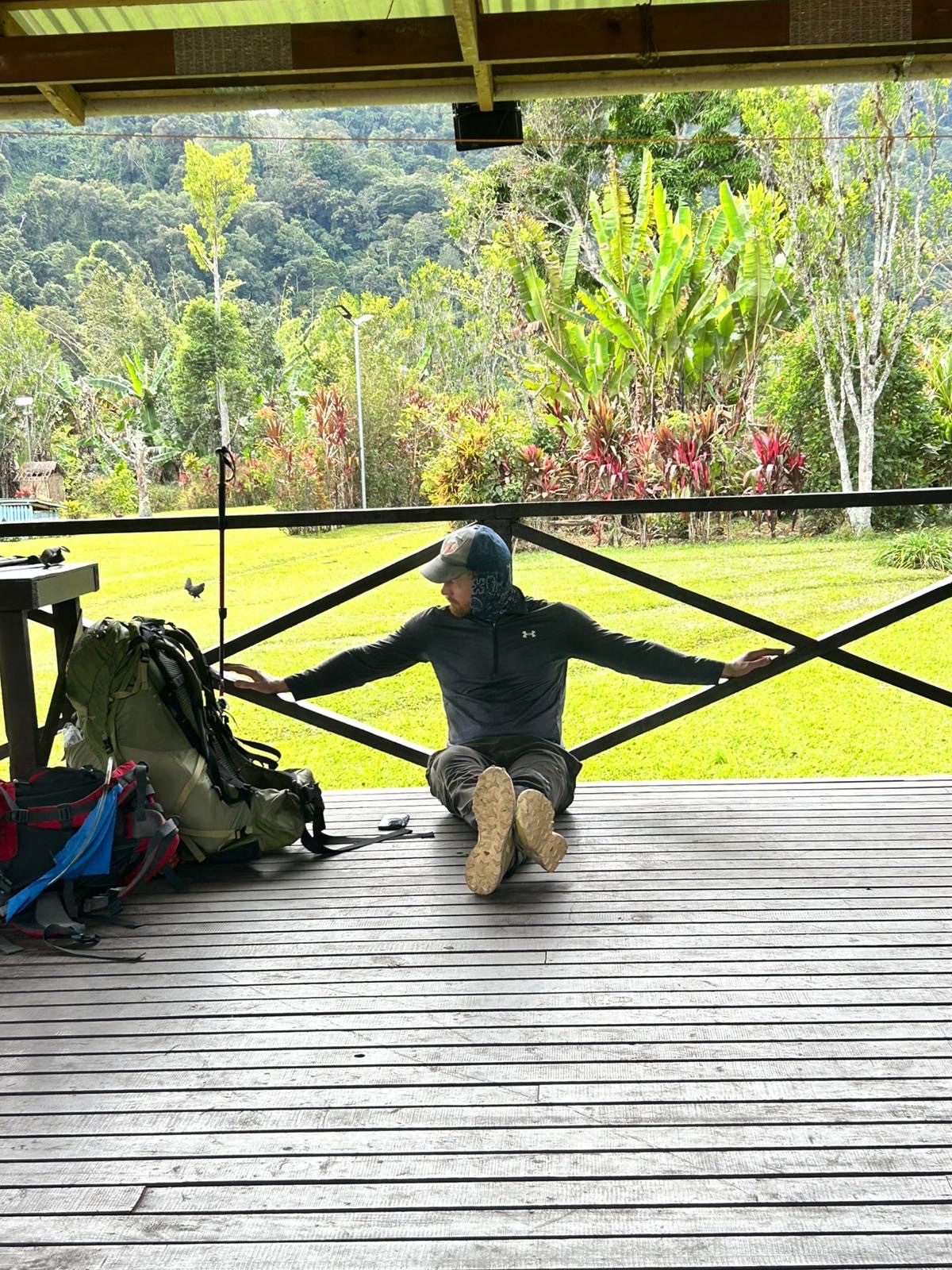
Even though it was hot, I wore long sleeves and pants cuz I don’t like getting sunburnt. The long sleeves were also supposed to protect me from insect bites, but surprisingly along this trail there were hardly any insects from which I needed to protect myself. Thought it was gonna be mosquito heaven
Nice afternoon not too far outside Kagi village
Burial place in the village of Kagi of the last known Fuzzy Wuzzy Angel, Havala Laula, who died at age 91
Campsite in Kagi
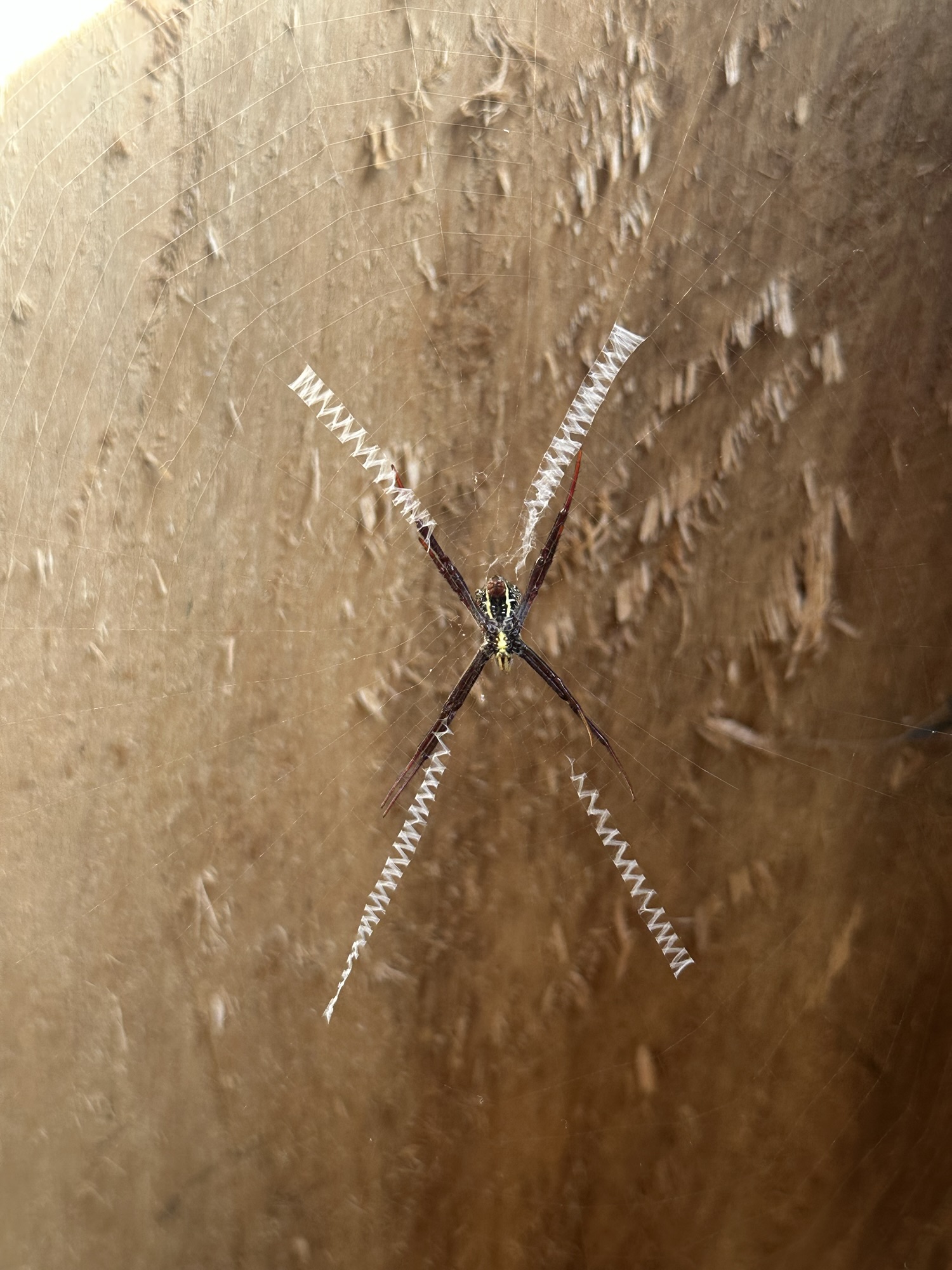
Interesting spider web design
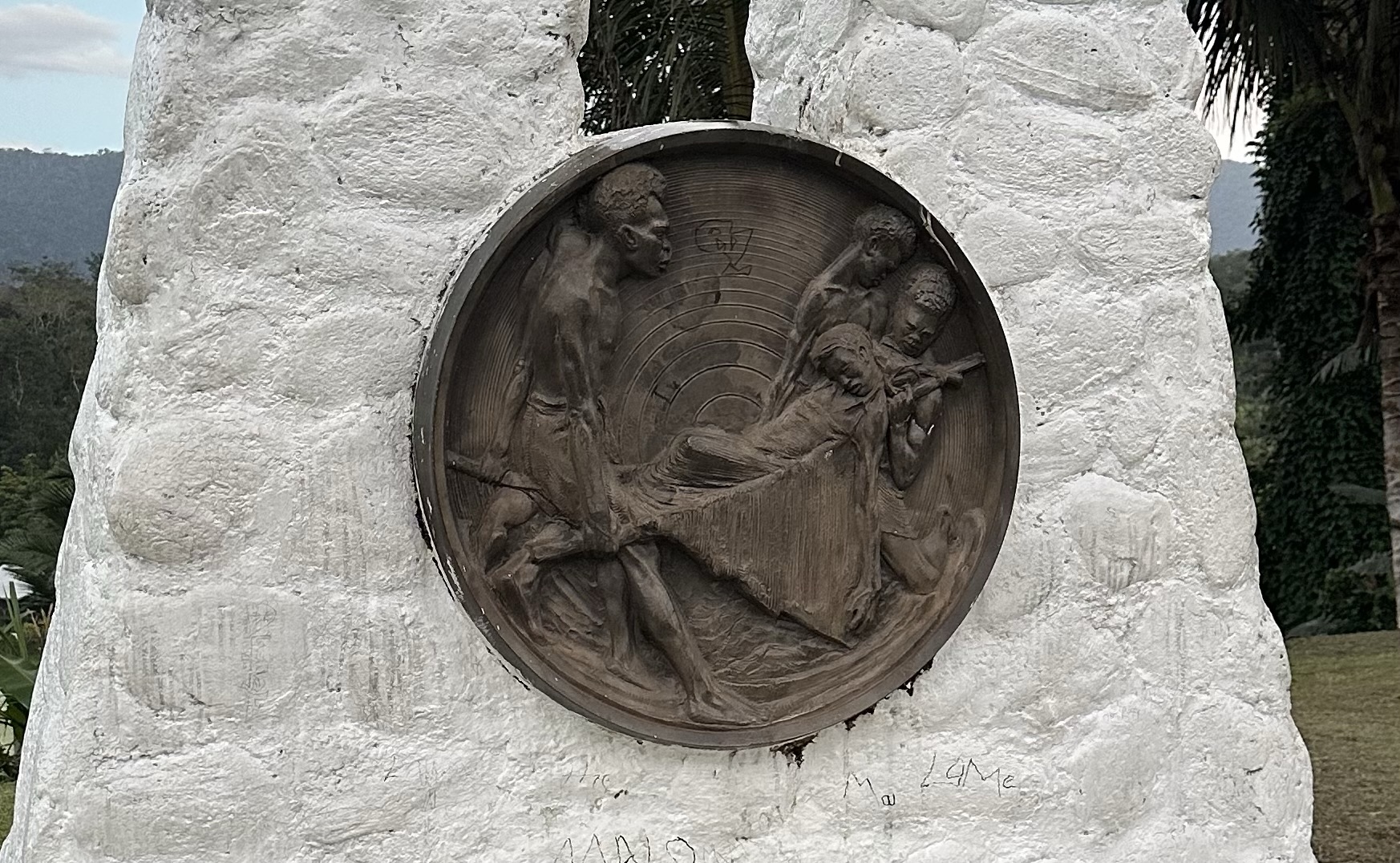
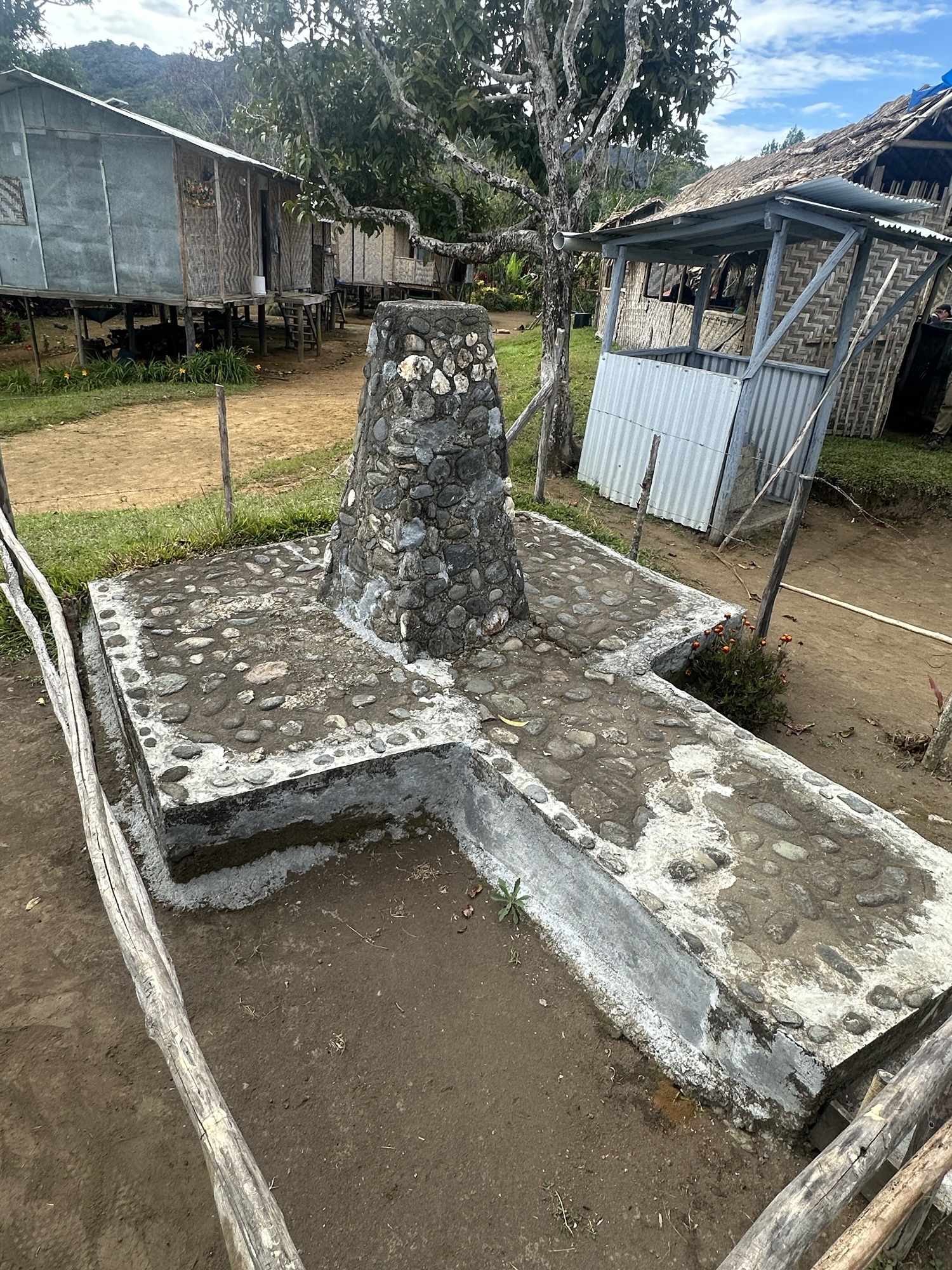
I don’t remember what village this monument was in or exactly what it was commemorating, but when I look at this image I know what we were talking about in that moment – it was the Japanese “Bone Man.” Kokichi Nishimura was his name. He fought against the Australians on the Kokoda Track, was shot three times and was the only man of his 56-member platoon to survive. He first returned to Papua New Guinea in 1979 to look for and recover the bodies of his fallen comrades. He did this work for about twenty-five years, until he was too old and ill to continue. During that time, he was said to have recovered the remains of some 300-350 fallen Japanese soldiers in Papua New Guinea.
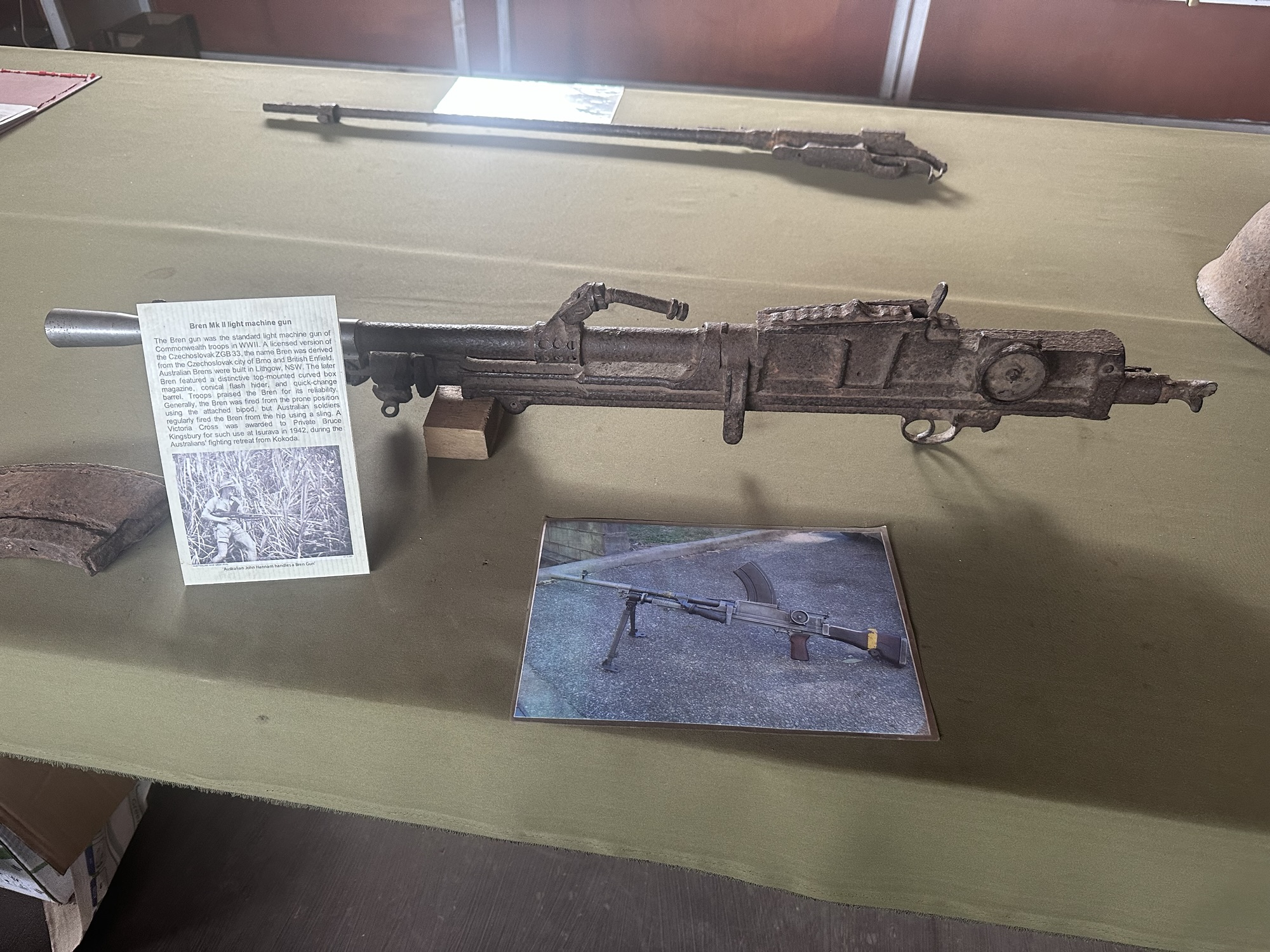
Bren gun
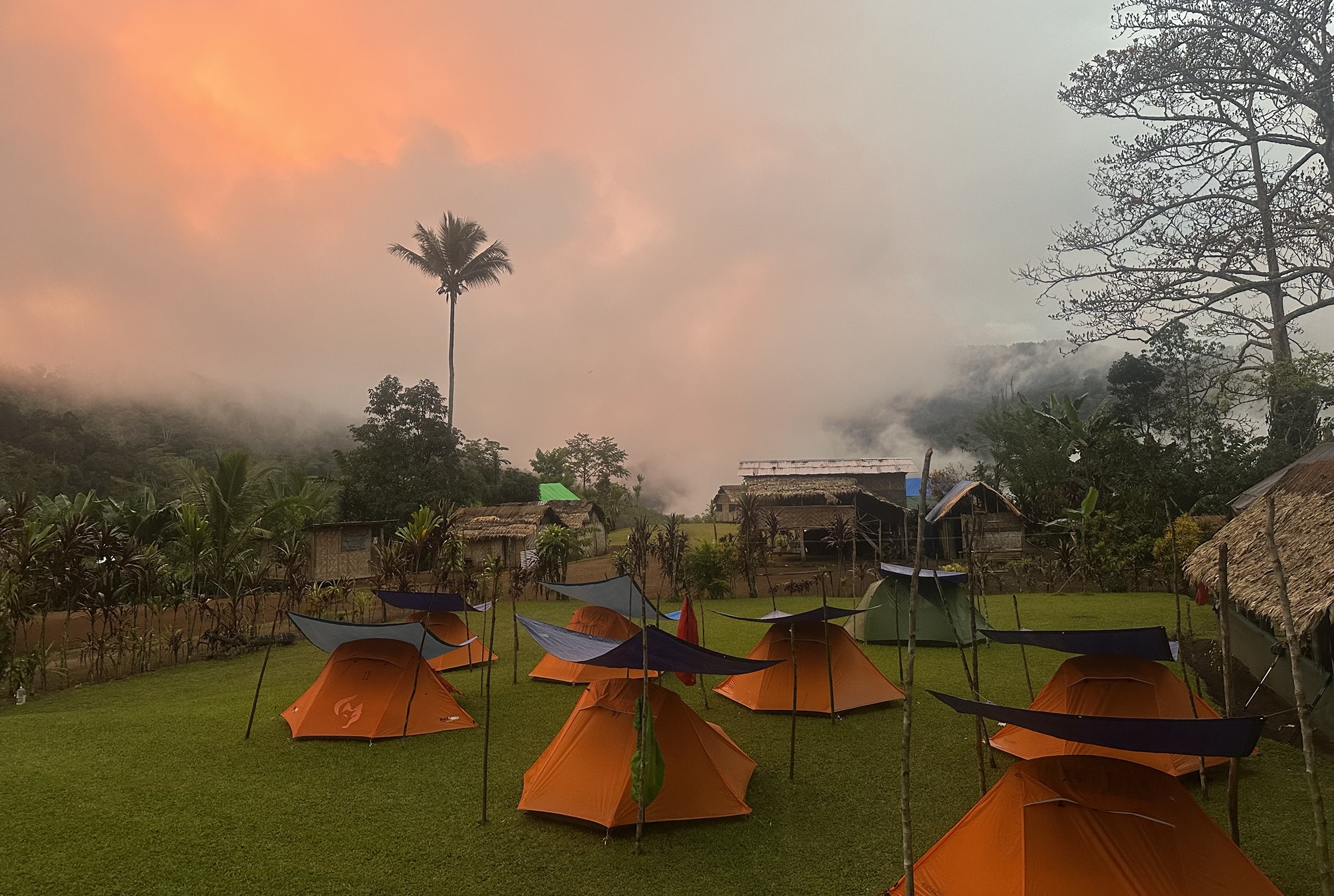
Sunset over the village of Menari
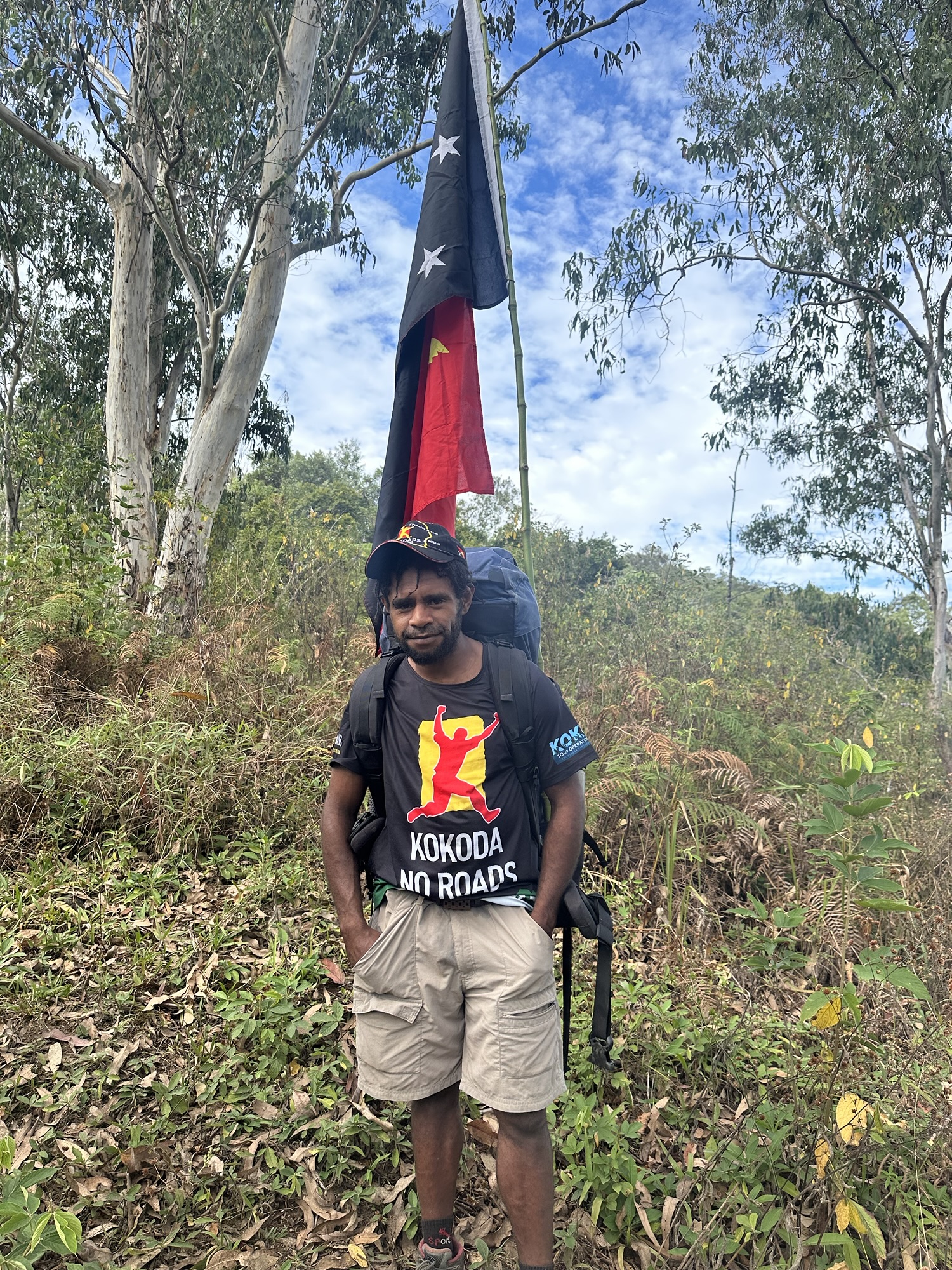
Porter Caleb celebrating PNG independence day with a national flag hoisted from his pack. Papua New Guinea became self-governing sometime in 1973 and then gained full independence from Australia on September 16, 1975
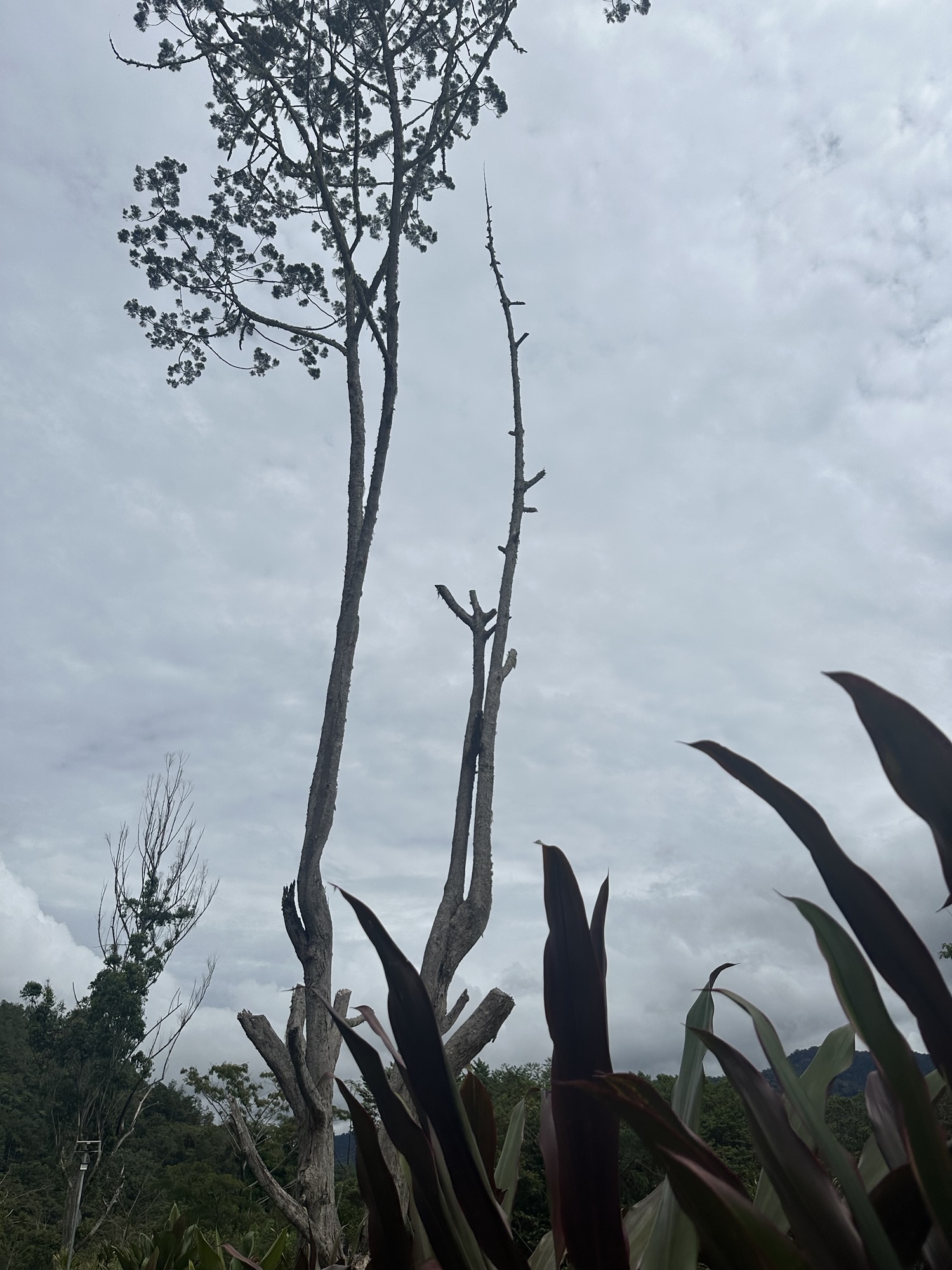
This tree, which was probably somewhere between 20 and 30 feet tall, had all its branches lopped off all the way up. My question is…how do you shimmy up to the top of something so skinny without the trunk bending or breaking?
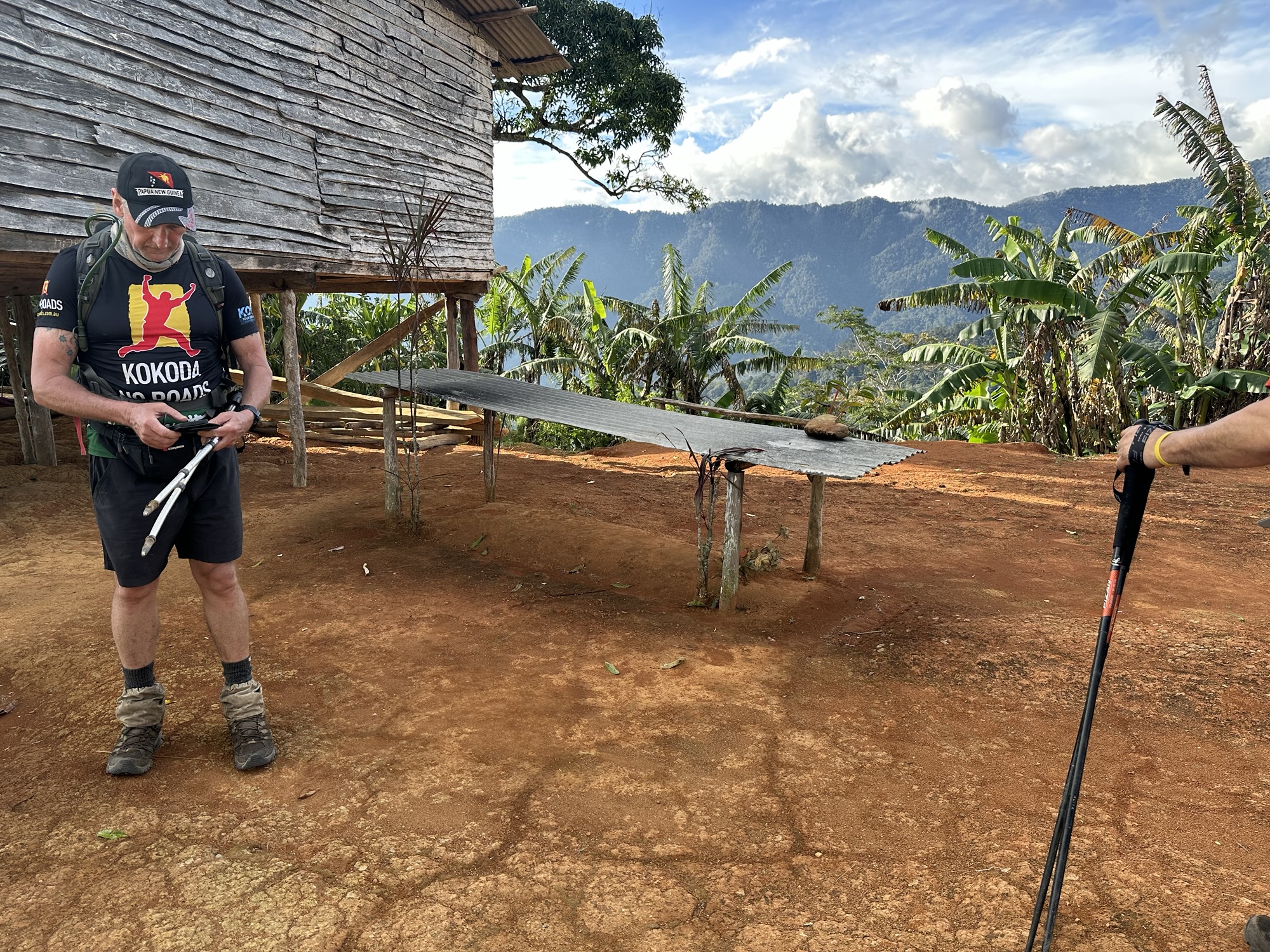
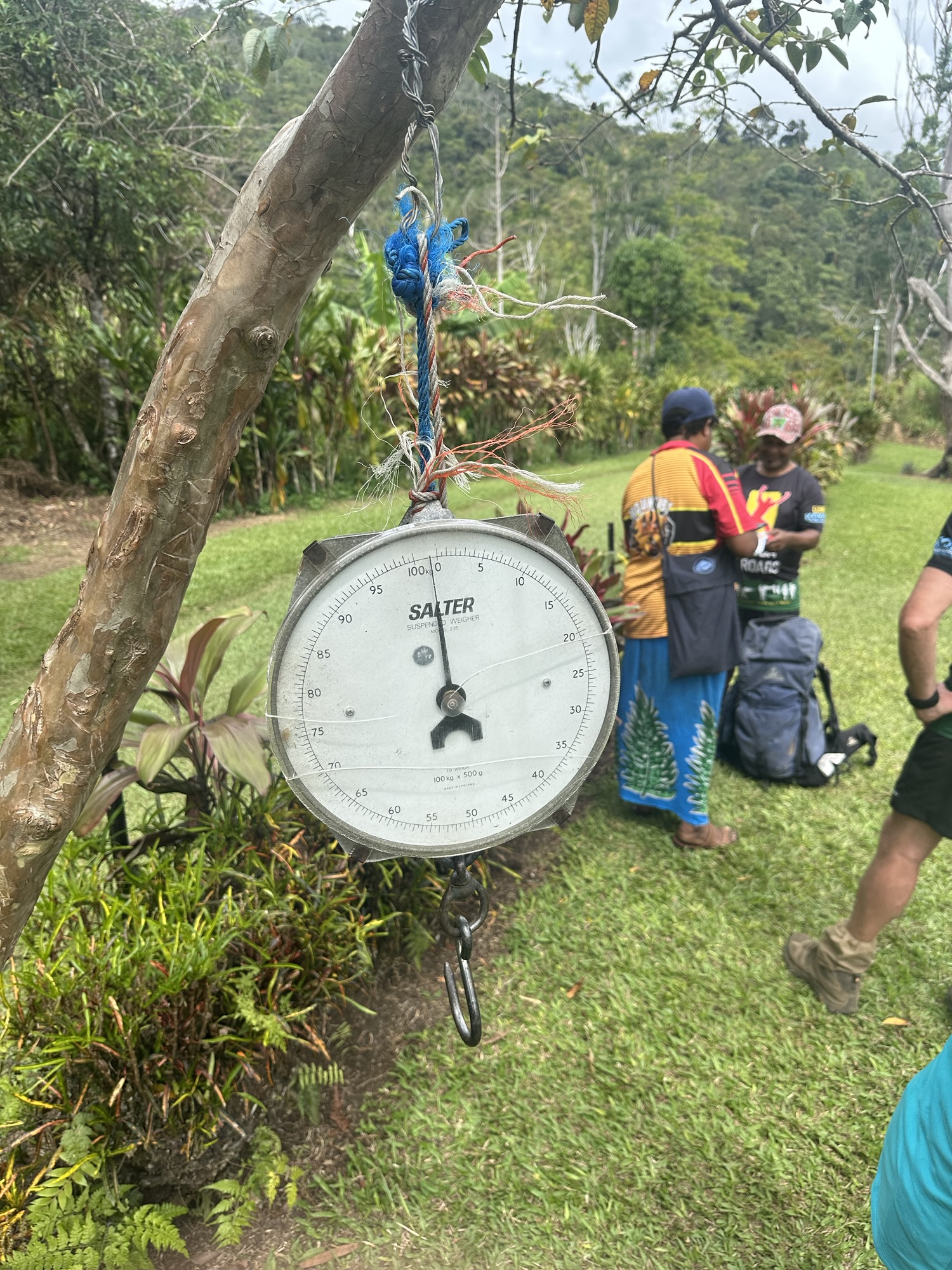
At this checkpoint, the porters needed to have their bags weighed to make sure that they weren’t exceeding the legal limit of 22.5kg that’d been set by the Kokoda Track Authority
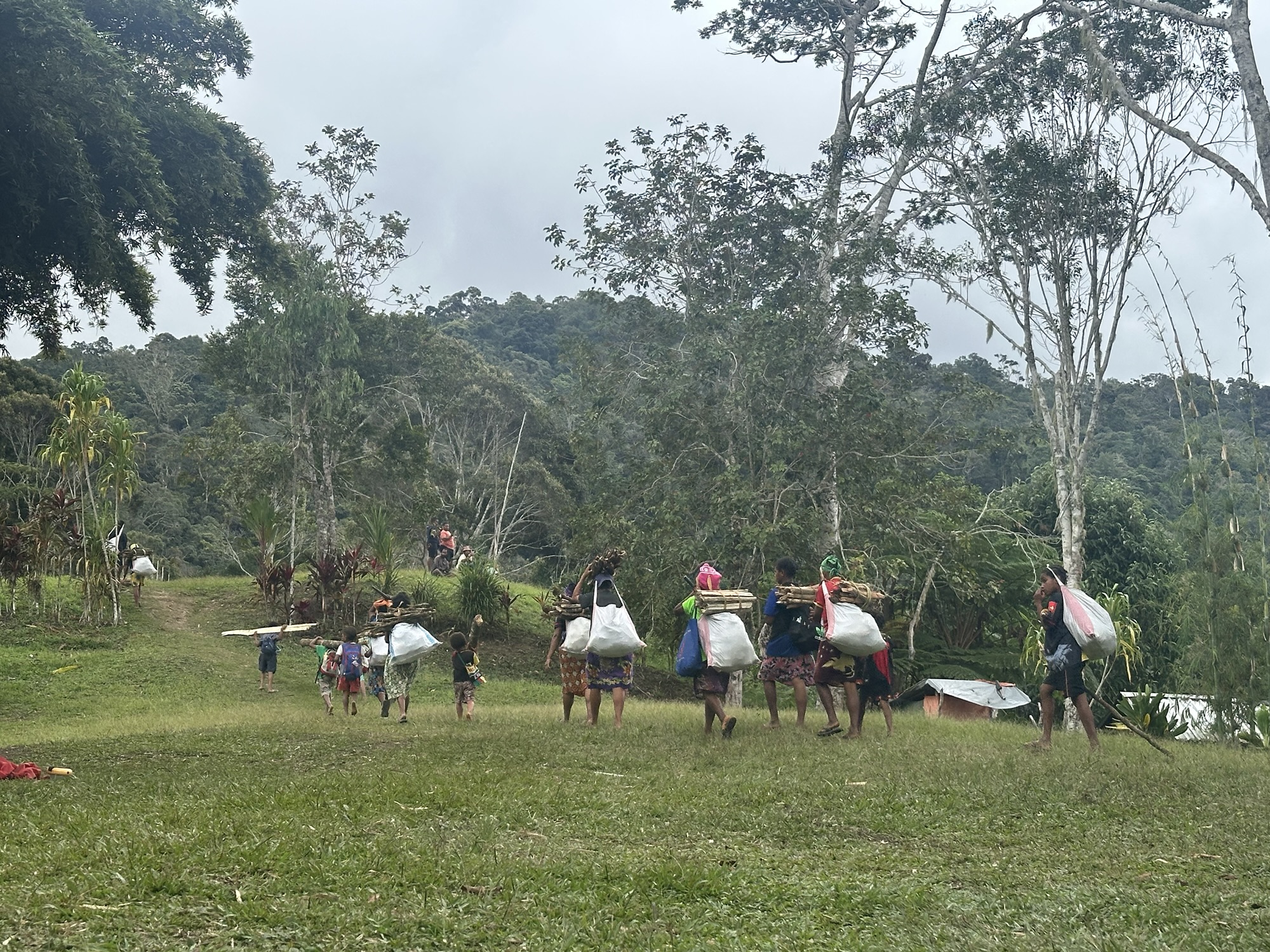
Here, about a day’s walk north of Owers’ Corner (the nearest place to where roads are connected to Port Moresby) we saw this convoy of locals carrying wood and other supplies up along the Kokoda Track back to their villages
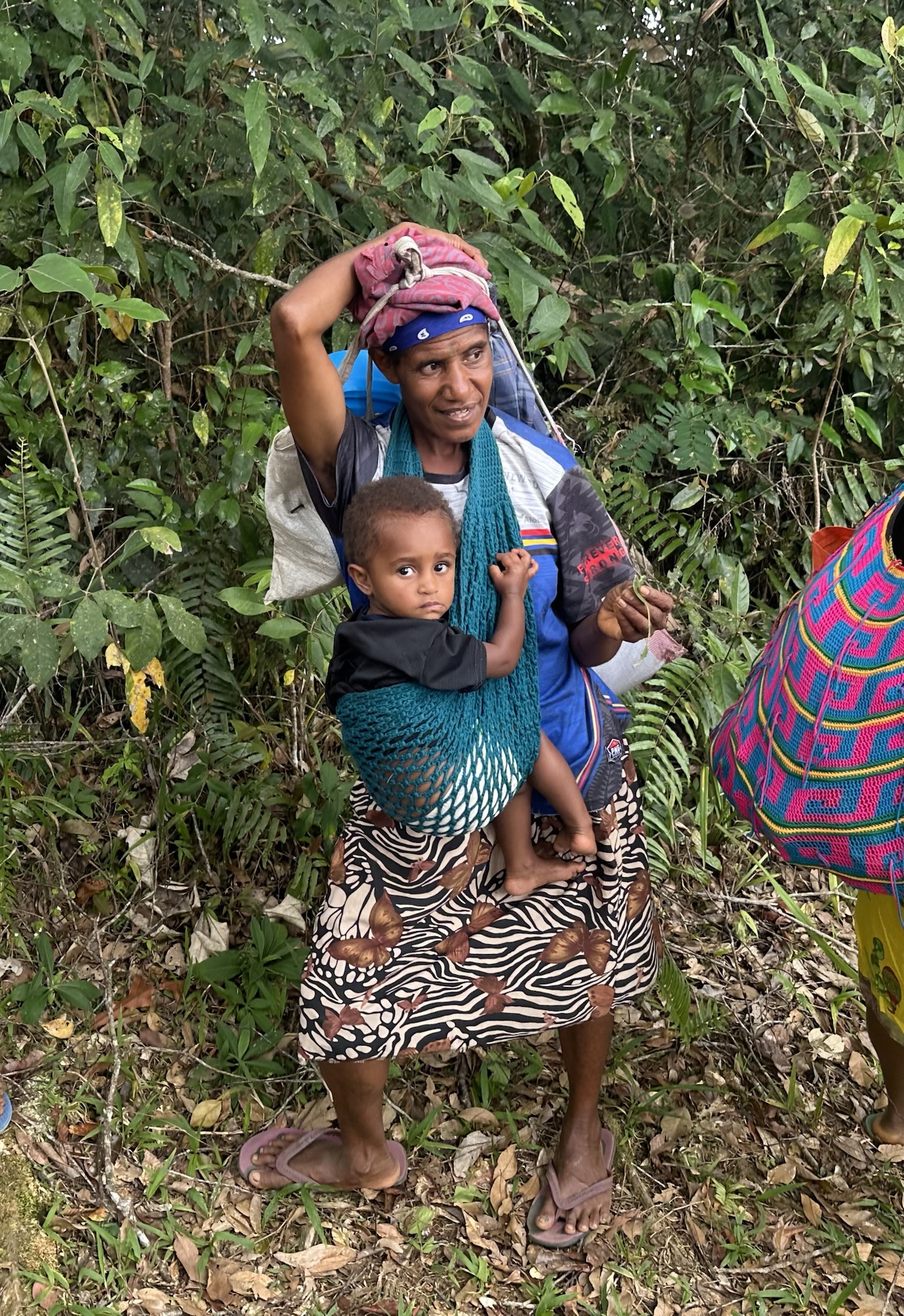
A woman belonging to the aforementioned convoy. Walking all day with a kid in front and a bag of goods slung over the top of her head in back – that’s one hell of a trip to the grocery store
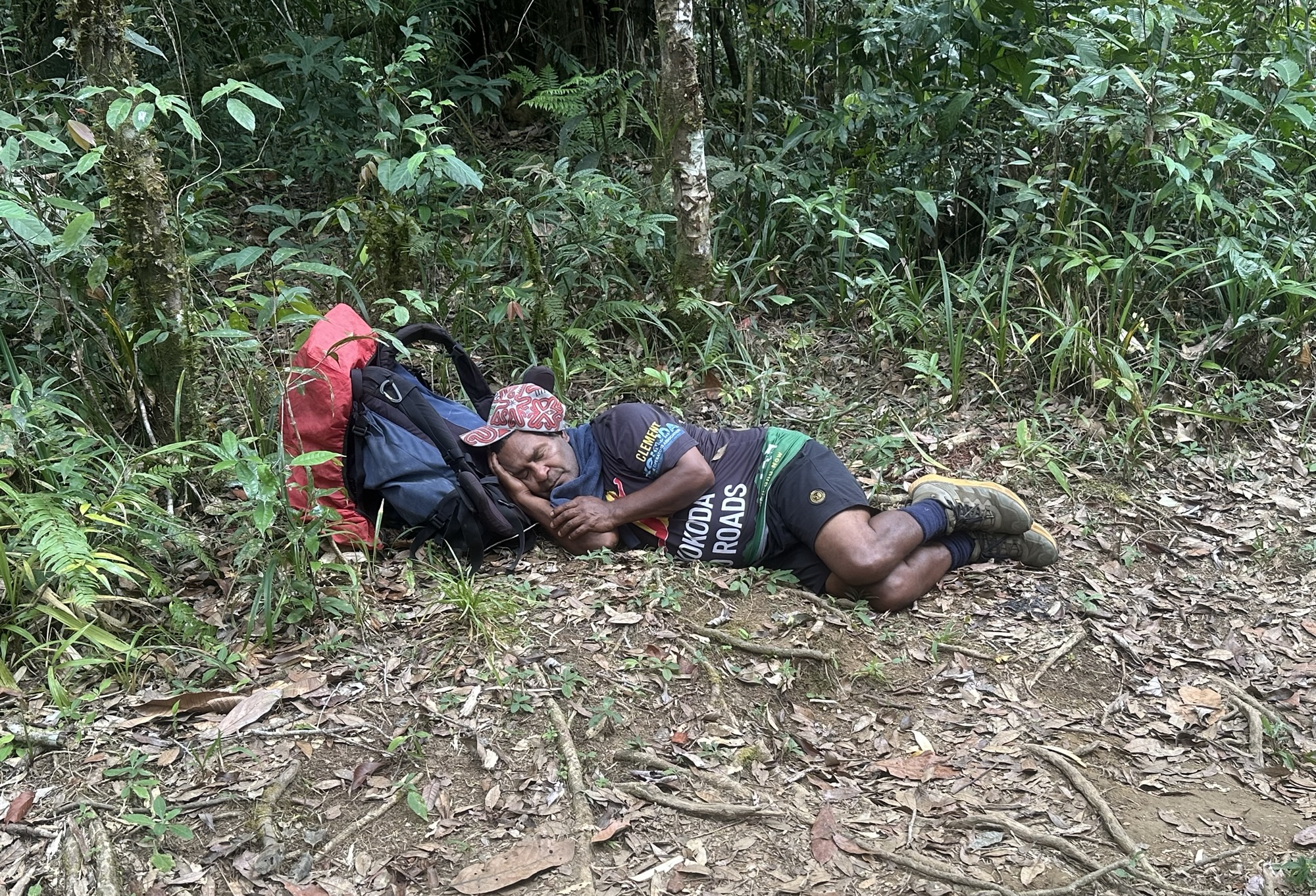
One of the porters, Clement, catching some shuteye off the side of the trail
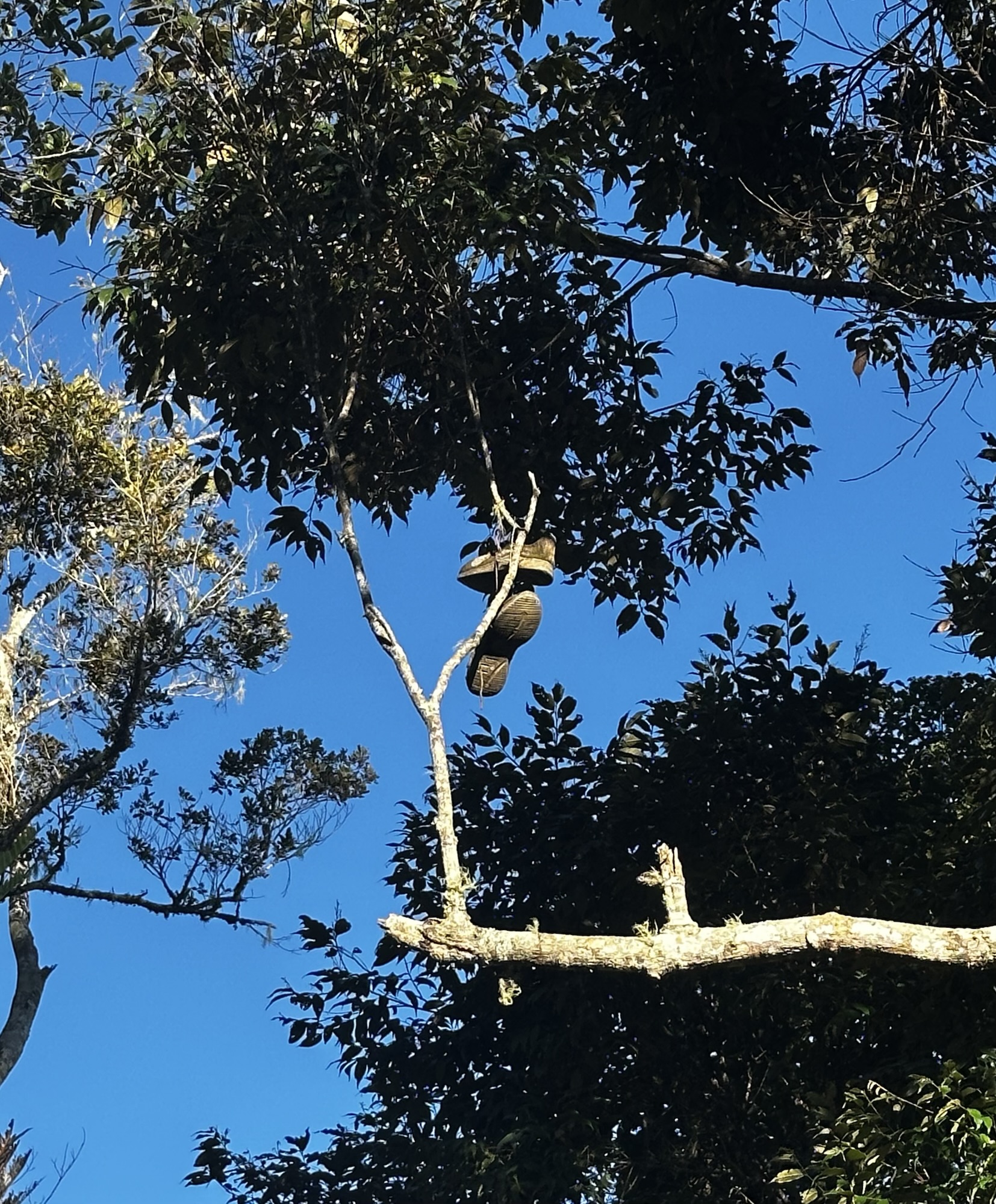
A nice juicy ripe pair of shoes hanging from a native Papuan Sneaker Tree
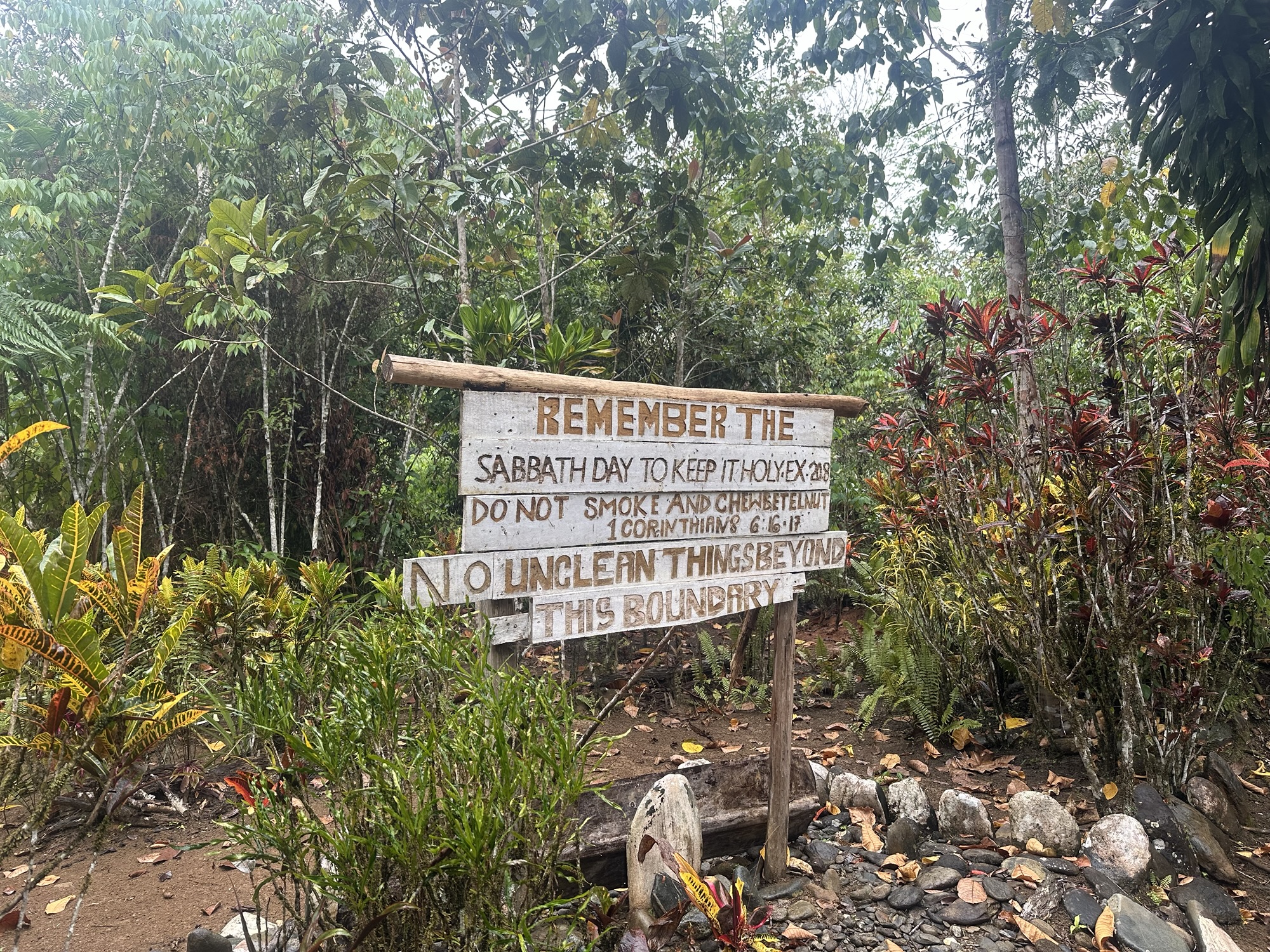
That’s the first time I’ve ever heard that Corinthians passage about not smoking or chewing betel nut. I can’t be bothered to open up a bible and check, but part of me seriously doubts it says that
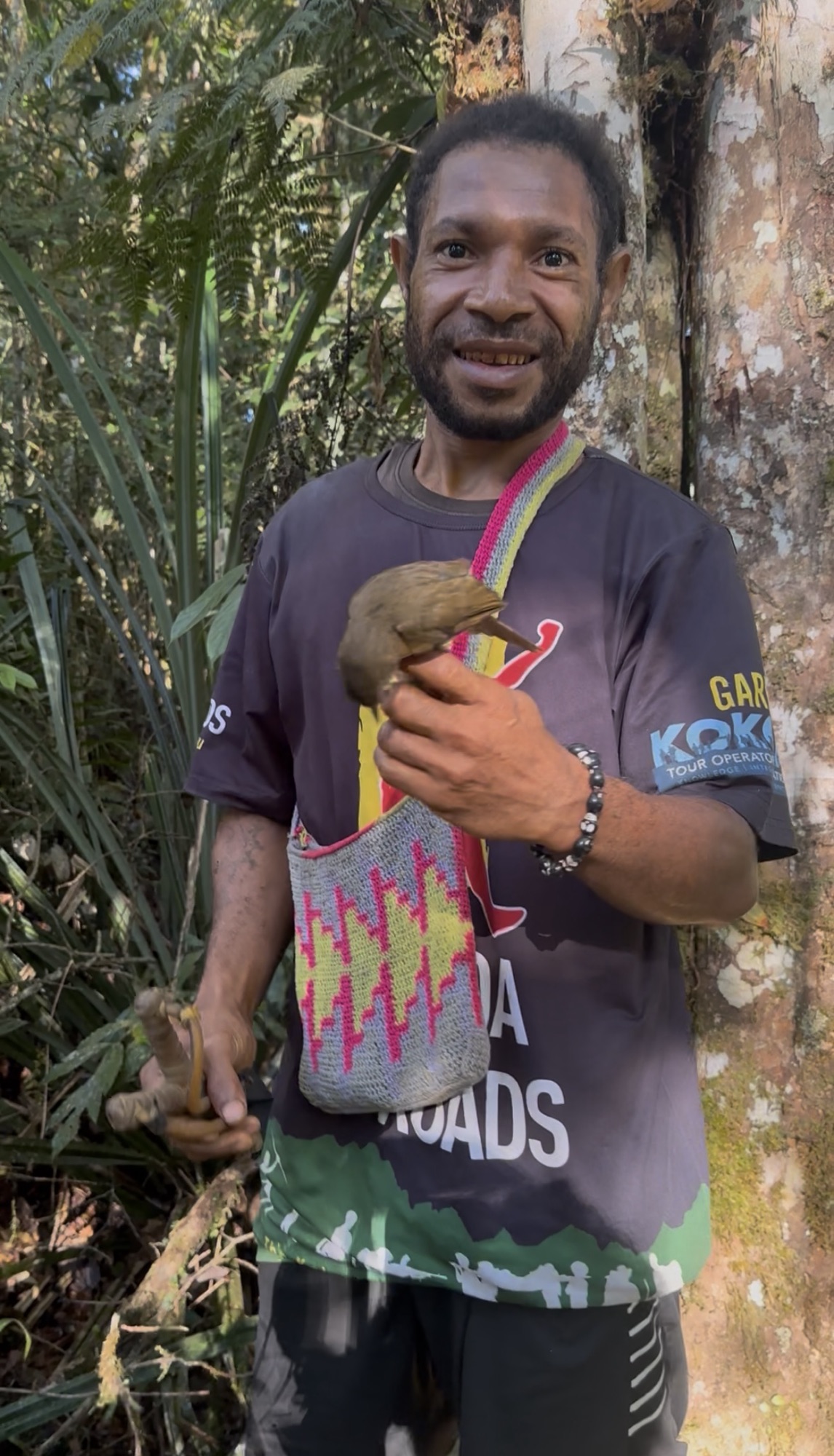
Gary from the local team shot this little bird out of a tree with his slingshot then roasted it up over the fire and ate it during lunch
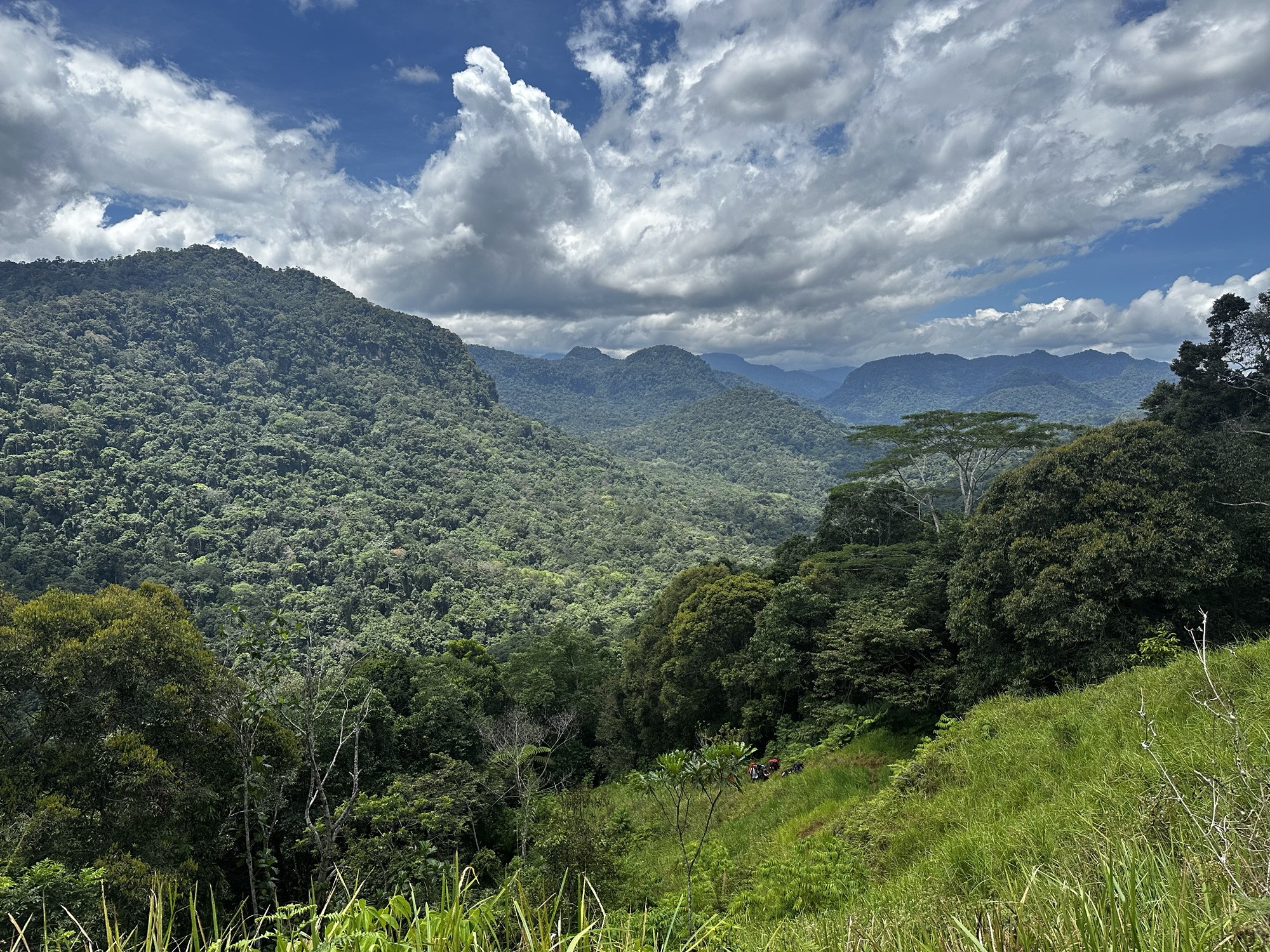
Just shy of reaching Owers’ Corner. Looking back on the wild terrain we’d just crossed during the previous 7.5 days
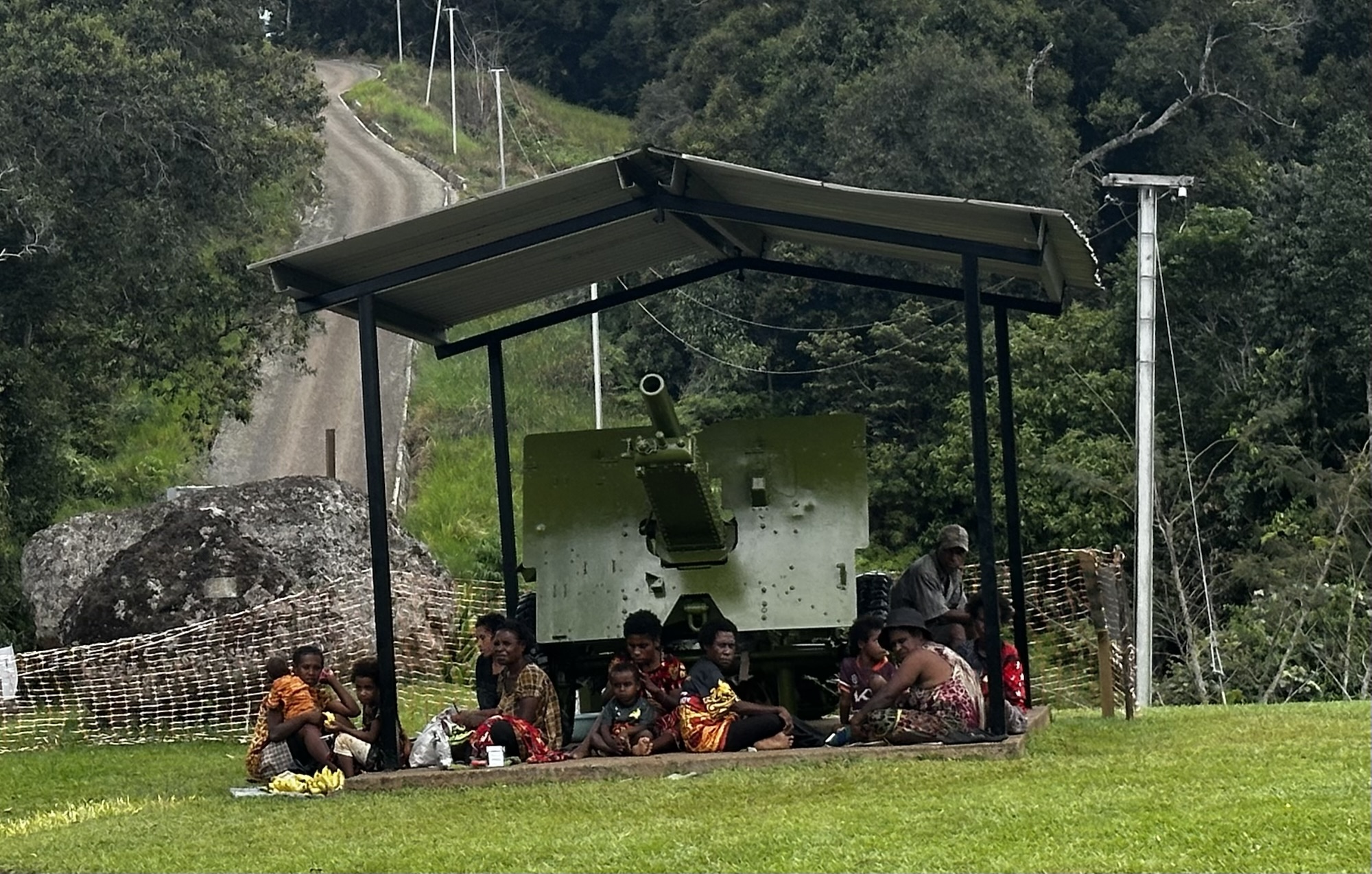
Locals chillin under some weaponry at Owers’ Corner
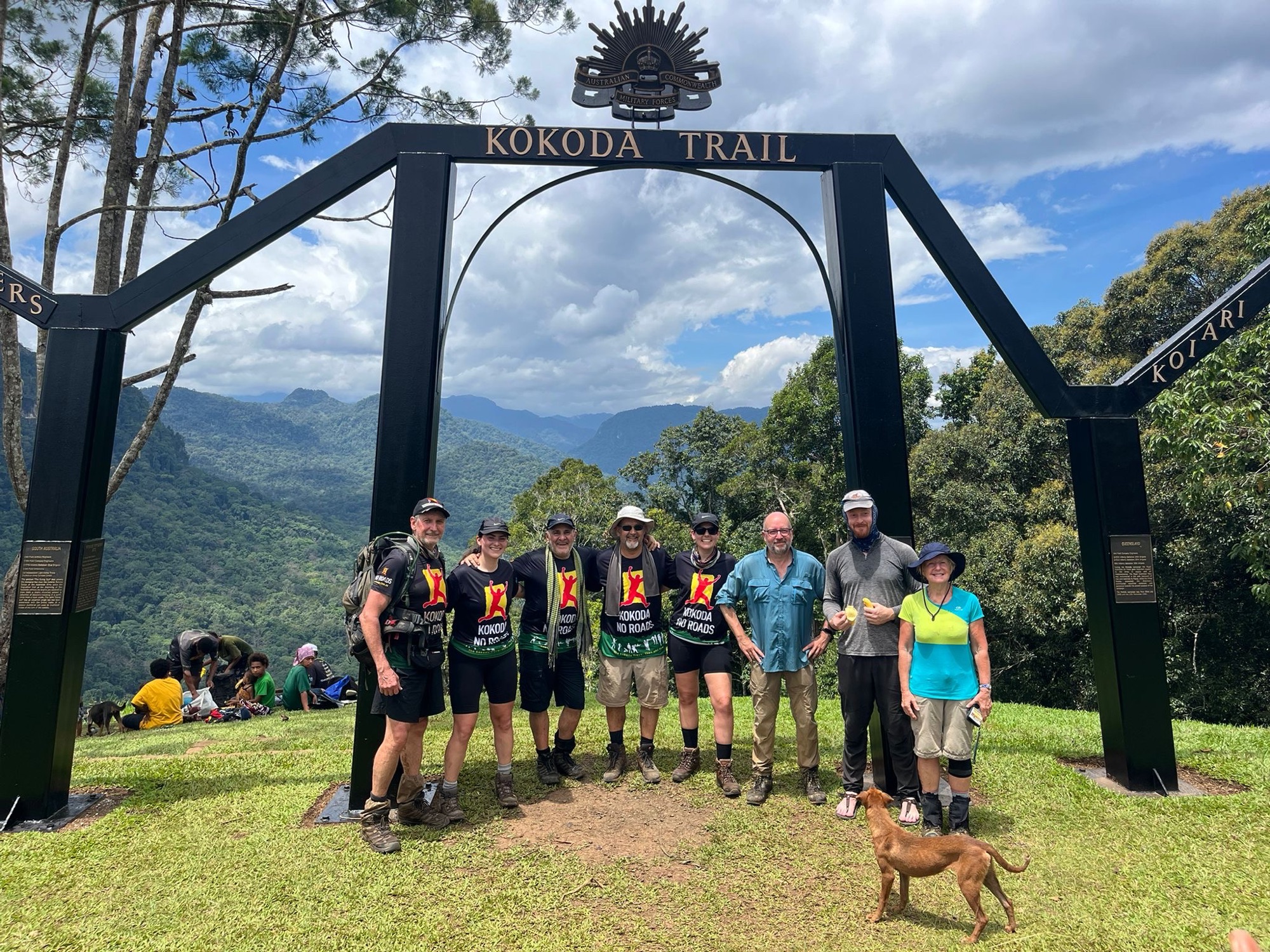
Group pic at the finish line
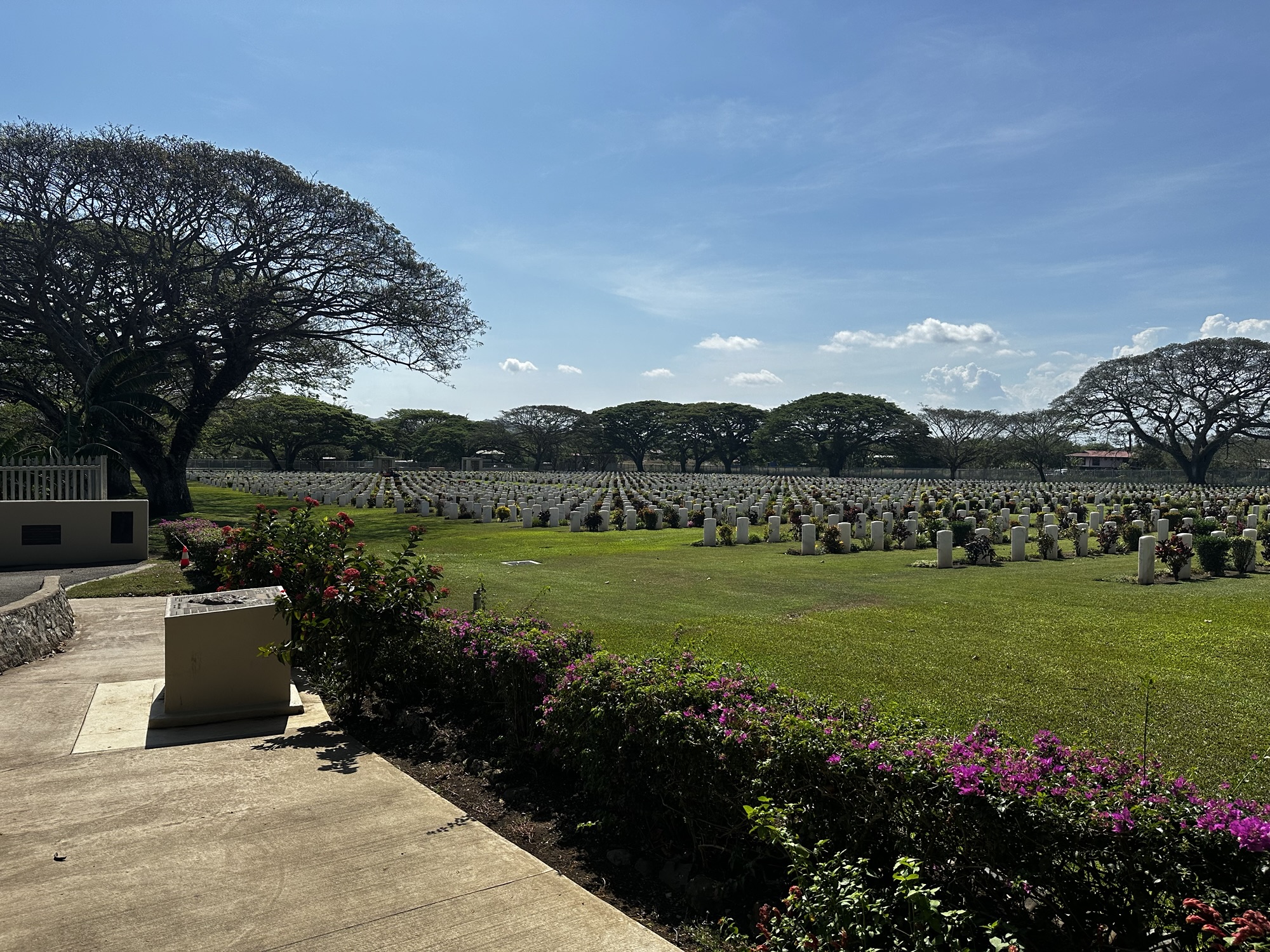
Bomana War Cemetery, final resting place of a few more than 3,330 Australians that died in Papua New Guinea during World War II
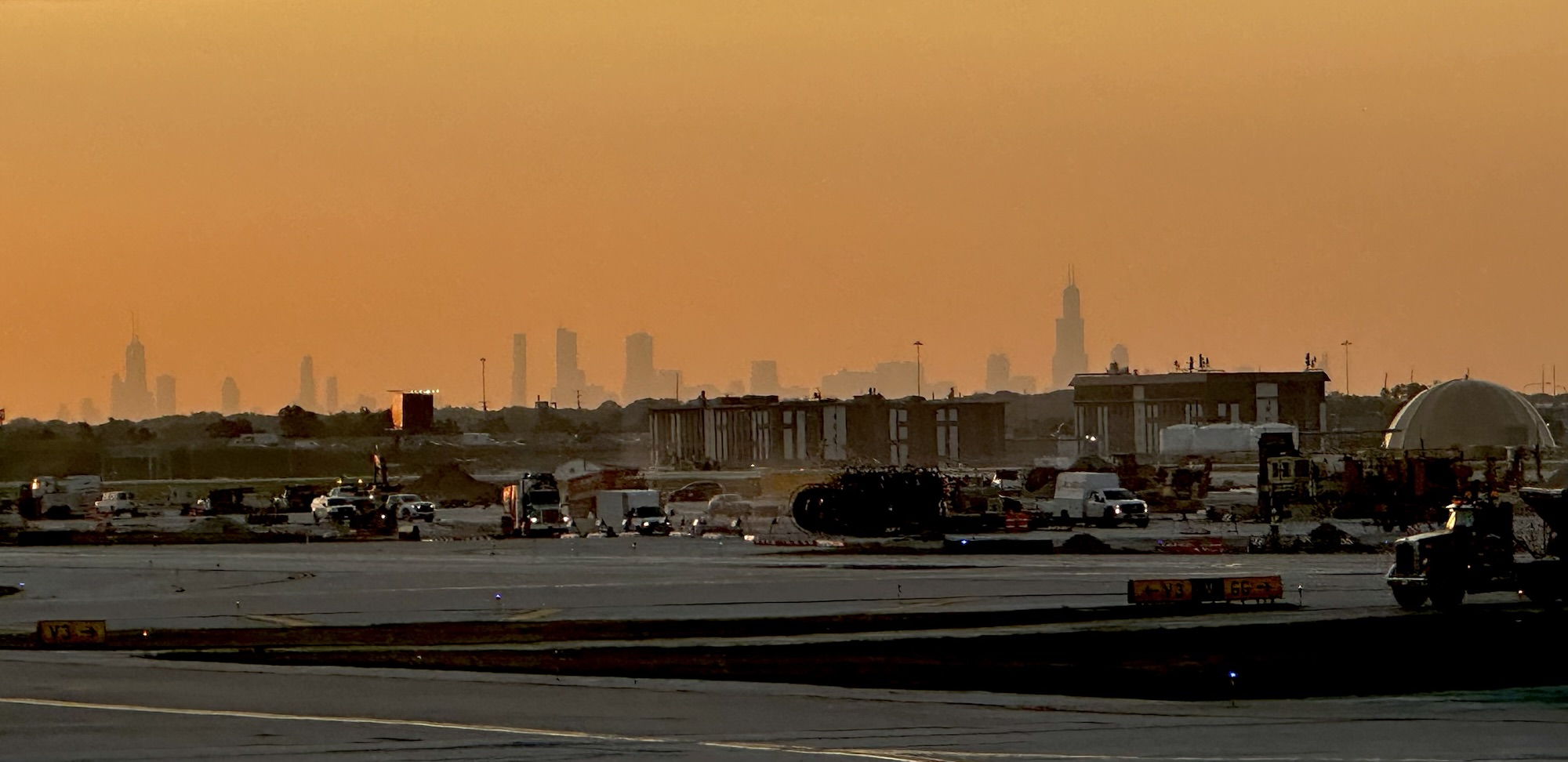
After the 30-something hours of transit back home, here’s a view of the Chicago skyline as seen from O’Hare airport at the crack of dawn